
Banten's Free School Programme Eases Burden on Daily Labourers
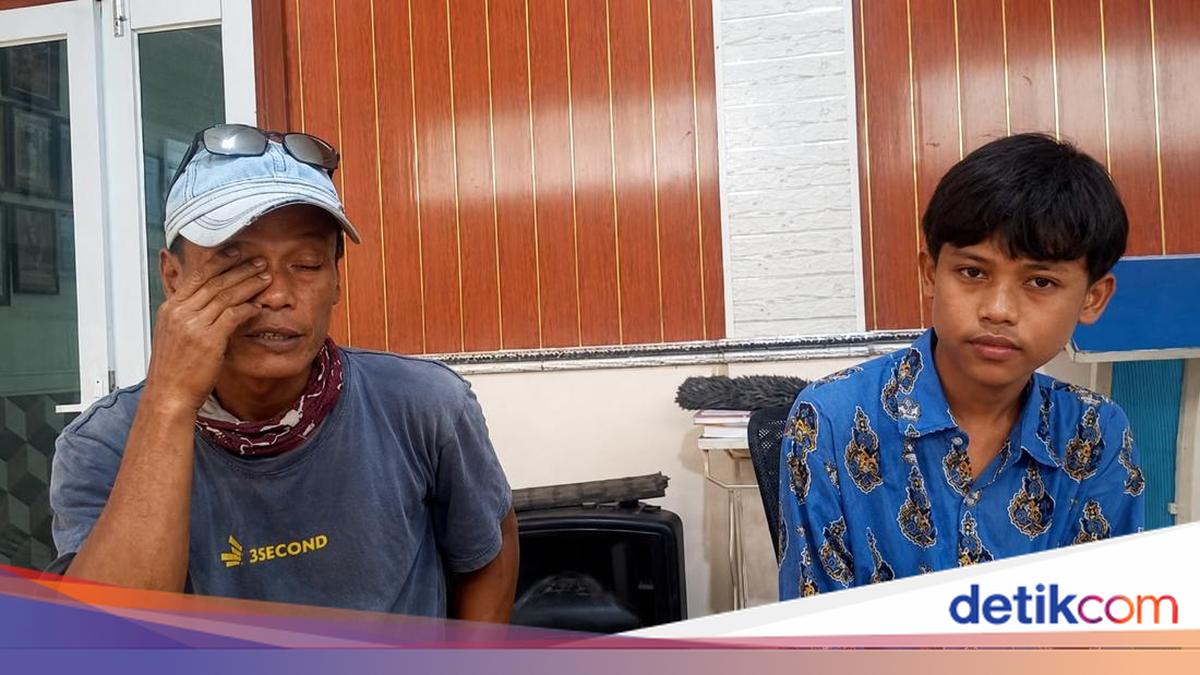
Sarbini (47), a casual labourer, says he is grateful that his son Nabil can continue to the next level of schooling, thanks to the Free School Programme for private senior high schools, vocational schools and Islamic senior high schools initiated by the Governor of Banten, Andra Soni.
Sarbini said that before the programme existed, he was often haunted by school fees whenever a new academic year arrived. As a casual day labourer from Sindang Mandi hamlet, Panyerapan village, Baros subdistrict, Serang Regency, his income was never certain.
“What matters is that my child can go to school,” Sarbini said in a written statement on Wednesday (15 July 2026).
Sometimes he works as a construction labourer, sometimes he gets calls to repair residents’ electrical installations. But he often has to go without work for weeks or even months. That anxiety has now gradually faded after his son, Nabil Ilham Maulana (15), was accepted at SMK Nurul Huda Baros through the Free School Programme of the Banten Provincial Government for the 2026-2027 academic year.
For Sarbini, the programme is not merely about abolishing tuition fee obligations. It represents hope for his family in securing his children’s education. Since the programme was introduced, tens of thousands of students have been able to continue to upper secondary level. In the 2025-2026 academic year alone, the Free School Programme reached 801 private schools with a total of 60,705 verified students taking part.
“Before the Free School Programme existed, I felt the burden. I have three children. The eldest is in vocational school, the second in junior high school, and the third in primary school. With this programme, thank God, I feel relieved and greatly helped. Now I only need to think about stationery needs,” Sarbini said.
He admitted that education costs had been the burden he worried about most, because as a casual labourer he has no fixed income.
“Work is not available every day. Sometimes I work for a week, then I can be idle for up to three months. So the money that used to go towards tuition fees can now be saved for my children’s future education needs,” he said.
His economic circumstances once left Sarbini worried when Nabil decided to continue his education at a private school. On one hand, he wanted to support his son’s ambitions; on the other, he did not know how he would pay the school fees.
“Yes, I worried about it. I was anxious about how I would pay. My work is odd jobs — sometimes as a labourer, sometimes welding. Anything, as long as it is halal,” he explained.
Nevertheless, Sarbini never crushed his son’s ambitions. Nabil had long dreamed of studying at SMK Nurul Huda Baros, a decision taken long before the Free School Programme existed.
“He wanted to study here from the start. I did not force him. I support my son’s choice,” he said.
Nabil is now registered as a Year 10 student in the Electrical Engineering programme at SMK Nurul Huda Baros. Sarbini hopes education will be the path for his son to achieve a better life than he has experienced.
For that reason, he constantly reminds Nabil to study seriously and to avoid social circles that could damage his future.
“I always tell him, earning money is hard. Study properly, don’t get involved in street brawls or bad company. I experienced a misguided youth myself, and I don’t want my son to repeat it,” he said.
Sarbini also expressed his gratitude to Banten Governor Andra Soni and Deputy Governor Achmad Dimyati Natakusumah for the Free School Programme, which has lightened the burden on ordinary people.
“I express many thanks to Pak Andra Soni and Pak Dimyati. If this programme didn’t exist, I would certainly still be worried, because my work is as a casual labourer — sometimes there is work, but more often there is none,” he said.
He hopes the programme can continue so that more families in similar economic circumstances can feel its benefits. He even dreams that one day educational assistance will extend to university level.
“I hope this programme continues. Ideally there would also be support up to university. I want my child to study as high as possible, to have a better life than his parents,” he concluded.