
Banten MTQ 2026 and Strengthening the Quranic Ecosystem
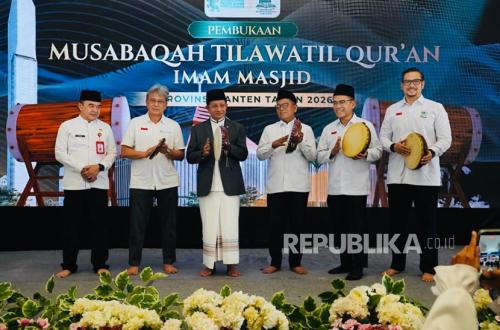
Amidst rapid social change, the tradition of Quranic learning continues to demonstrate strong vitality in Banten Province. Thousands of stakeholders from various regencies and cities are preparing to participate in the 23rd Banten Provincial Musabaqah Tilawatil Qur’an (MTQ), scheduled to take place from 6 to 10 July 2026 at the Banten Provincial Government Centre (KP3B) in Serang. This event consistently captures public attention, serving as a convergence point for religious fervour, regional pride, and the year-round cultivation of a Quranic generation.
MTQ holds a significant position in the life of Bantenese society, a tradition that has grown from deep historical foundations. Since the era of the Banten Sultanate, the region has been recognised as a centre for the spread of Islam in the archipelago. It has produced prominent scholars who have exerted considerable influence on Indonesian and global Islamic scholarship. A vast network of pesantren has developed across the region, forming a space for a scholarly tradition that endures to this day.
This historical legacy remains visible in contemporary Banten. Data from the Ministry of Religious Affairs indicates that Banten is home to approximately 6,776 pesantren, making it one of the provinces with the largest number of such institutions in Indonesia. These thousands of religious educational institutions serve as a social infrastructure supporting Quranic learning, moral education, and the regeneration of ulama across various areas.
Among the figures who best represent Banten’s scholarly authority is Syekh Nawawi al-Bantani (1813–1897), a great scholar from Tanara whose works are referenced in pesantren across Indonesia, Southeast Asia, and the Middle East. The dozens of books he authored in the fields of tafsir, fiqh, Sufism, and theology have earned him widespread recognition within the global Islamic scholarly network. His presence demonstrates that the Islamic tradition in Banten has long developed within an intellectual space that is open, dialogical, and oriented towards the advancement of knowledge.
The intellectual legacy of Syekh Nawawi offers an important lesson: the relationship between the people of Banten and the Quran extends beyond mere recitation, growing instead into a tradition of understanding, teaching, and scholarly development. From this same tradition, numerous pesantren, religious study circles, and Islamic educational institutions have emerged, ensuring the continuity of knowledge transmission across generations. From this perspective, the MTQ can be seen as part of a long chain of scholarly civilisation deeply rooted in Banten’s history.
From a regional development perspective, this social capital is an invaluable asset. Banten’s religious identity is firmly grounded in its pesantren tradition, taklim assemblies, Quranic education, and the close relationship between ulama and the community. The MTQ serves as a space where all these elements converge in a shared moment. The choice of the Banten Provincial Government Centre (KP3B) as the venue carries important symbolic meaning. As the hub of regional policy formulation and execution, hosting the MTQ in this government complex demonstrates that regional development is closely linked to the strengthening of moral values, education, and societal culture.