
Banten Governor Andra Soni Reaffirms Commitment to Preserving the Baduy Environment
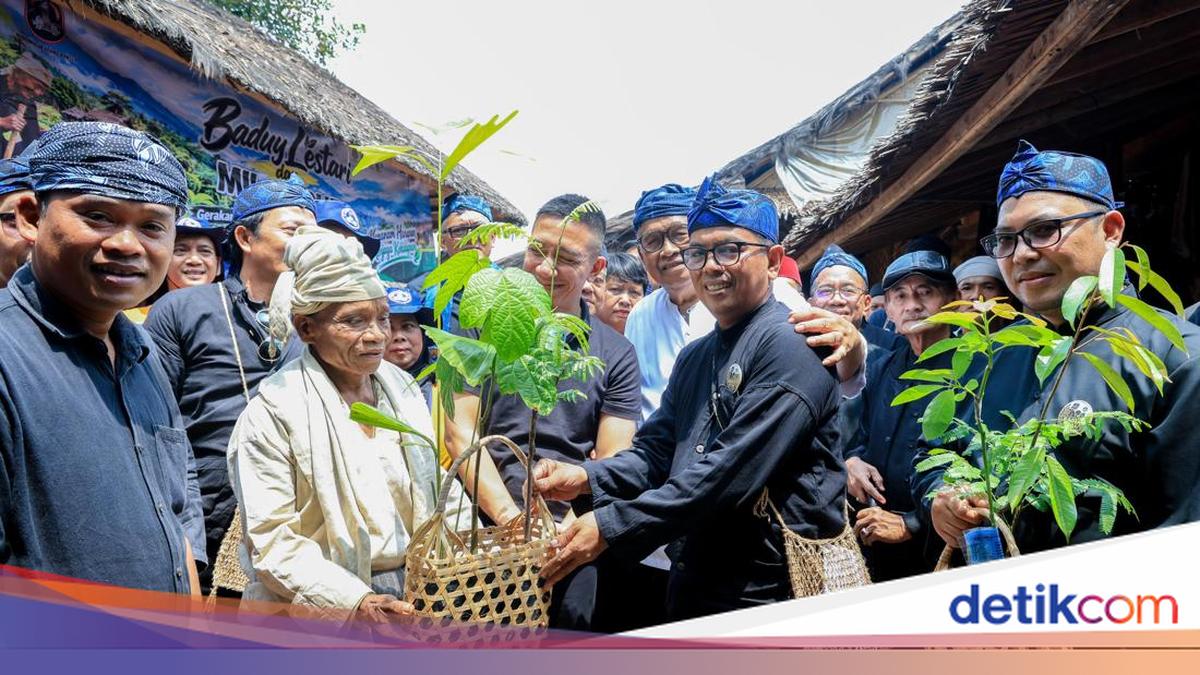
Banten Governor Andra Soni has reaffirmed the provincial government’s commitment to supporting environmental conservation and protecting the Baduy indigenous community. The commitment aligns with efforts to preserve Baduy local wisdom, which has long served as an example of maintaining balance between people and nature.
Andra made the commitment while handing over seedlings as part of a campaign to plant 70,000 trees, held to mark the eighth anniversary of the Perkumpulan Urang Banten (PUB) at Rumah Kajaroan Kanekes in Ciboleger, Lebak Regency.
Andra praised PUB and the various parties that supported the tree-planting campaign.
“Congratulations to Perkumpulan Urang Banten on its eighth anniversary. Thank you for initiating the Baduy Lestari movement, as well as to the Citarum-Ciliwung Watershed Management Centre and everyone who supported the provision and distribution of seedlings,” Andra said in a written statement on Sunday (25 October 2026).
He said that, beyond contributing to environmental conservation, the event held special significance because it took place during the month marking the 26th anniversary of Banten Province. Andra said he hoped PUB would continue contributing to the region’s progress.
“This is a special moment because it coincides with the month marking the 26th anniversary of Banten Province. I hope Perkumpulan Urang Banten will continue to serve as a vehicle for contributing to Banten’s progress,” he said.
Alongside the campaign, Andra said the Banten Provincial Government was committed to continuing its support for environmental conservation and the protection of the Baduy indigenous community.
The effort includes forest and land rehabilitation, stronger environmental monitoring, and economic empowerment for communities in ways that are consistent with customary practices and local wisdom.
The Baduy’s customary rules also reflect their commitment to protecting the environment. Andra said these principles teach the importance of preserving nature and maintaining its balance.
“The Baduy people have long set an example in maintaining the balance between people and nature. Pikukuh, or Baduy customary rules, teach that ‘Gunung teu meunang dilebur, lebak teu meunang diruksak’—mountains must not be destroyed and valleys must not be damaged,” he said.
“There is also the saying, ‘Lojor teu meunang dipotong, pondok teu meunang disambung’—what is long must not be cut, and what is short must not be lengthened,” he added.
He said these customary values remained relevant as a guide to sustainable environmental stewardship. They also serve as a reminder to consider the effects of human actions on future generations.
“These values teach us to accept and care for nature as it is, not to take excessively, and always to think of future generations,” he said.
These principles also underpin the campaign to plant 70,000 seedlings in the Baduy community’s huma, or cultivated fields. Andra said the seedlings had been distributed to 68 villages: three in Baduy Dalam and 65 in Baduy Luar.
Andra said the campaign used a range of tree species to support the environment while providing economic benefits to the community. The selection is intended to help maintain land cover and water sources.
“The species chosen are also very suitable, including agarwood, manglid, durian, albizia, rambutan and sugar palm. These trees not only help maintain land cover and water sources, but also provide economic value for the community,” he said.
Andra stressed the importance of managing the trees’ produce effectively so that the benefits of planting would last. With proper care and management, the trees are expected to generate added economic value for the Baduy community.
“We encourage the produce from this campaign to be managed well, so that in the coming years it can bring economic benefits to the Baduy community,” Andra said.
To ensure the campaign’s sustainability, Andra said three commitments were needed: planted seedlings must be cared for until they mature; all activities in customary territory must respect and uphold Baduy customary rules; and the planting campaign should be expanded to other parts of Banten, particularly upstream areas and disaster-prone zones.
He said the effort was linked not only to environmental conservation but also to protecting indigenous rights. Andra highlighted recognition and protection of the Baduy people’s customary land rights, which have helped preserve forests, water sources and the environmental balance in surrounding areas, including downstream regions.
Andra thanked Baduy customary leaders and residents for protecting nature for hundreds of years, calling their example a valuable legacy for the wider community.
“To the customary leaders and Baduy community, thank you for setting an example in protecting nature for hundreds of years. This is a valuable legacy, not only for the people of Banten but for Indonesia as a whole,” he said.
Meanwhile, PUB chairman-general and retired National Police Commissioner-General Taufiqurrahman Ruki described the Baduy community’s circumstances in 2026. He said the community numbered around 16,000 people across 68 villages, with farming among its sources of livelihood.
“Cultivated land covers 599,000 hectares. There is one planting season a year,” he said.
Ruki urged the government to pay attention to the availability of cultivated land for the Baduy and surrounding communities. Access to farmland, he said, could help people meet their food needs independently.
“This includes the surrounding community. If they have the right to cultivate land, God willing, they can have a source of food,” he said.
Ruki also gave an update on the distribution of seedlings under the campaign. Of the total prepared, 40,000 had been handed over to the community.
“Through eight entry points to Baduy. The planting period follows calculations based on local wisdom,” he said.