
Banten accelerates farmer regeneration by promoting modern agriculture
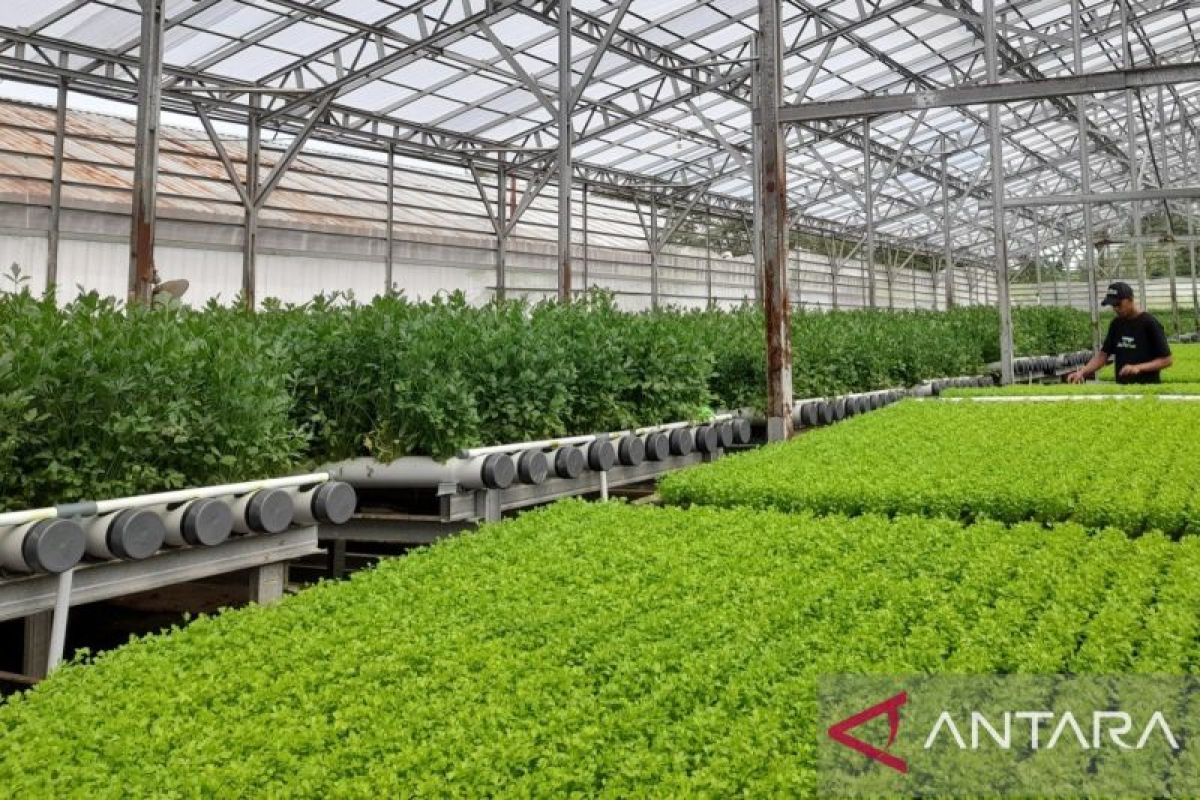
The Banten Provincial Government is increasingly promoting the adoption of modern, technology-based agricultural systems to accelerate farmer regeneration and attract the interest of the younger generation, amid the high dominance of elderly farm workers.
Acting Head of the Banten Provincial Agriculture Office, Nasir, in Serang on Saturday, expressed his concern because the majority of farmers in the region are now in the older age group. This condition is considered a threat to the sustainability of regional food production if not immediately anticipated.
"The average age of farmers in Banten now is probably 90 per cent above fifty years old. We are worried about who will continue the production land to produce our food in the future," Nasir said.
Nasir explained that the low interest of the younger generation in entering the agricultural sector is often triggered by the stigma that the farming profession is synonymous with dirty, heavy, and seemingly unpromising work.
Yet, according to him, the agricultural sector has enormous economic potential if managed professionally and based on technology. Even relatively small plots of land can generate income above the minimum wage if planted with high-value commodities with proper management.
To change this perception and accelerate regeneration, the Banten Agriculture Office has launched a number of initiatives. These steps include the formation of Young Millennial Farmers, the appointment of agriculture ambassadors, and the establishment of a new institution called the Food Brigade.
Through the Food Brigade programme, the management of agricultural areas is handed over entirely to young people, including agricultural graduates.
"We created a new institution in the form of a Food Brigade with management by young graduates. They manage a 150-hectare expanse of land and are fully supported from upstream to downstream, including facilities and agricultural machinery," he said.
The government is also starting to promote smart farming or integrated modern agriculture. Nasir cited the example of a smart screenhouse facility that enables the precise cultivation of high-economic-value plants on limited land.
This system utilises Internet of Things (IoT) technology to control plant needs, from digital fertilisation to environmental temperature regulation.
In addition to domestic infrastructure, the Banten Provincial Government has also dispatched 21 youths to participate in an agricultural internship programme in Japan last April. This programme aims to introduce an international-standard modern agricultural system.
Nasir hopes that the internship participants can replicate and apply the knowledge learned upon their return to the country, so that the regeneration process of Banten’s farmers runs optimally. He stressed that the success of this regeneration must be accompanied by the provision of adequate facilities from the government.
"Once they return here, of course they won’t just be hoeing again. Therefore, they must be facilitated with modern-based tools so that young people do not return to traditional farming patterns which are considered less attractive," Nasir said.