
Bantargebang TPST: World's Second Largest Methane Producer, Jakarta Provincial Government Prepares Three Steps
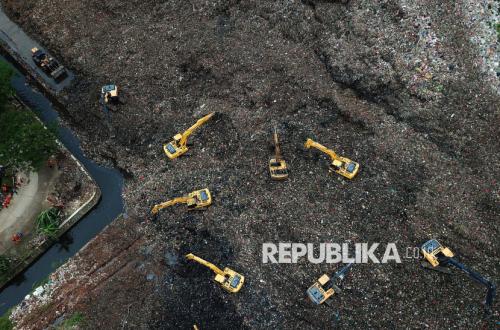
The Jakarta Provincial Government is preparing integrated waste management at the Bantargebang TPST after the area was identified as one of the world’s largest contributors to methane gas emissions. These steps are being taken through the construction of facilities to process waste into energy and fuel to reduce the continuously increasing waste accumulation.
The Integrated Waste Processing Site (TPST) Bantargebang in Bekasi, West Java, was previously recorded as the second-largest contributor to methane gas emissions in the world based on a report from the UCLA School of Law released on 20 April 2026. In the report titled “Spotlight on the Top 25 Methane Plumes in 2025: Landfills”, TPST Bantargebang is said to produce around 6.3 million tonnes of methane gas every hour.
Jakarta Governor Pramono Anung stated that the development of facilities at Bantargebang will encompass three main activities, namely the production of refuse-derived fuel (RDF), processing waste into fuel, and converting waste into electricity.
“Thus, there will be three activities there: for RDF Bantargebang, the second for fuel, and the third for energy,” said Pramono at Jakarta City Hall on Wednesday (6/5/2026).
Pramono explained that the waste accumulation at Bantargebang is currently estimated to reach around 55 million tonnes. According to him, this condition becomes a significant source of methane emissions if not addressed promptly with adequate processing technology.
“If that can be done, it will certainly reduce a lot of the methane that is there, which has been buried for so long, with reserves already at 55 million,” said Pramono.
He emphasised that waste issues must be handled collaboratively and not merely by seeking to blame parties. Therefore, the Jakarta Provincial Government is targeting long-term solutions through the development of modern waste processing facilities.
“I do not want to blame anyone, but this is our responsibility to resolve it,” said Pramono.
In addition to development at Bantargebang, the Jakarta Provincial Government is also targeting the construction of other waste-to-energy power plants (PLTSa) in Jakarta. Meanwhile, the RDF facility in Rorotan is requested to gradually increase production capacity, which currently averages 750 tonnes per day.
Pramono requested that the increase in capacity at RDF Rorotan be accompanied by infrastructure improvements to avoid causing air pollution and health disturbances for nearby residents.
“I ask for the capacity to be increased gradually, but with the infrastructure improved so as not to cause odour impacts or respiratory issues for the residents,” said Pramono.