
Bantargebang TPST Transforms to Controlled Landfill, DKI Government Urged to Educate Citizens on Waste Sorting
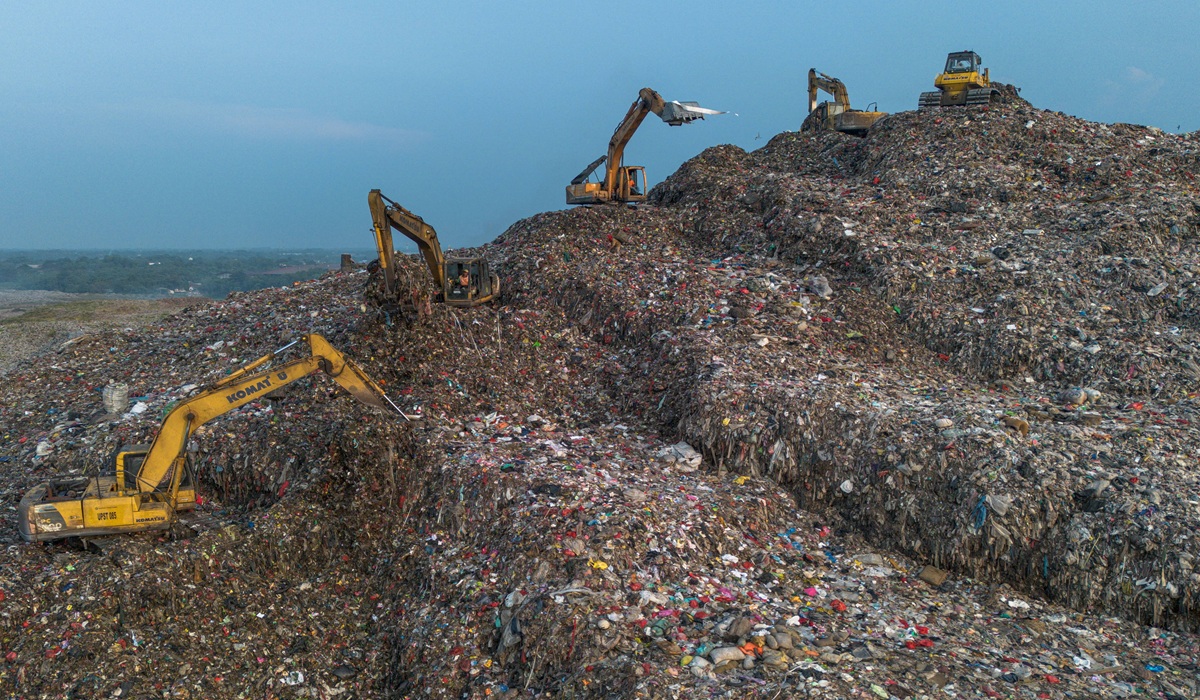
The DKI Jakarta Provincial Government is accelerating a major transformation in waste management at the Bantargebang Integrated Waste Treatment Plant (TPST) in Bekasi. This move is marked by the transition from an open dumping system to a controlled landfill system. This system change carries direct consequences for residents of the capital. Starting 1 August 2026, all Jakarta citizens will be required to sort their waste directly at the source, namely from households. This policy is being implemented in line with the plan to completely shut down the open dumping system, which has long been an environmental burden at Bantargebang.
Josephine Simanjuntak, a member of the DKI Jakarta Regional House of Representatives (DPRD) from the Indonesian Solidarity Party (PSI) faction, provided critical notes regarding this policy. While fully supporting the transition to a controlled landfill, she cautioned that the programme’s success depends heavily on massive education and the availability of facilities on the ground. ‘The implementation of a controlled landfill is a step forward so that waste management is more organised and environmentally friendly. However, the waste problem will not be solved if it is only addressed downstream. Reduction and sorting must start from households,’ she stated on Tuesday.
Based on the results of a recess and regional regulation socialisation on 9-10 July 2026, Josephine found that residents’ enthusiasm for sorting waste is still hindered by a lack of facilities. She highlighted that some neighbourhood units only have a few bins to serve hundreds of residents. DKI Jakarta Environmental Agency Head Dudi Gardesi explained that the controlled landfill system operates by rotating disposal points every seven days. Areas that have been used will be temporarily covered with protective media before a geomembrane is installed. To accelerate this process, the DKI Jakarta Provincial Government is also collaborating with the private sector through Corporate Social Responsibility (CSR) schemes to provide covering materials. Through synergy between infrastructure improvements downstream and behavioural changes upstream, Jakarta is expected to realise more sustainable waste management.