
Banks That Fail to Channel Subsidised Mortgage Loans to ojol and Informal Workers Could Face Sanctions
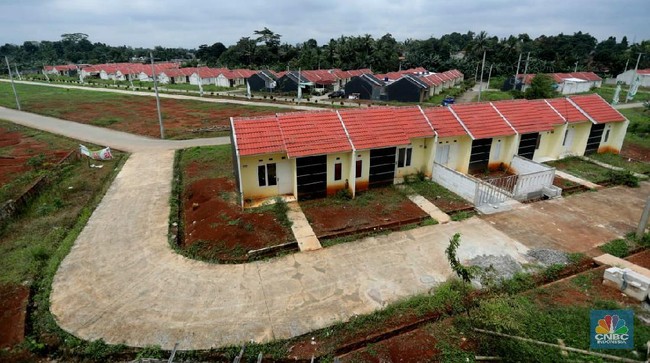
Jakarta, CNBC Indonesia - The Housing Savings Management Agency (BP Tapera) continues to press banks to be more aggressive in distributing subsidised mortgage credit to low-income communities (MBR) from the non-fixed income sector, such as online motorcycle taxi drivers (ojol) and other informal workers. Acting Director for Financing Utilisation and Digital Services BP Tapera, Alfian Arif, said that the backlog trend in housing indeed shows a decline according to Susenas and BPS data. However, housing demand in urban areas remains far higher than in rural areas. “If you say backlog has declined? It has. Based on Susenas and BPS data he says it has declined. BPS data shows 9.6 million. Then housing demand from the urban-rural side indeed the backlog in urban areas is almost three times higher,” Alfian said during the Media Discussion on Housing Financing Innovation for Informal Workers in Kemang, South Jakarta, on Friday (22/5/2026). On the other hand, BP Tapera is starting to change the pattern of FLPP distribution so that it is not only enjoyed by the fixed-salary group such as civil servants (ASN) and the TNI-Polri. Banks are now required to channel a certain portion to non-fixed income groups if they want to obtain additional quotas of subsidised housing loans. The rule has been tightened progressively over recent years. If banks do not meet the targets for non-fixed income segments, then additional FLPP quotas will not be provided. “We are opening the obligation for banks to channel non-fixed income targets from 10%, 12%, today 15%. If the distributing bank does not channel non-fixed income within the one-year period from its total national quota, then that distributing bank will not be given additional quotas,” he said. He gave an example: if a bank has a quota of 1,000 subsidised homes, then at least 150 units must be channelled to informal workers. “Why are we doing this? So that the principle of justice for all citizens of this Republic can utilise FLPP. It is not just about fixed income, not just about TNI-Polri, not just about ASN, but today the state is present to meet housing needs for MBR in the non-fixed income segment,” Alfian said. This assessment becomes part of the bank performance report evaluated quarterly. Data from BP Tapera show that disbursement of FLPP to the non-fixed income segment has continued to rise in recent years. In 2021 its realisation reached 16.3%, then rose to 15.8% in 2024 and 17% in 2025. Meanwhile in 2026, although only into May, it has reached 18.4%. “We continue pushing the non-fixed income target even up to 25% in the future,” Alfian said. According to him, policy pressure on banks is starting to bear fruit. The majority of distributing banks are now actively entering the informal workers segment which previously attracted less attention. “Of 43 distributing banks, 92% distribute non-fixed income above the 15% target. This is quite significant. The pattern of pressuring distributing banks is quite significant,” he said. (dce) Add as a preferred source on Google
Source: jawawa.id (https://jawawa.id/newsitem/banks-that-fail-to-channel-subsidised-mortgage-loans-to-ojol-and-informal-workers-could-face-sanctions-1779541990)
Originally published by CNBC Indonesia (https://www.cnbcindonesia.com/news/20260522153818-4-737135/bank-tak-salurkan-kpr-ke-ojol-pekerja-informal-bisa-kena-sanksi-ini), translated from Indonesian