
Bank Mandiri's Government and SOE Loans Surge 41.6% in Q2-2026
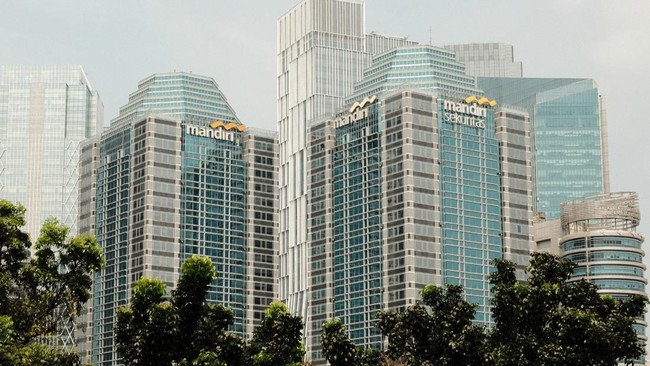
PT Bank Mandiri (Persero) Tbk (BMRI) recorded a significant 41.6% year-on-year (yoy) surge in lending to the government and state-owned enterprise (BUMN) ecosystem during the second quarter of 2026. This segment became one of the main drivers of the bank’s overall credit growth, which reached Rp1,592 trillion, growing 19.9% yoy—nearly double the national banking industry’s average credit growth rate.
Bank Mandiri’s President Director, Riduan, stated that the surge in lending to the government and BUMN ecosystem is inseparable from the bank’s role as a pillar supporting various national strategic programmes. He emphasised that this lending directly impacts the improvement of public services.
‘This lending has a direct impact on and improves public services. We fully support various strategic energy and food security services, including productive financing programmes such as KUR,’ Riduan said during the quarterly performance presentation held online on Thursday (23/7/2026).
Riduan explained that the momentum for lending to the government and BUMN sector is also in line with the government’s increasingly solid fiscal condition in the second quarter of 2026, where both state revenue and expenditure accelerated. This condition, he said, provides greater room for the government to push forward various priority programmes while opening up financing synergy opportunities for national banks.
‘Thus, the government is not only capable but also drives the economy,’ said Riduan, adding that supportive monetary policy is also directed at maintaining macroeconomic stability while ensuring sustainable growth.
In addition to supporting the government and BUMN segment, Bank Mandiri also recorded strong credit growth in two other ecosystems: the business ecosystem supporting the economy, which grew 17.7% yoy, where the bank acts as a strategic partner for major national companies, and the grassroots MSME ecosystem, which grew 15.7% yoy as part of efforts to promote equitable access to financing.
Amid this aggressive credit expansion, Bank Mandiri maintained discipline in risk management. The bank’s Non-Performing Loan (NPL) ratio was recorded at just 0.15%, far below the industry average. On the funding side, Bank Mandiri’s Third-Party Funds (DPK) also grew 17.1% yoy, above the industry growth level, which according to Riduan reflects the persistently high level of customer trust in the bank.
‘This solid performance and fundamentals make us optimistic that Bank Mandiri can deliver a positive, healthy, and significant contribution to strengthening and driving a sustainable national economy,’ concluded Riduan.