
Bank Mandiri Taspen and ITB Develop Circular Economy Model for Pensioners Using Maggot Farming
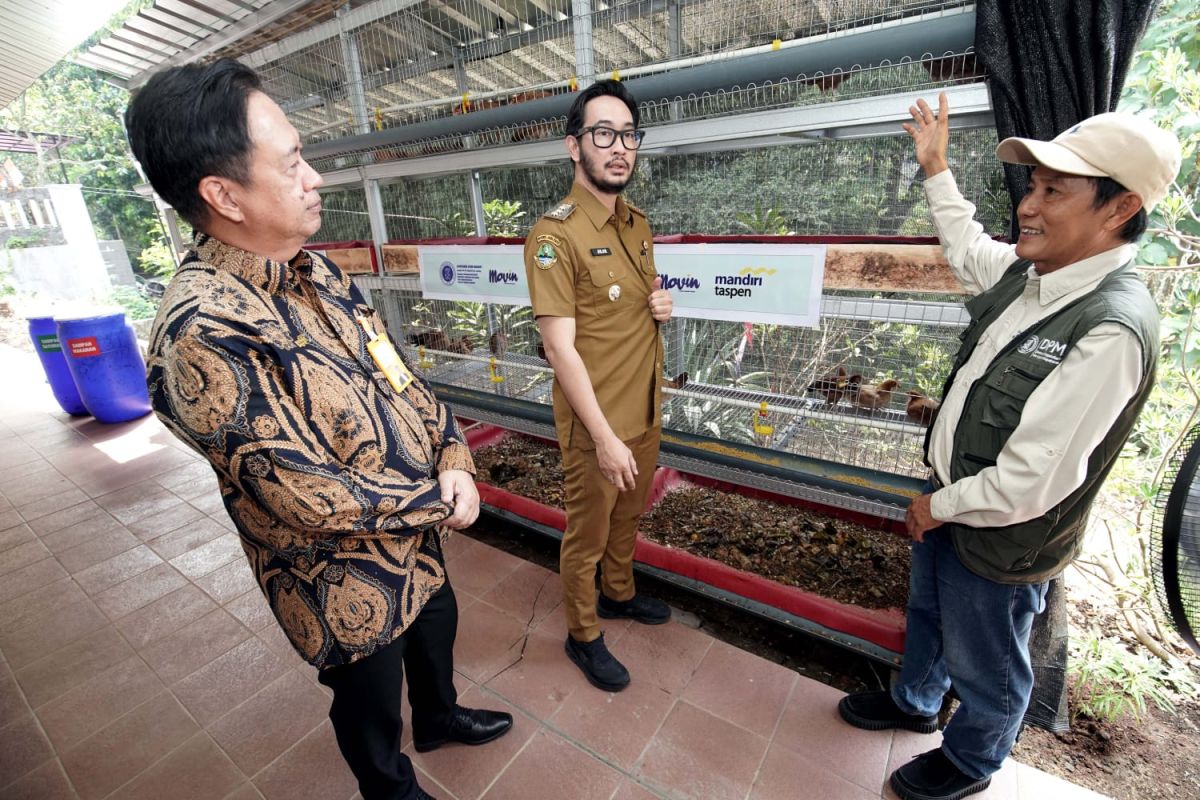
Pensioners can fill their days together with residents so that organic waste becomes a food source for maggots.
PT Bank Mandiri Taspen, together with the Bandung Institute of Technology (ITB), has developed a circular economy model for pensioners through an integrated poultry farming facility and organic waste management using black soldier fly (BSF) maggots in West Bandung, West Java.
The corporate social responsibility programme combines organic waste management, maggot and poultry cultivation, and the economic empowerment of communities and pensioners.
“Pensioners can fill their days together with residents so that organic waste becomes a food source for maggots, and the maggots can be eaten by chickens, and then the chickens lay eggs,” said Bank Mandiri Taspen President Director Panji Irawan in an official statement received in Jakarta on Tuesday.
According to Panji, the facility will be evaluated as a pilot model before being replicated in other regions. Bank Mandiri Taspen also stated that it is ready to provide financing support for pensioners who wish to develop poultry and maggot farming businesses.
“If this is successful, it can be disseminated everywhere. We want to see the model, we want to see the use case. This can become one of the sources of activity for senior citizens,” he said.
Panji noted that around 12 percent of Indonesia’s population are elderly, while the number of pensioners who are Bank Mandiri Taspen customers reaches around 670,000 people across Indonesia.
He said the development of a circular economy requires collaboration from various parties. In the programme, ITB provides technological and innovation support, the community acts as the implementer, while Bank Mandiri Taspen provides support from the banking side.
As an illustration, Panji mentioned that the company has provided financing of around Rp45 million to a pensioner to open a laundry business.
According to him, the financing needs for the poultry and maggot farming facility can be in that range, or even lower.
The initiator of the maggot processing facility from ITB, Linus Ampang Pasasa, said the technology can decompose organic waste in about two days using a simple and conventional method.
According to Linus, one facility unit called a “maggot apartment” costs around Rp45 million and can support the rearing of up to 100 chickens on a 6-square-metre plot of land.
Currently, the number of chickens in one unit is only around 40 because the supply of organic waste is still limited.
“The number of chickens in one unit is currently only around 40 because the available supply of organic waste is still limited,” he said.
Linus said the waste processing capacity can reach around 250 kilograms per day, depending on the number of units and the waste supply.
The facility also opens up opportunities to receive organic waste from hotels, restaurants, and cafes that has not yet been fully processed.
In the system, Linus continued, organic waste is used as a feed source for maggots, and the maggots are then used as chicken feed.
The eggs produced can then be sold to help finance the operations of the managing group or used for the social benefit of the community.
“The eggs can be sold to cover the costs of those who manage it, or distributed for stunting handling through community health centres and so on. It just depends on the management,” said Linus.
Bank Mandiri Taspen Business Director Mahrauza Purnaditya said the company’s social and environmental responsibility programme is increasingly focused on environmental issues, with the development of economic activities as a follow-on benefit.
Mahrauza noted that around 60 percent of waste at final processing sites is organic waste.
According to him, the chicken farming programme that had previously been running is now combined with organic waste management through maggots to form an integrated system.
The egg production can be used to meet the needs of the surrounding community or developed into a business activity.
The programme is also a development of Bank Mandiri Taspen’s efforts to prepare pensioners to remain productive through the Mantap Sejahtera empowerment programme, including Warung Mantap Sejahtera, hydroponics, and laundry.
Mahrauza said waste management through maggots can also encourage changes in community habits in managing waste starting from the household level.
“In its development, in some places there is actually a shortage of organic waste. This is our spirit, why don’t we do it in a number of households,” he said.
The integration of waste management, maggot cultivation, poultry farming, and egg production is expected to support a cleaner environment, productive community activities, and food security at the local level.
“Good collaboration does not only produce a programme, but can create benefits that continue to live on even after the programme has ended,” said Mahrauza.
The programme ceremony was also attended by West Bandung Regent Jeje Ritchie Ismail, ITB Rector Tatacipta Dirgantara, representatives of PT Taspen (Persero) and PT Asabri (Persero), local government, community leaders, and beneficiaries.
Source: jawawa.id (https://jawawa.id/newsitem/bank-mandiri-taspen-and-itb-develop-circular-economy-model-for-pensioners-using-maggot-farming-1787061355)
Originally published by Antara (Indonesian) (https://www.antaranews.com/berita/5700389/bank-mandiri-taspen-itb-kembangkan-ekonomi-sirkular-bagi-pensiunan), translated from Indonesian