
Bank Mandiri: Global Economic Situation is Highly Uncertain
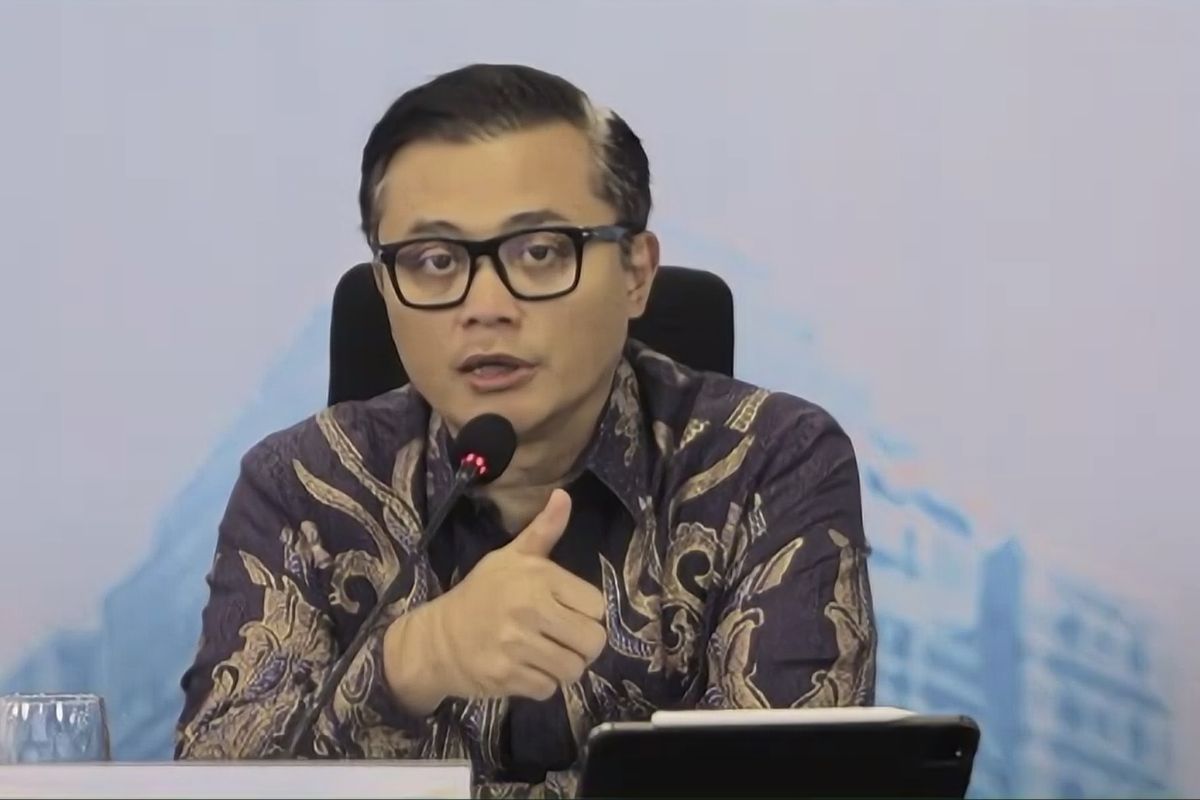
Jakarta (ANTARA) - Bank Mandiri’s Chief Economist Andry Asmoro stated that the global economic situation is highly uncertain.
“Even when we create scenarios at present, we at the internal Bank Mandiri Group feel that the scenario we are making is the most complicated one we have ever produced, because we are facing many challenges and many factors or variables that affect the condition or bottom line of our company or even our economy,” he said during the virtual Macro & Market Brief Q2-2026 Indonesia Economic Outlook in Jakarta on Monday.
Looking at the global economic conditions, the US conflict with Iran has yet to reach a resolution, implying disruptions in the Strait of Hormuz that keep energy supply risks high, with oil prices holding above $100 per barrel. In this context, risk-off sentiment is strengthening the US dollar and pressuring emerging markets (EM) assets.
The International Monetary Fund’s (IMF) outlook has also cut the global economic growth projection to 3.1% from the previous 3.3% in January 2026, in line with increasing geopolitical risks and slowing global trade.
Markets are projecting the Fed Funds Rate (FFR) to remain unchanged throughout the year at 3.75%. The CME FedWatch probability indicates dominance of 350-375 basis points (bps) until year-end.
Meanwhile, inflows to EMs are being held back and could potentially turn into outflows, amid the strengthening US dollar and rising global risk aversion.
His side assesses that risks to watch include disruptions in the Strait of Hormuz and escalation of the US-Iran-Lebanon conflict that could trigger a surge in oil prices, as well as increased fiscal burdens due to rising energy subsidies.
Second, rising energy prices are pushing inflation higher, thereby reducing room for monetary easing by EM central banks, including Bank Indonesia (BI).
Next is risk-off sentiment driving rupiah depreciation, rising yields on Government Securities (SBN), and pressure on the stock exchange. Finally, there is the risk of rising interest rates (market rate), as well as limited export receipts amid high imports.
In this situation, Indonesia has the opportunity to gain windfall from commodity exporters of crude palm oil (CPO), coal, and nickel, which are experiencing price increases, thereby providing positive sentiment for state revenues and the current account balance.
The relocation of global supply chains also opens opportunities for foreign investment into EM countries, including Indonesia as an alternative manufacturing hub.
In addition, strengthened downstreaming policies are increasing export value added with a shift from raw materials to processed products (smelters, cathodes, battery grade).
Global energy transitions are also triggering momentum for investments in electric vehicles, nickel, and renewables, where Indonesia has the potential to become a key player in the global battery and electricity ecosystem.
“Don’t forget that even though there is war, the commitment to global energy transition is still being carried out consistently by the Indonesian government,” Andry Asmoro stated.