
Bank Indonesia’s Mandate Expands, Now Including Job Creation
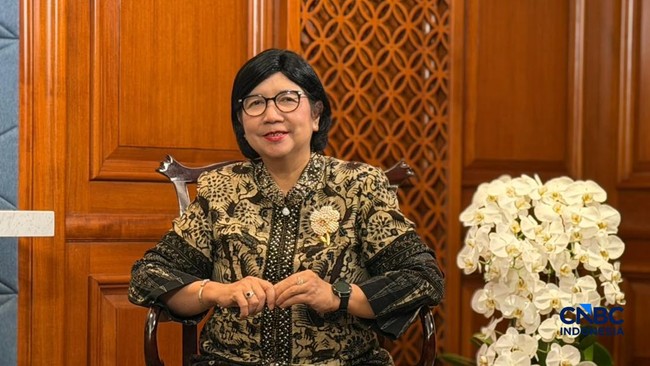
Jakarta – Bank Indonesia (BI) has received a new mandate to create a favourable economic climate that supports growth in the real sector and job creation. The change is set out in Law No. 4 of 2026 on Financial Sector Development and Strengthening (P2SK).
“So the mandate is somewhat broader: we have to create a favourable economic climate and, of course, support growth in the real sector and the creation of jobs,” Destry told CNBC Indonesia, as quoted on Monday (12 October 2026).
Destry said BI could not fulfil the mandate on its own, but would need to work in partnership with various parties, a collaboration she called “Sinergi Merah Putih” (Red and White Synergy).
The collaboration involves BI and other ministries and government agencies, coordination with members of the Financial System Stability Committee (KSSK), as well as other stakeholders.
“All of this can only be achieved if we work together. We need this Red and White Synergy,” Destry stressed.
She said cooperation was necessary because development, progress and stability in Indonesia were a shared responsibility.
Destry said the term “Sinergi Merah Putih” reflects the national spirit and patriotism shared by BI and other stakeholders.
“However small our contribution, it will certainly have a positive impact on our beloved country,” she said.
Alongside collaboration, Destry said BI was pursuing inclusive policies to promote economic growth and job creation. One such innovation is the Quick Response Code Indonesian Standard (QRIS), whose merchants are predominantly micro, small and medium-sized enterprises (MSMEs).
“Our principle for MSMEs is that no one should be left behind. That is why 96% of QRIS merchants are MSMEs. It has to be inclusive,” Destry said.
As a concrete example of collaboration, BI is working with the Ministry of Housing and Settlement Areas on initiatives that can directly create jobs.
Destry said a 118 trillion rupiah incentive scheme for the housing sector could generate hundreds of thousands of direct jobs.
“When I spoke with the Housing Minister, Mr Ara, I asked: for each house you build, how many workers does it employ? He said that even a small house could employ four people. So we can simply multiply that: around 115,600 homes times four workers. Those are direct jobs,” Destry said.
Job creation would extend further because property construction has a broad multiplier effect.
“The impact is very wide. We can immediately see the direct effect: four times around 115,000. We can also calculate the indirect impact in detail, but that will take time,” she said.
“The point is that we want policies to be more than policies for their own sake. They should also have an impact on real-sector growth and job creation,” she added.
Source: jawawa.id (https://jawawa.id/newsitem/bank-indonesias-mandate-expands-now-including-job-creation-1791766244)
Originally published by CNBC Indonesia (https://www.cnbcindonesia.com/market/20261012055748-17-775163/mandat-bi-makin-luas-kini-wajib-dorong-lapangan-kerja), translated from Indonesian