
Bank Indonesia's Difficult Choice: Stabilising the Rupiah Without Sacrificing Economic Growth
Bank Indonesia holds the mandate to maintain the stability of the rupiah exchange rate. This mandate serves as the ‘centre of gravity’ for the policy mix designed and implemented by the central bank.
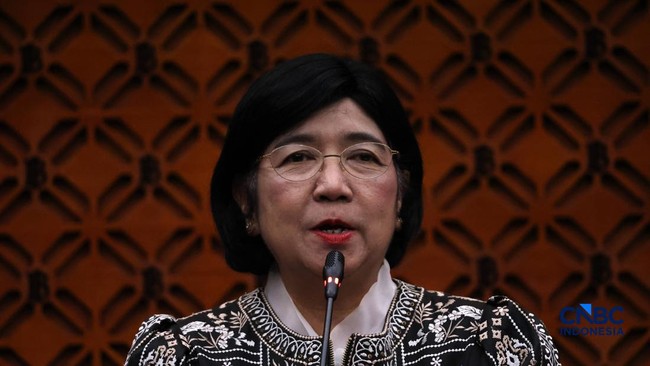
Nevertheless, Bank Indonesia also carries the responsibility, in accordance with the Law on the Development and Strengthening of the Financial Sector (P2SK), to actively encourage economic growth. Consequently, Bank Indonesia’s monetary policy mix is required to maintain stability while remaining pro-growth. Bank Indonesia Governor Destry Damayanti explained that this is not an easy task.
“We are conducting assessments and stress analyses. We are looking at every impact of the BI Rate increase or rupiah movements on economic growth,” Destry stated during a working meeting with Commission XI of the House of Representatives (DPR RI) on Tuesday (28/09/2026).
During the meeting, Destry explained that in maintaining stability, inflation serves as the anchor for Bank Indonesia’s monetary policy, particularly because inflation is a monetary indicator with a direct influence on the economy.
“Our anchor is actually inflation, because in economics, we consider it a highly feared disease. It causes the cost of funds to rise, increases costs, reduces public purchasing power, and leads to a decline in economic growth,” she said.
Theoretically, inflation is controlled by the central bank through interest rates. Destry explained that there are difficult choices in determining interest rate policies, especially when the global economic condition is not ideal.
As is known, the global inflation trend is rising, driven by geopolitical volatility that has stimulated an increase in global crude oil prices. Rising energy prices have spread across various sectors, increasing aggregate goods prices.
This has prompted various central banks worldwide to adopt tighter monetary policies, such as the US Federal Reserve, which raised interest rates by 25 basis points to 3.75%–4.00% in September 2026.
Despite this, Bank Indonesia has chosen a more cautious path regarding interest rate hikes. Beyond the fact that this was anticipated through a 100 basis point BI Rate increase during the May-June period, the trade-off between inflation and economic growth remains a key consideration.
Addressing Commission XI of the DPR RI, the BI Governor stated that based on assessments in August, a 25 basis point interest rate hike could reduce economic growth by 0.1 percentage points, all else being equal.
“If the BI rate rises by 25 basis points or 0.25%, then economic growth will drop by 0.1 percentage points. For example, if economic growth is 5.4%, it would drop to 5.3% according to our assessment last August,” said Destry.
On the other hand, Bank Indonesia observes that the inflation trend in Indonesia remains controllable even as global trends rise, allowing BI to maintain the interest rate at 5.75%.
She explained that core inflation, a vital indicator for assessing demand-side price pressures, remains around the 2% level. Meanwhile, headline inflation was recorded at 3.19%.
According to BI, this increase in inflation is largely influenced by volatile food prices rather than rising domestic demand pressures.
Therefore, BI believes that the policy response cannot rely solely on interest rate instruments. Controlling food inflation requires the involvement of many parties, ranging from the central government and regional governments to other relevant authorities.
As a result, Bank Indonesia is seeking other policy innovations capable of maintaining stability without sacrificing economic growth.
This involves implementing various targeted policy mixes, ranging from incentives to deepening the money market, as well as collaborating closely with relevant authorities within the Financial System Stability Committee (KSSK).
“We must always combine these policies because growth remains our concern, as our mandate has expanded. This is in accordance with the decision agreed upon by the government and the DPR that BI has an additional mandate. Therefore, we are striving to utilise all the policies at our disposal,” she added.
Source: jawawa.id (https://jawawa.id/newsitem/bank-indonesias-difficult-choice-stabilising-the-rupiah-without-sacrificing-economic-growth-1790643111)
Originally published by CNBC Indonesia (https://www.cnbcindonesia.com/news/20260929052752-4-771608/pilihan-sulit-bi-selamatkan-rupiah-tanpa-korbankan-ekonomi-ri), translated from Indonesian