
Bank Indonesia: US$1.6 Billion in Foreign Capital Inflows Help Stabilise Rupiah
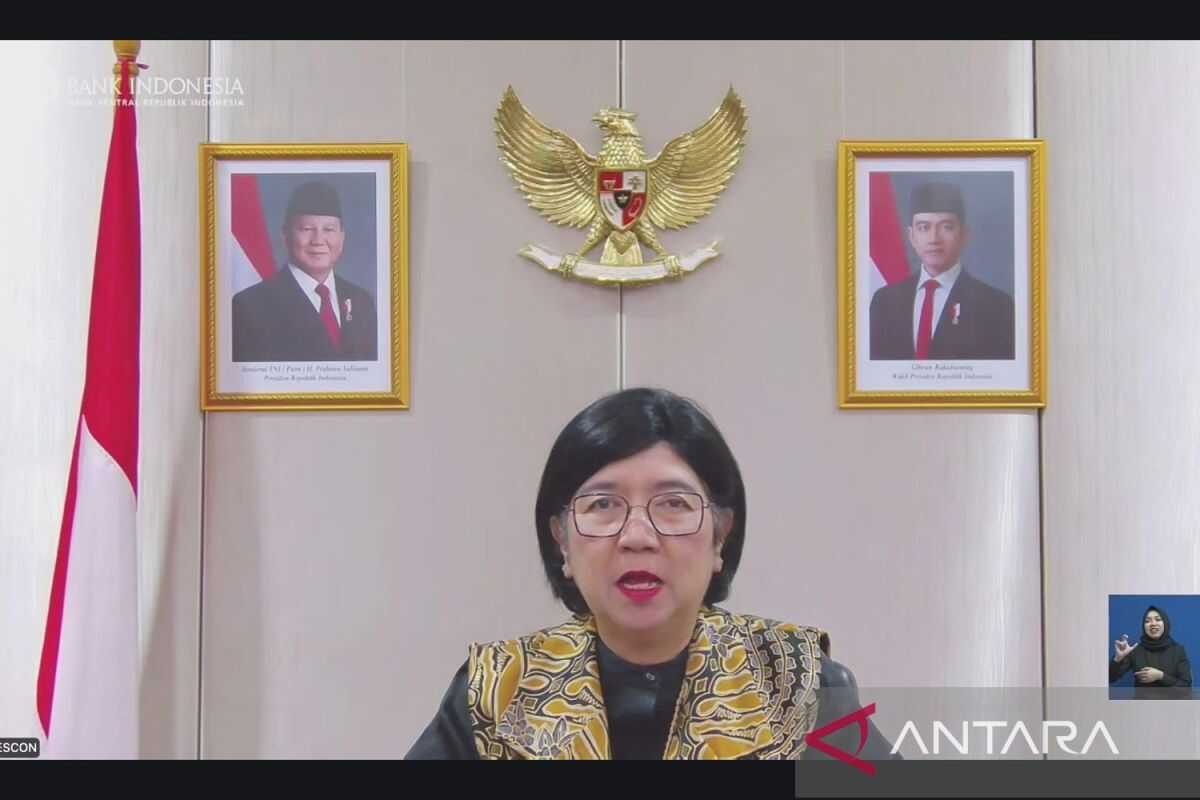
Jakarta (ANTARA) - Bank Indonesia (BI) recorded net foreign portfolio inflows of US$1.6 billion from the start of the year to 13 February 2026, which has helped strengthen the stability of the rupiah exchange rate.
The inflows were primarily supported by substantial foreign capital flows into Bank Indonesia Rupiah Securities (SRBI) and Government Securities (SBN), whilst investment in equities continued to register outflows.
“Based on settlement data as of 18 February, inflows into SRBI reached Rp31 trillion and into SBN approximately Rp530 billion. These inflows continue to increase, so overall year-to-date they have reached approximately US$1.6 billion. This is very helpful indeed for the stability of the rupiah itself,” said BI Senior Deputy Governor Destry Damayanti during an online press conference in Jakarta on Thursday.
Destry added that Indonesia’s central bank is also continuing to deepen the foreign exchange market for the rupiah-Chinese renminbi (RMB) pair to support Indonesia-China trade transactions, particularly in the implementation of local currency transactions (LCT).
She noted that LCT transactions with China continue to grow, with December 2025 alone reaching US$2.7 billion in value. BI continues to encourage the use of local currencies so that transactions are not entirely dependent on the US dollar.
“And if we look at the supply, it is also gradually increasing. But of course we still need continued efforts to increase the supply of CNY and CNH in our foreign exchange market,” Destry said.
BI considers the current rupiah exchange rate to be below its fair value, or undervalued, compared with Indonesia’s economic fundamentals, including consistency with inflation control targets of 2.5 per cent plus or minus 1 percentage point for 2026 and 2027.
“Fundamental factors — namely inflation indicators, economic growth, yields, and other indicators — all suggest that the rupiah should be more stable and tend to strengthen,” said BI Governor Perry Warjiyo.
However, Perry added, pressure on the rupiah is more influenced by technical factors and global risk premia that trigger short-term volatility in financial markets.
In response to these conditions, BI continues to intensify its rupiah exchange rate stabilisation efforts through intervention in the offshore non-delivery forward (NDF) market as well as spot and domestic non-delivery forward (DNDF) transactions in the onshore market.
These measures are also supported by efforts to attract foreign portfolio investment flows through SRBI and SBN transactions, with the primary objective of increasing foreign portfolio investment.
“Over the past two months, foreign portfolio investment has continued to flow in — there have been net inflows and this will support the stability of the rupiah exchange rate, whilst ensuring the adequacy of domestic liquidity as reflected in base money growth that consistently remains in double digits,” Perry said.