
Bank Indonesia Urges Economic Research to Underpin East Java’s Development Policies
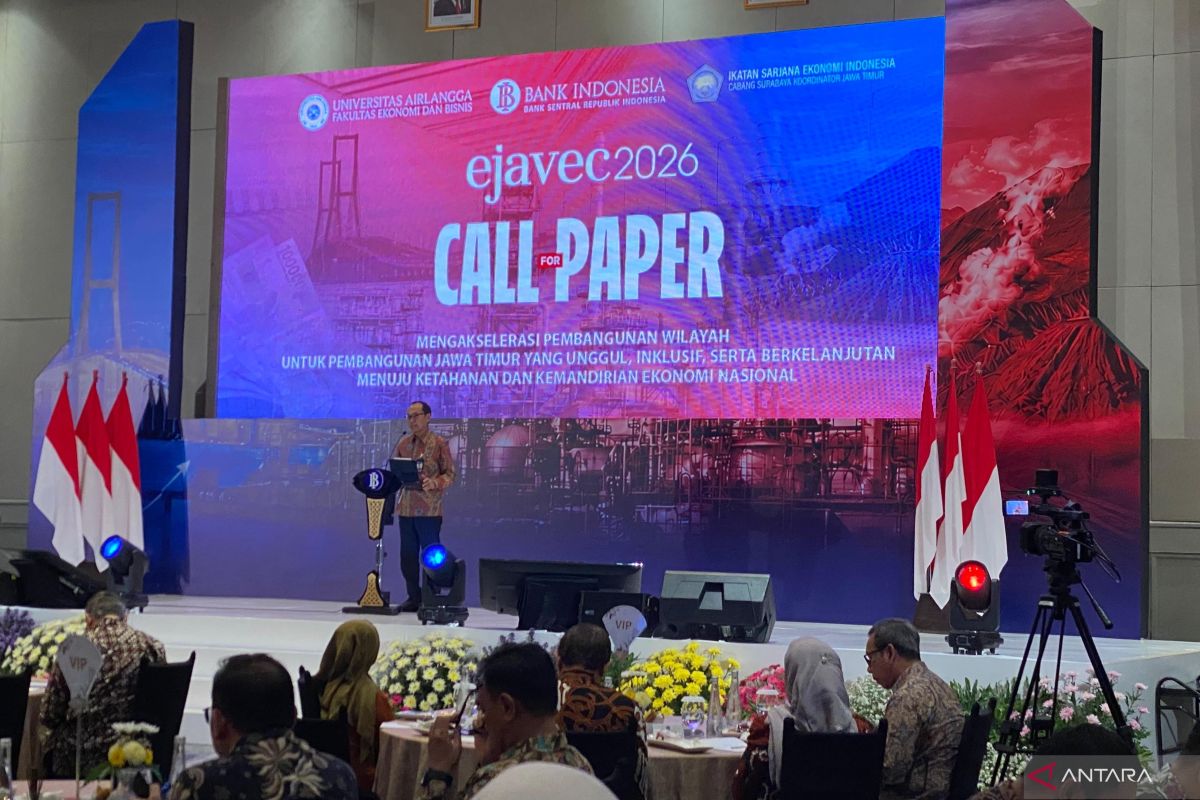
Surabaya, East Java (ANTARA) – Bank Indonesia’s (BI) East Java Representative Office is encouraging the use of economic research as a basis for regional development policy, so that economic growth not only rises but also broadens equality and public welfare.
BI East Java Representative Office Head Ibrahim said development policies should be based on objective, measurable scientific studies so they can address real economic problems while making the most of the region’s potential.
“Understanding conditions and economic problems on the ground is an important asset in formulating policy, but it still needs to be complemented by robust research,” Ibrahim said in Surabaya on Friday.
He said the government was currently focusing on strengthening productivity, boosting competitiveness and developing new sources of economic growth.
To achieve these targets, he said, the government must formulate policies based not only on current conditions but also on research and analysis, enabling them to address both challenges and opportunities.
“Understanding needs to be supported by strong scientific research and analysis so that the recommendations produced are not only relevant, but also objective, measurable and implementable,” he said.
Ibrahim stressed that combining an understanding of current conditions with research in policymaking requires collaboration among the government, academics, research institutions and businesses.
To that end, BI East Java is working with Airlangga University’s Faculty of Economics and Business and the Surabaya branch of the Indonesian Economists Association (ISEI) to receive 559 research papers in 2026, collected through the 13th East Java Economic (EJAVEC) Forum 2026.
The papers cover six strategic issues: industrial competitiveness and downstream processing; food security and price stability; trade and regional connectivity; tourism; the development of micro, small and medium-sized enterprises (MSMEs) and financial inclusion; and workforce readiness and social welfare.
Ibrahim said EJAVEC would strengthen the provision of policy recommendations to local governments, ensuring that research findings do not remain solely academic publications.
The research findings will be applied to strengthen competitiveness, expand economic opportunities and support inclusive and sustainable growth in East Java.
Source: jawawa.id (https://jawawa.id/newsitem/bank-indonesia-urges-economic-research-to-underpin-east-javas-development-policies-1792731224)
Originally published by Antara (Indonesian) (https://www.antaranews.com/berita/5806731/bi-dorong-riset-ekonomi-jadi-dasar-kebijakan-pembangunan-jatim), translated from Indonesian