
Bank Indonesia Urged to Monitor SRBI Impact on Liquidity
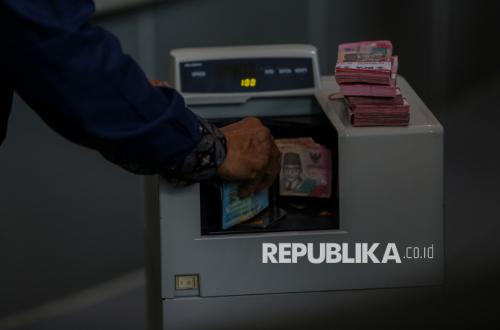
PermataBank Chief Economist Josua Pardede has reminded Bank Indonesia (BI) that it must ensure its Rupiah Securities (SRBI), which currently offer relatively high yields, do not excessively absorb banking liquidity. “Because SRBI yields that are too attractive could force banks to raise deposit rates to retain funds,” Josua said in Jakarta on Saturday (20/6/2026).
BI strengthened SRBI yields across all tenors in line with a 100 basis point (bps) increase in the BI-Rate during May-June 2026. The central bank took this step to attract foreign portfolio investment inflows into domestic financial assets, thereby helping to strengthen the rupiah exchange rate. Based on BI publications, the weighted average yield of SRBI on the secondary market across all tenors tended to increase and was in the range of 7 percent on Friday (12/6/2026).
Josua also believes the central bank needs to refrain from further BI-Rate hikes if the rupiah exchange rate and inflation begin to stabilise, because the transmission of the interest rate increase to the cost of funds and credit has already started. “The OJK and BI need to closely monitor special deposit rates, liquid asset ratios, new credit growth, non-performing loans, and changes in new lending rates. The government also needs to maintain the timing of state cash placements and withdrawals in banks so as not to suddenly add liquidity pressure,” he said.
Josua assessed that the 100 bps BI-Rate hike has the potential to reverse the direction of banking funding costs. However, the increase is likely to occur gradually and not spike sharply for the entire industry. He noted that early signs were already visible from the rupiah third-party funds (DPK) interest rate, which rose from 2.65 percent in April 2026 to 2.70 percent in May 2026. “This increase indicates that competition for fund collection is starting to intensify, especially because sources of cheap funds are limited and credit funding needs remain large,” he said.
Nevertheless, the pressure on funding costs has not yet become a systemic pressure because banking liquidity is still relatively adequate and BI continues to maintain liquidity sufficiency through a policy mix, including repo auctions and strengthening banking liquidity instruments. “In other words, the downward trend in funding costs that occurred after the 125 bps BI-Rate cut in 2025 is indeed at risk of reversing direction in 2026,” he stated.
He estimates that the outlook for deposit rates in the coming months will tend to increase earlier than lending rates. The increase will mainly be seen in time deposits, large corporate funds, and large-value deposits that are more sensitive to interest rate changes. Meanwhile, savings and current accounts are usually slower to rise due to their more transactional nature. “If the BI-Rate remains at 5.75 percent until the end of 2026, deposit rates are likely to rise gradually, not spike. However, if rupiah pressure intensifies again and BI must raise interest rates further, competition for deposit rates will become tighter, especially among small and medium-sized banks and banks with high loan-to-deposit ratios,” Josua explained.
From a stability perspective, Josua noted that the current condition of the banking industry is still strong enough to absorb initial pressures. Banking credit performance in May 2026 grew 11.51 percent year-on-year (yoy), higher than April’s 9.98 percent (yoy). Meanwhile, DPK grew 13.47 percent (yoy) and the liquid assets to DPK ratio (AL/DPK) stood at 24.74 percent. In addition, capitalisation remains strong and aggregate credit risk remains under control. “This means the interest rate hike is not yet a direct threat to bank stability. However, the risk of a delayed impact remains large. If deposit rates continue to rise, funding costs increase, lending rates rise, credit demand slows, and credit quality deteriorates, then banks will face dual pressure between maintaining credit growth and maintaining asset quality,” Josua said.
Source: jawawa.id (https://jawawa.id/newsitem/bank-indonesia-urged-to-monitor-srbi-impact-on-liquidity-1782006642)
Originally published by Republika (https://ekonomi.republika.co.id/berita/tgyjpz490/terbitkan-srbi-bank-indonesia-diminta-waspadai-dampaknya-ke-likuiditas), translated from Indonesian