
Bank Indonesia Unexpectedly Raises Benchmark Rate to 5.50%, Here's Why
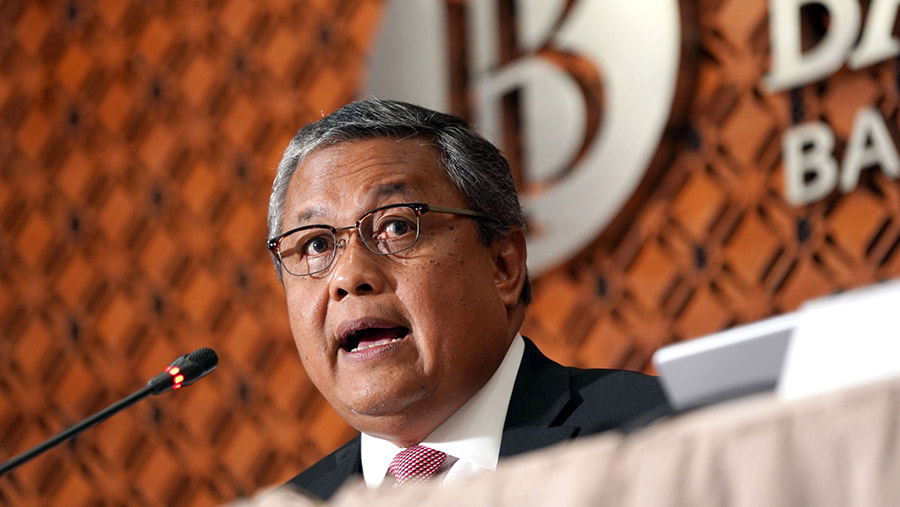
Bank Indonesia (BI) raised its benchmark interest rate, the BI-Rate, by 25 bps to 5.50% today, Tuesday (9/6/2026). The increase was decided during a Weekly Board of Governors’ Meeting to evaluate the implementation of the policy mix set in the Monthly Board of Governors’ Meeting. BI Governor Perry Warjiyo stated that this increase is a follow-up measure to strengthen the stabilisation of the Rupiah exchange rate from the impact of high global turmoil due to the war in the Middle East, as well as a pre-emptive step to keep inflation in 2026 and 2027 within the target range of 2.5±1% set by the Government. “This policy is also aimed at increasing yields to attract foreign portfolio investment inflows into Indonesia,” he said. In accordance with prevailing law and practice, Perry said Bank Indonesia holds a Weekly Board of Governors’ Meeting every Tuesday to evaluate the implementation of the policy mix set in the Monthly Board of Governors’ Meeting. In the evaluation since the Monthly Board of Governors’ Meeting on 19-20 May 2026, the Rupiah exchange rate showed weaker-than-expected developments. Besides being caused by ongoing global turmoil and high domestic demand for foreign currency, the weakening was also driven by foreign portfolio investment outflows from Indonesia. In this regard, Perry emphasised that BI deems it necessary to take further steps to strengthen the stabilisation of the Rupiah exchange rate by again increasing yields and a number of other incentives to encourage foreign investment inflows. “The stabilisation of the Rupiah exchange rate is also pursued so that Indonesia’s external economic resilience is maintained and the inflation targets for 2026 and 2027 remain achievable,” said Perry. In addition to raising the BI-Rate to 5.50%, Bank Indonesia is also taking measures to strengthen the stabilisation of the Rupiah exchange rate by increasing yields and a number of other incentives in monetary operations for foreign investment inflows, as follows: An increase in the interest rate structure of Bank Indonesia Rupiah Securities (SRBI) across all 6, 9, and 12-month tenors to further increase yields for foreign portfolio investment inflows. The SRBI interest rate structure increase is carried out according to market mechanisms and to ensure portfolio investment in Indonesia remains competitive with other countries. Provision of incentives in the form of a 10% reduction in the hedging swap rate for foreign investors to further increase the attractiveness for foreign investor inflows and compensate for obligations borne by investors thus far. As is known, Bank Indonesia has been providing swap hedging facilities for foreign investment inflows through banks in Indonesia which then pass them on to Bank Indonesia. Meanwhile, the determination of the regular swap rate continues to be provided by Bank Indonesia according to applicable market mechanisms. The reopening of the auction window for repurchase agreement (repo) instruments for 3, 6, 9, and 12-month tenors for banks to ensure sufficient liquidity in the money market and banking sector, with the target that Primary Money (M0) growth remains in double digits (above 10%). The expansion of this repo facility will become the main instrument in monetary liquidity management compared to other mechanisms, including the purchase of Government Securities (SBN) from the secondary market that has been pursued by Bank Indonesia. Increased intensity of monetary operations, both Rupiah and foreign exchange, to strengthen Rupiah exchange rate stabilisation. The strengthening of Rupiah monetary operations is pursued by opening SRBI auctions twice a week. Meanwhile, the strengthening of foreign exchange monetary operations continues to be carried out by increasing the intensity of intervention through both spot and Domestic Non-Deliverable Forward (DNDF) transactions in the domestic market and NDF transactions in overseas markets.