
Bank Indonesia: The Agricultural Sector Plays a Strategic Role as the Backbone of the Economy
Jakarta (ANTARA) - Bank Indonesia states that the agricultural sector plays a strategic role as the backbone of national economic resilience, referring to the results of the Business Activity Survey (SKDU) released by the state institution.
Director of the Bank Indonesia Communication Department, Anton Pitono, said that in the first quarter of 2026, business activity remained in the positive zone with a Weighted Net Balance (SBT) of 10.11 per cent, slightly down from 10.61 per cent in the fourth quarter of 2025.
“The SKDU results indicate that business activity performance in the first quarter of 2026 is maintained,” said Anton in an official statement received in Jakarta on Saturday.
He said that the majority of business fields recorded positive performance, particularly the financial services sector, agriculture, forestry and fisheries, processing industry, as well as wholesale and retail trade.
The maintenance of business activity, he said, was driven by increased public demand during the period of national religious holidays, such as Chinese New Year, Nyepi Holy Day, Ramadan to Eid al-Fitr 1447 Hijriah, which coincided with the harvest season.
From an operational perspective, the utilised production capacity in the first quarter of 2026 was recorded at 73.33 per cent, an increase from 73.15 per cent in the previous quarter. This increase was mainly supported by the agriculture, forestry and fisheries sector as well as the processing industry.
The financial condition of businesses is also assessed to remain good, both in terms of liquidity and profitability, and supported by relatively easier access to financing.
Entering the second quarter of 2026, businesses are expected to experience improved performance. Bank Indonesia projects the SBT to reach 14.80 per cent, driven by the agricultural sector, in line with the continuation of the harvest season for food commodities and plantation crops.
“Respondents predict that business activity in the second quarter of 2026 will increase with an SBT of 14.80 per cent,” said Anton.
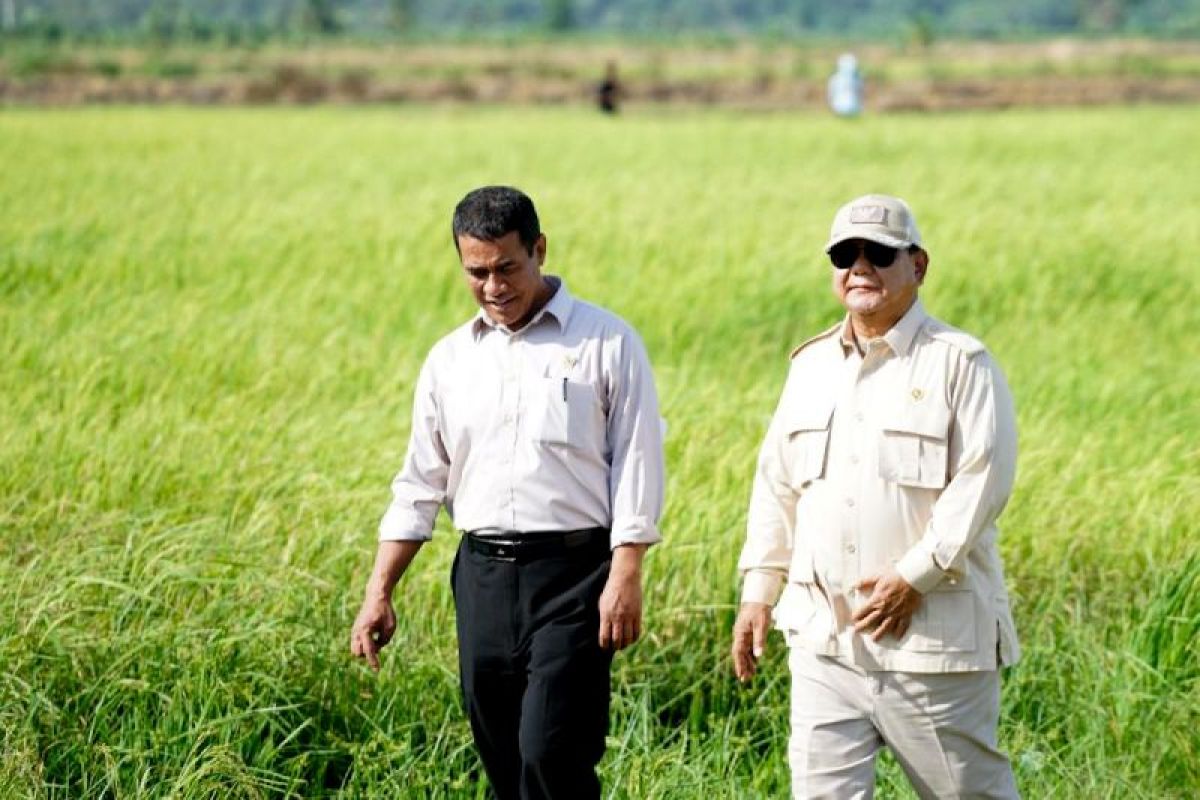
“Agriculture today is not just a buffer, but the main driver of the national economy. When other sectors face pressure, agriculture emerges as a solution and the main pillar,” said the Minister of Agriculture in a statement confirmed in Jakarta on Saturday.
He added that strengthening the agricultural sector is inseparable from various strategic steps that have been implemented by the government, starting from accelerating planting, optimising land, pump irrigation, as well as improving irrigation and fertiliser distribution.
“This is structured and sustainable work. We ensure production increases, farmers are protected, and food remains available. The results are now starting to show and are recognised by various parties,” said the Minister.
Furthermore, he said that based on the export value of the agricultural sector (fresh and processed) in 2025, there was an increase of Rp166.71 trillion or growth of 28.26 per cent, while imports fell by Rp41.68 trillion or a correction of 9.66 per cent.
This performance shows that Indonesia’s agricultural sector is becoming increasingly competitive in the global market while reducing dependence on foreign products.
“This is not the work of one programme, but a grand orchestration. Our production is up, exports are sharply increasing, we are suppressing imports. This means our agricultural foundation is getting stronger and more independent,” said Amran.
Production of major commodities, such as rice and corn, has increased, and the government’s rice reserves (CBP) are in a very safe condition. The moving CBP, which reached 5 million tonnes, indicates a positive trend in export performance, along with increasingly effective import control.
“Our reserves are at the highest level in history. This is not just about numbers, but about security for the Indonesian people, 4.8 million tonnes at the end of April, 5 million tonnes, this is already visible. We ensure sufficient stock, stable prices, and farmers remain profitable,” emphasised Amran.
Positive performance is also evident from the perspective of farmer welfare. The Farmer Exchange Rate (NTP) reached 125.35, the highest in the last 34 years, indicating a significant increase in farmers’ purchasing power and income.
Meanwhile, the agricultural sector also recorded impressive economic growth. The Gross Domestic Product (GDP) of the agricultural sector in 2025 grew by 5.74 per cent, the highest in the last 25 years, making this sector one of the main pillars of national economic growth.
The Ministry of Agriculture is optimistic that the agricultural sector will continue to be the engine of the national economy as well as the forefront in maintaining food security.
“If agriculture is strong, the national economy will definitely be strong. This is what we continue to maintain and accelerate,” concluded the Minister.
Source: jawawa.id (https://jawawa.id/newsitem/bank-indonesia-the-agricultural-sector-plays-a-strategic-role-as-the-backbone-of-the-economy-1776498644)
Originally published by Antara (Indonesian) (https://www.antaranews.com/berita/5532157/bank-indonesia-sektor-pertanian-berperan-jadi-tulang-punggung-ekonomi), translated from Indonesian