
Bank Indonesia Seen Needing to Raise Interest Rates to Stabilise the Rupiah
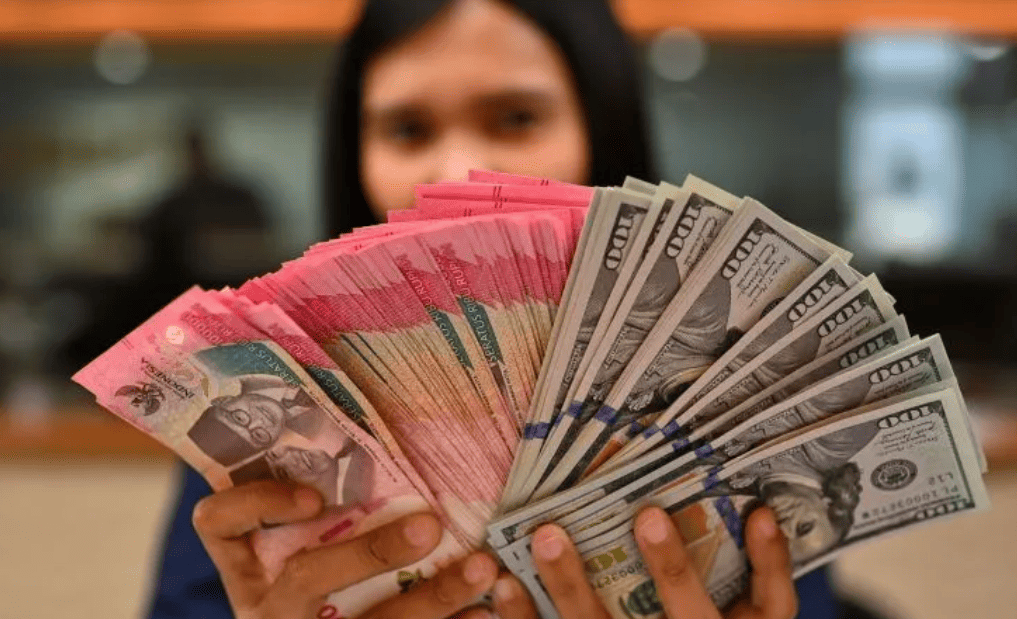
Bank Indonesia (BI) is seen as needing to take firmer monetary policy steps by raising the policy rate to curb pressures on the rupiah as it continues to weaken. The move is viewed as crucial to maintaining macroeconomic stability amid global market volatility.
The macroeconomics and financial markets economist Teuku Riefky of the University of Indonesia’s LPEM UI said that the rupiah’s weakness reflects substantial external pressures facing Indonesia, particularly the strength of the US dollar. While domestic inflation remains reasonably controlled, the depreciation could trigger imported inflation through higher costs of imported inputs, foodstuffs, and energy.
‘Specifically, Bank Indonesia should raise the policy rate by 25 basis points to 5.00% in the upcoming Board of Governors’ Meeting (RDG),’ Riefky said in a statement received by Media Indonesia on Tuesday (19/5).
Riefky argued that a rate hike is needed to strengthen the appeal of domestic assets and to preserve foreign capital inflows. Although the policy could slow credit growth — which was 8.93% year-on-year in March 2026 — the move would be worthwhile to preclude the adverse effects of protracted rupiah weakness on macroeconomic stability.
On the other hand, headline inflation in Indonesia showed a cooling trend to 2.42% year-on-year in April 2026, down from 3.48% in the previous month. The figure remains within BI’s target range of 1.5%–3.5%. However, the central bank has deployed more than US$10 billion of foreign exchange reserves over the last four months to intervene in the market.
In contrast to LPEM UI’s projection, Mirae Asset’s Head of Research and Chief Economist, Rully Arya Wisnubroto, assessed that the rupiah’s pressure at around Rp17,700 per US dollar has not been strong enough to force BI to raise rates.
Mirae Asset predicts BI will hold the BI Rate at 4.75% through a hawkish-hold approach. ‘We expect BI to hold at 4.75% while continuing to intervene aggressively in the foreign exchange market and maintain liquidity,’ said Rully.
According to Rully, the effectiveness of a rate rise at present is limited because rupiah pressures are driven more by seasonal factors, such as dividend repatriation and demand for foreign currency for the Haj season, which is expected to ease in July–August. He emphasised that non-rate measures such as SRBI, DNDF, and foreign exchange reserve interventions will be the key to stabilising the market in the short term.
With global dynamics still beset by uncertainty, particularly regarding the path of policy at the Fed and geopolitical tensions, the upcoming RDG decision at Bank Indonesia will be a crucial signal for market participants in determining the direction of investments in domestic financial markets.
Rupiah pierced Rp17,600 per US dollar. An expert from Universitas Airlangga said BI interventions are not enough; a synergy of fiscal policy and the real sector is needed for fundamental stability.
He noted that in such a situation, the central bank not only plays a role in combating inflation but also in maintaining confidence in policy direction overall.
He explained that interventions are not only conducted in the domestic market but also abroad. The move has affected foreign exchange reserves by around US$10 billion.
Bank Indonesia noted a decrease in the counterfeit money detection ratio from 5 ppm in 2023 to 1 ppm in April 2026 thanks to strengthened security features.
Bank Indonesia, together with the Police (Polri), destroyed 466,535 counterfeit banknotes to safeguard the rupiah’s sovereignty and public trust.
Source: jawawa.id (https://jawawa.id/newsitem/bank-indonesia-seen-needing-to-raise-interest-rates-to-stabilise-the-rupiah-1779546327)
Originally published by Media Indonesia (https://mediaindonesia.com/ekonomi/891604/bank-indonesia-dinilai-perlu-naikkan-suku-bunga-demi-stabilkan-rupiah), translated from Indonesian