
Bank Indonesia Reveals that the US$25,000 Purchase Restriction Is Not Permanent
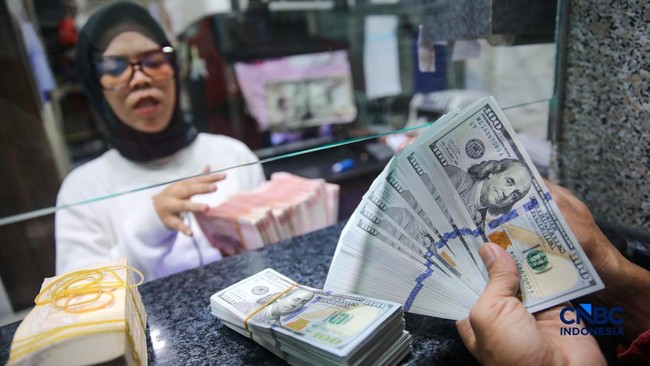
Bank Indonesia reveals that the US$25,000 purchase restriction is not permanent. Jakarta, CNBC Indonesia - Amid global financial market volatility that pressures the rupiah exchange rate, Bank Indonesia continues to dynamically adjust policy. One main instrument currently tightened is the obligation to submit supporting documents or underlying transactions for cash or spot foreign exchange purchases. This policy was introduced solely to dampen market panic that often leads to speculative buying, while encouraging deeper domestic financial markets toward hedging instruments (derivatives). Director of the Financial Market Development Department at Bank Indonesia, Ruth, in a question-and-answer session with the media, explained that tightening the underlying is essentially an authority effort to ensure that every dollar purchase in the cash market has a real need basis. She likened the spike in FX purchases when the rupiah is under pressure to panic buying in the society. ‘People panic; much like during Covid-19, what is bought first is rice and oil. The same goes for foreign exchange; if there are mothers with children studying abroad or companies with import obligations, when the rupiah weakens, they will rush to buy dollars earlier than their needs,’ Ruth said. The surge in demand driven by psychological sentiment makes the exchange rate reflect fundamentals less accurately, hence BI intervenes to neutralise the situation. Although supervision rules are tightened, monetary authorities signal clearly that the underlying obligation is not a policy that will apply forever. Regarding when the requirement might be dropped, Ruth stressed that it depends heavily on market maturity and financial literacy of the economic players. According to her, when literacy in derivative instruments among the public is high and they no longer react to market fluctuations with irrational cash speculation, the restrictions can gradually be lifted. ‘If we can convince that there is no more speculation, and we believe all transactions are based on correct calculations and reflect fair pricing, at that time we may not need the underlying anymore. Because we do not want our exchange rate to reflect something unreal,’ she stated. To illustrate the effectiveness of this policy tightening, the following are details of daily FX market transactions before and after the threshold adjustment: Based on the above data, it is evident that this can significantly increase the pressure to buy USD; if applied over a 20 working day period, it could achieve efficiency of more than US$1 billion per month. From that journey, the underlying instrument is a highly dynamic control tool. In 2015 during the taper tantrum, BI also pressed this transaction limit to US$25,000, before eventually relaxing it back to US$100,000 in 2022 when the market gradually stabilised. Therefore, the plan to cut the cash FX purchase limit to US$25,000 to be implemented in June 2026 is a measured step to curb expectations of Rupiah weakness. Together with tightening in the cash market, BI continues to open wide space for businesses to use hedging instruments such as swaps and forwards, with transaction limits eased up to US$10 million. Through a combination of cash market discipline and easier access to hedging instruments, Bank Indonesia is confident that the domestic financial market structure will become more resilient, efficient, and ready to face various economic challenges in the future without relying on rigid restrictions.