
Bank Indonesia Reveals Key to Elevating Indonesia's Islamic Economy
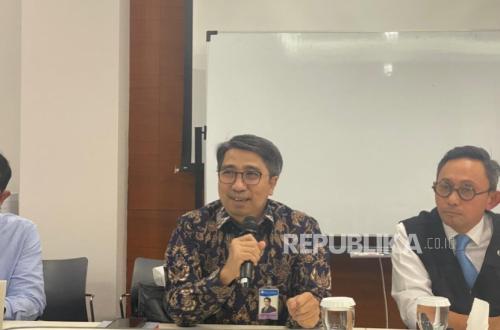
Bank Indonesia (BI) Deputy Governor Solikin M Juhro stated that the Islamic economy must be developed as a holistic concept, involving broader participation and possessing resilience in facing various challenges. Solikin noted that strengthening the Islamic economic ecosystem is essential for building economic independence.
“Therefore, we can indeed stand firmly to support the welfare of the Indonesian people,” said Solikin during a national seminar titled “Building an Inclusive and Sustainable Future for the Islamic Economy” in Jakarta on Monday (5/10/2026).
Solikin mentioned that Indonesia possesses strong fundamental capital to develop its Islamic economy. According to the State of the Global Islamic Economy Report (SGIE), Indonesia ranks among the top five globally, with several sectors, such as tourism and halal food, demonstrating strong competitiveness.
“Domestically, the halal value chain has recorded high growth, reaching 6.2 per cent, with a contribution to the Gross Domestic Product (GDP) of approximately 27 per cent,” Solikin continued.
However, Solikin warned that this vast potential does not automatically translate into significant economic power. He identified the main challenge as directing and converting this potential into an economic force capable of elevating Indonesia’s global standing.
“However, the more important question is, have we truly transformed that great potential into great economic power?” Solikin asked.
Solikin assessed that the large Muslim population and a demographic structure with a young population represent potential capital for economic growth. He noted the need for integration with evolving societal values and technological advancements.
“Productivity must serve as the anchor for strengthening the ecosystem,” Solikin said.
According to Solikin, strengthening productivity is inseparable from the ability to drive innovation. However, innovation—particularly structural innovation—requires significant costs and carries high risks, as success is not guaranteed.
In such conditions, Solikin believes that Islamic economics and finance have a role to play. The principles of Maqasid Shariah can serve as a foundation to support innovation activities that ultimately drive economic productivity.
In addition to productivity and innovation, Solikin highlighted the importance of building inclusive welfare. He stated that increasing the welfare of one group should not be done at the expense of others.
“Welfare must be non-Pareto because we are speaking within Islamic principles; no party should be left behind,” said Solikin.
Solikin stated that this principle is realised through the role of Islamic social economics, including zakat, waqf, infaq, and sadaqah. For him, these instruments can fill gaps within the economic system to ensure that prosperity can grow collectively without leaving any group behind.
Source: jawawa.id (https://jawawa.id/newsitem/bank-indonesia-reveals-key-to-elevating-indonesias-islamic-economy-1791205064)
Originally published by Republika (https://sharia.republika.co.id/berita/tmfobt349/bi-ungkap-kunci-bawa-ekonomi-syariah-indonesia-naik-kelas), translated from Indonesian