
Bank Indonesia Records 7.74 Per Cent Rupiah Depreciation from January to September 2026
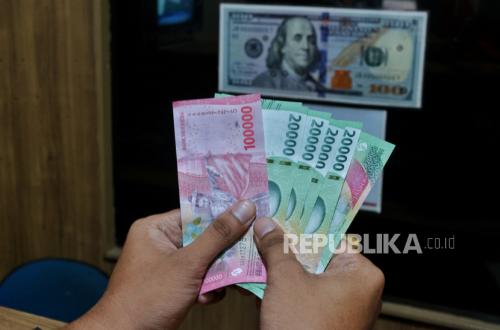
Bank Indonesia (BI) has recorded a weakening of the rupiah exchange rate of more than 7 per cent throughout the year up to the end of September 2026. BI has ensured that it will continue to undertake intervention efforts to create rupiah stability.
“Regarding the weakening of the exchange rate, we are moving in tandem with our peers. Year-to-date, as of 29 September, we are in a position of 7.74 per cent depreciation compared to our position at the end of last year,” said Erwin G. Hutapea, Executive Director and Head of the Monetary and Securities Management Department at BI, during a Media Briefing at the BI Complex, Jakarta, on Wednesday (30/9/2026).
The deepest currency depreciation occurred in the Turkish Lira at 14.08 per cent (ytd). Meanwhile, the depreciation of other countries’ currencies remains smaller than Indonesia’s. The Russian Ruble weakened by 7.54 per cent (ytd), the Indian Rupee depreciated by 6.88 per cent (ytd), the Thai Baht corrected by 6.70 per cent (ytd), and the Philippine Peso weakened by 6.32 per cent (ytd).
“In terms of volatility, we are actually better off compared to our peers. Our volatility is 7.3 per cent (ytd), whereas some countries like Korea are at 15.6 per cent (ytd), the Philippines at 8.7 per cent (ytd), and even Malaysia’s volatility is at 8.59 per cent (ytd),” he continued.
Erwin explained that exchange rate movements are inseparable from economic structures or fundamentals, particularly regarding current account conditions. BI data shows that Indonesia’s Balance of Payments (BOP) performance in the second quarter of 202<0xC2>6 recorded a deficit of US$0.9 billion, significantly smaller than the deficit in the first quarter of 2026, which was US$9.1 billion.
The current account recorded a higher deficit, driven by an increase in the oil and gas trade balance deficit and a decrease in the non-oil and gas trade balance surplus. Meanwhile, capital and financial transactions recorded a surplus, supported by increased inflows of direct investment and portfolio investment.
“There is one piece of evidence that, fundamentally and theoretically, cannot be argued. When a country’s current account is in deficit, it means the demand for foreign exchange is greater than its production; therefore, the exchange rate movement will follow that situation. Thus, our task is to maintain stability,” he explained.
As an effort to reverse the current account deficit condition, BI is confirmed to continue coordinating with relevant authorities or Ministries/Agencies (K/L) to implement improvements.
“Of course, Bank Indonesia is also trying to balance this by encouraging foreign capital inflows into the capital account as a counterbalance, so that the balance of supply and demand for foreign exchange can be maintained through the policies we implement,” he said.
Erwin emphasised that BI remains committed to maintaining the stability of the rupiah exchange rate to provide certainty to all economic actors in making their economic decisions.
Source: jawawa.id (https://jawawa.id/newsitem/bank-indonesia-records-7-74-per-cent-rupiah-depreciation-from-january-to-september-2026-1790758735)
Originally published by Republika (https://ekonomi.republika.co.id/berita/tm63g8423/bi-catat-rupiah-terdepresiasi-774-persen-dari-januariseptember-2026), translated from Indonesian