
Bank Indonesia Raises Benchmark Rate to 5.75%
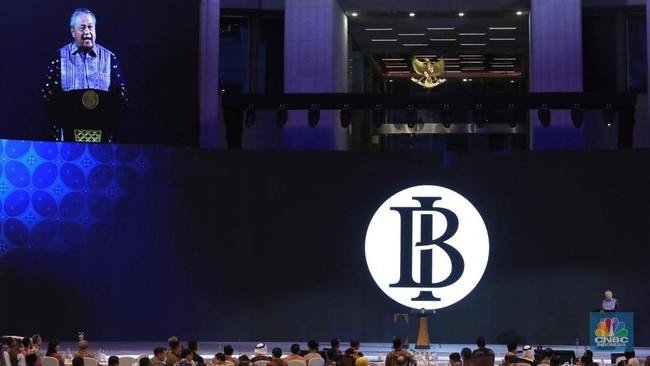
Jakarta, CNBC Indonesia - The Bank Indonesia (BI) Board of Governors decided to raise the benchmark BI Rate by 25 basis points to 5.75% during its meeting on 17-18 June 2026.
BI Governor Perry Warjiyo stated that the rate hike is part of a continued effort to strengthen the stability of the rupiah exchange rate against the US dollar. “This increase is a follow-up step to further strengthen rupiah stabilisation amidst persistently high global uncertainty,” Perry said during an online press conference on Thursday (18/6/2026).
He added that the two rate increases this month are also aimed at managing potential future inflationary pressures. “It is also a pre-emptive measure to keep inflation in 2026 and 2027 within the government’s target range of 2.5±1%,” he stressed.
According to Perry, the monetary policy move is crucial because global economic uncertainty remains very high, even though one contributing factor—the war between the United States and Iran—has ended. “Global uncertainty due to the Middle East conflict remains high, although it has eased slightly following the interim deal between the US and Iran on 14 June 2026,” Perry noted.
He also highlighted that several central banks have begun raising their policy rates in response to rising inflation. The US monetary policy rate, the Fed Funds Rate, is currently held at 3.75%, with a possibility of future increases aligned with US inflation prospects. US Treasury yields also remain elevated, reaching 4.49% for the 10-year tenor and 4.18% for the 2-year tenor as of 17 June 2026, driven by a widening fiscal deficit.
Meanwhile, the US dollar index against both developed (DXY) and emerging market (ADXY) currencies remains strong. Consequently, global investors’ appetite for placing funds in Emerging Markets (EMs) has not yet strengthened, with a shift towards safe-haven assets in advanced economies.
“Going forward, negotiations between the US and Iran regarding a conflict resolution agreement in the Middle East are expected to remain dynamic, necessitating vigilance and strengthened fiscal and monetary policy responses and synergy to bolster external resilience, maintain stability, and support domestic economic growth,” Perry stated.
To safeguard external resilience while maintaining the growth trend, BI is also reinforcing its policy mix encompassing monetary, macroprudential, and payment system measures. The specific policy steps are as follows:
- Strengthening the effectiveness of monetary policy implementation to stabilise the rupiah exchange rate and maintain inflation within the 2.5±1% target range for 2026 and 2027, through:
Increasing the intensity of foreign exchange intervention to reinforce rupiah exchange rate stabilisation, via both Non-Deliverable Forward (NDF) transactions in offshore markets and spot and Domestic Non-Deliverable Forward (DNDF) transactions in the domestic market.
Maintaining the interest rate structure of Bank Indonesia Rupiah Securities (SRBI) across all tenors of 6, 9, and 12 months in line with the BI Rate increase, to continue attracting foreign portfolio investment inflows into domestic financial assets.
Continuing the provision of a 10% reduction in hedging swap rates for foreign investors, to further enhance the attractiveness for foreign investor inflows and compensate for obligations previously borne by investors.
Ensuring sufficient liquidity in the money market and banking sector by maintaining primary money growth in double digits, in accordance with monetary expansion, including through the reopening of the repurchase agreement (repo) instrument window for 3, 6, 9, and 12-month tenors as the primary monetary expansion instrument for banks.
- Strengthening the effectiveness of macroprudential policy through:
Increasing the Bank External Funding Ratio (Rasio Pendanaan Luar Negeri Bank/RPLN) from a maximum of 35% to 40% of bank capital, effective 1 July 2026, aimed at broadening banks’ funding sources, particularly from abroad, to support credit/financing distribution to the economy while adhering to prudential principles.
Synergising with the Government and other stakeholders to encourage bank credit/financing through the Indonesia Intermediation Acceleration Programme (PINISI).
Publishing an assessment of the transparency of the Prime Lending Rate (SBDK), with a deeper focus on lending rates by priority sectors covered under the Macroprudential Liquidity Incentive Policy (KLM).
- Strengthening the implementation of payment system digitalisation measures in line with the Indonesian Payment System Blueprint (BSPI) 2030 to support economic growth and expand digital economic and financial inclusion activities, through:
Extending the credit card policies and Bank Indonesia National Clearing System (SKNBI) tariff policies until 31 December 2026, encompassing: (i) a minimum payment policy for credit cardholders of 5% of the total bill and a late fee penalty policy of a maximum of 1% of the total bill, not exceeding Rp100,000; and (ii) an SKNBI tariff of Rp1 from BI to banks and a maximum SKNBI tariff of Rp2,900 from banks to customers.
Expanding digital payment acceptance through the QRIS Jelajah Indonesia 2026 programme and QRIS cross-border expansion, as well as the continued implementation of the Indonesian Digital Innovation Centre (PIDI), which includes the Digdaya (Digital Talenta Berdaya dan Berkarya) programme and Hackathon, in synergy with the Government through the KATALIS P2DD (Acceleration and Expansion of Regional Digitalisation) and Digdaya programmes.
- Strengthening the policy of deepening the money market and foreign exchange market.