
Bank Indonesia Projected to Hold Benchmark Interest Rate, Here Are the Considerations
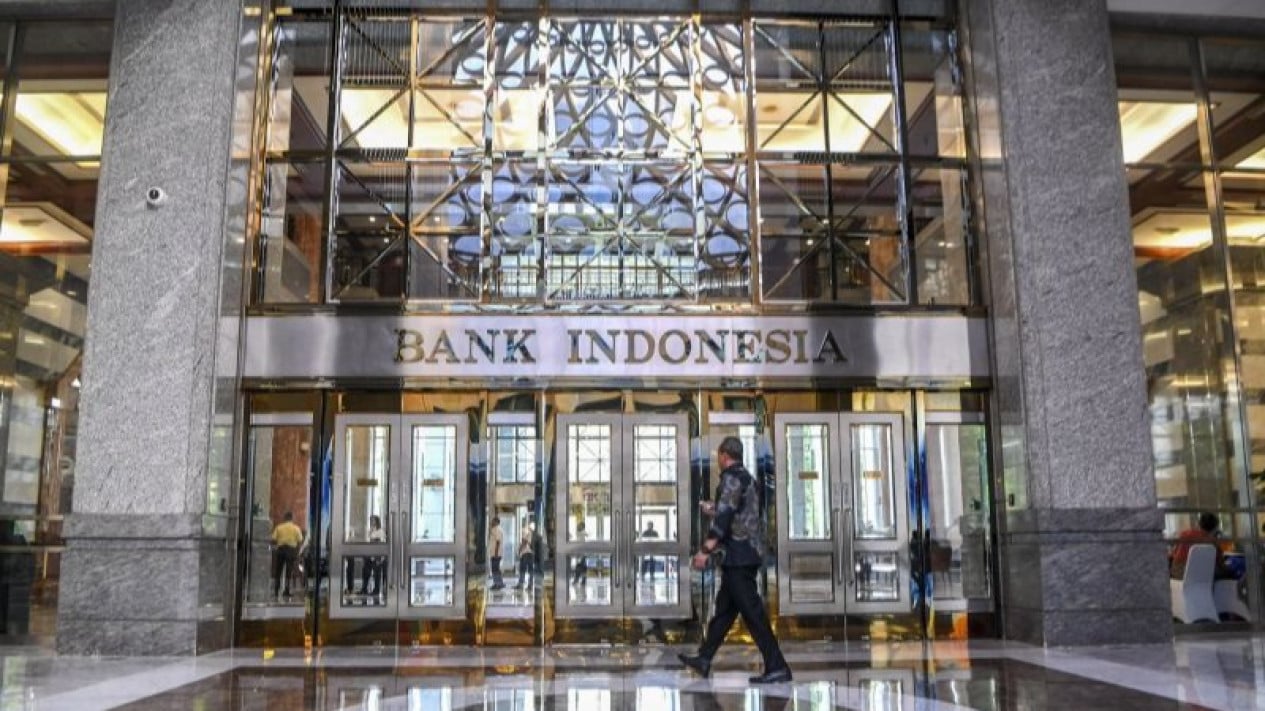
Bank Indonesia is projected to maintain its benchmark interest rate (BI-Rate) at 5.75 percent at the Bank Indonesia Board of Governors Meeting (RDG) in August 2026, the results of which will be announced this Wednesday afternoon.
Head of Macroeconomic & Financial Market Research at Permata Bank, Faisal Rachman, explained that the factors supporting this projection include inflation that has returned to below 3 percent. This is also supported by an improvement in capital inflows that supports the rupiah exchange rate.
Another factor is the reduced expectation of a faster increase in the US Federal Reserve’s interest rate, in line with inflation, labour, and real sector data from the United States that show signs of weakening, although uncertainty in the Middle East remains quite high and the global economic slowdown is pressuring trade balance performance.
“Going forward, we still see that for the remainder of 2026, BI will tend to maintain the BI-Rate, although we do not rule out the possibility of an increase if global conditions unexpectedly deteriorate very significantly,” said Faisal in his written response in Jakarta on Wednesday, 19 August 2026.
Meanwhile, the Institute for Economic and Social Research at the Faculty of Economics and Business, University of Indonesia (LPEM FEB UI) also estimates that the BI-Rate will remain at 5.75 percent.
As a note, inflation in July 2026 slowed to 2.88 percent (year on year/yoy) from 3.34 percent (yoy) in the previous month.
LPEM FEB UI in its report reminded that inflationary pressure is expected to increase in the coming months as the El Niño phenomenon and the dry season are expected to peak in August and September 2026.
However, BI is still considered to have room to hold the BI-Rate as external pressures temporarily ease due to geopolitical tensions in the Middle East that have been relatively contained in recent weeks.
From the global side, the Fed held its benchmark interest rate at 3.50 percent to 3.75 percent at the Federal Open Market Committee (FOMC) meeting at the end of July, although this decision was marked by differences of opinion following concerns about prolonged inflation.
The Fed’s decision to hold its policy rate can be justified by considering the weakening US labour market, reflected in the decline in labour absorption in July 2026, although the unemployment rate fell to 4.1 percent due to a contraction in the labour force.