
Bank Indonesia on Alert Over High Food Inflation
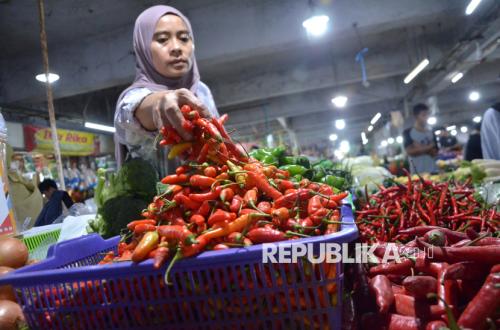
Bank Indonesia (BI) considers food inflation to be a major challenge in maintaining price stability amidst high global uncertainty. Consequently, BI, in collaboration with the government, will strengthen food inflation control through the Synergistic Food Inflation Control Movement (GPIPS).
Acting Governor of Bank Indonesia, Destry Damayanti, stated that core inflation and general inflation remain relatively controlled. However, food inflation has risen above 5 per cent, necessitating special attention. “We see challenges ahead for inflation, particularly food inflation. While core inflation is relatively safe with total inflation at 3.5 per cent, food inflation is above 5 per cent. This is our primary concern,” Destry said during an online Editors Briefing in Parapat, North Sumatra, on Friday (31/07/2026).
According to Destry, food inflation pressures are primarily driven by supply-side factors due to the limited availability of several commodities. To address this, BI will strengthen coordination with the government through the Central Inflation Control Team (TPIP) and the Regional Inflation Control Team (TPID). “Food availability is relatively limited, which we will address. We are grateful to have Inflation Control Teams at both central and regional levels,” she noted. She added that on 5 August, BI and the government will report achievements and further steps for food inflation control to the President.
In addition to managing inflation, Destry stated that BI will maintain the benchmark interest rate (BI Rate) at 5.75 per cent to safeguard the stability of the rupiah exchange rate, given the global landscape shadowed by the ‘higher for longer’ interest rate policy in the United States. She noted that such conditions impact developing nations, including Indonesia, making exchange rate and inflation stability the primary focus of BI’s policy.
Destry emphasised that BI will continue to optimise various monetary instruments to maintain rupiah stability while encouraging economic growth through macroprudential policies, payment systems, the strengthening of MSMEs, Sharia economics, and the green economy. She also ensured that BI’s policy direction remains consistent despite the leadership transition following the resignation of BI Governor Ferry Warjiyo.
In controlling food inflation, BI and the government are also developing GPIPS, which is a transformation of the National Food Inflation Control Movement (GNPIP). This programme integrates productivity enhancement, downstreaming, availability, and the smooth distribution of food to maintain price stability and strengthen national food security.
As of July 2026, the implementation of GPIPS has exceeded several national targets. The optimisation of Good Agricultural Practices (GAP) reached 242 activities, or 137.5 per cent of the target; inter-regional cooperation realised 267 memoranda of understanding, or 176.82 per cent of the target; and food distribution facilitation reached 785 programmes, or 303.09 per cent of the target. Additionally, the Cheap Market Movement has conducted 10,669 activities, representing 67.22 per cent of the annual target, and will continue to be accelerated until the end of the year.