
Bank Indonesia Maintains Interest Rates, but Tightening Options Remain?
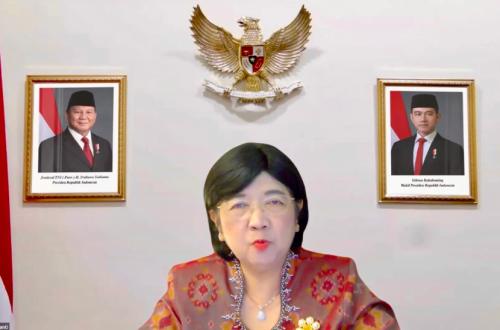
Bank Indonesia (BI) has maintained its benchmark interest rate, the BI Rate, at 5.75 per cent during the September 2026 Board of Governors Meeting. However, the central bank has strengthened non-interest rate instruments, specifically incentive policies, to support the stability of the Rupiah. This decision is viewed as an indication that there is room to dampen external pressures without tightening domestic financial conditions.
“Even though the Fed raised interest rates by 25 basis points (bps) to 3.75–4.00 per cent and provided more hawkish policy signals, BI continues to rely on foreign exchange intervention, hedging incentives, and monetary operations, rather than directly raising interest rates,” said Irman Faiz, Chief Economist at Bank Danamon, when contacted on Wednesday (23/9/2026).
Irman noted that the most prominent policy involves BI expanding swap discounts and Domestic Non-Deliverable Forward (DNDF) into a progressive structure based on tenor, accompanied by adjustments to Local Currency Transaction (LCT) incentives and inclusive financing ratios.
“This decision shows that BI still sees room to dampen external pressures in the short term without broadly tightening domestic financial conditions,” he said.
Furthermore, Irman explained that external conditions are becoming increasingly challenging, narrowing BI’s policy flexibility. Higher US interest rates and ongoing fiscal concerns keep US Treasury yields high, reducing the relative attractiveness of emerging market assets.
On the other hand, Indonesia’s external balance has weakened compared to the beginning of the year. Irman predicts that the current account deficit will widen to approximately 1.5 per cent of Gross Domestic Product (GDP) in 2026. This situation increases the importance of maintaining competitive risk-adjusted returns for Rupiah assets and ensuring an adequate supply of foreign exchange.
“BI is responding by making longer-term foreign exchange inflows more attractive. Swap discounts have been increased from a flat 12.5 per cent in August 2026 to 15 per cent/20 per cent/25 per cent for 3-month/6-month/12-month tenors, respectively. Meanwhile, DNDF discounts have increased from 15 per cent to 25 per cent/30 per cent for 6-month/12-month tenors.
“This progressive structure provides greater incentives for longer-term hedging and, in our view, can help increase the duration and sustainability of foreign exchange inflows. This strengthens Rupiah stabilisation without relying solely on the policy interest rate,” he explained.
Irman continued, noting that higher oil prices are exerting pressure through both the external balance and inflation channels. Rising energy prices increase Indonesia’s import value and demand for foreign exchange, while simultaneously increasing the risk of imported inflation through higher transport and logistics costs.
Headline inflation reached 3.19 per cent year-on-year in August 2026, while core inflation stood at 2.92 per cent. These figures remain within BI’s target of 2.5 per cent ± 1 per cent, but are approaching the upper limit of the target range. Irman mentioned that ongoing oil price pressures could weaken the Rupiah while driving inflation, thereby strengthening BI’s preference to stabilise the exchange rate before second-round effects emerge.
Source: jawawa.id (https://jawawa.id/newsitem/bank-indonesia-maintains-interest-rates-but-tightening-options-remain-1790160909)
Originally published by Republika (https://ekonomi.republika.co.id/berita/tlt9ze490/bank-indonesia-tahan-suku-bunga-opsi-pengetatan-masih-ada), translated from Indonesian