
Bank Indonesia Launches Indonesian Credit Card, Here Are the Rules
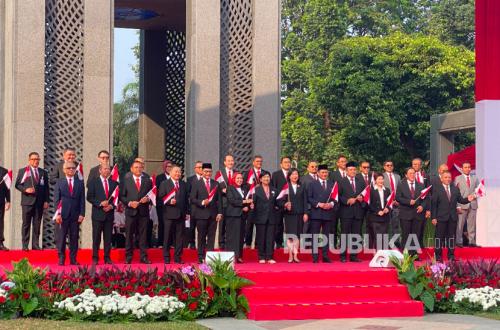
Bank Indonesia (BI) has launched a new innovation in the form of the Indonesian Credit Card (KKI) for the retail segment, timed to coincide with the 81st anniversary of the Republic of Indonesia. The KKI officially came into effect on 17 August 2026.
Acting Governor of Bank Indonesia Destry Damayanti said the KKI is a payment instrument with a credit facility as a deferred payment source, with transaction processing carried out domestically through the national payment system infrastructure. The presence of the KKI is expected to expand domestic deferred payment alternatives, supporting payment system innovation and strengthening Indonesia’s digital financial ecosystem.
‘The launch of the KKI as a QRIS funding source, whether through CPM (Customer Presented Mode), MPM (Merchant Presented Mode), and Tap (Near Field Communication/NFC), is effectively implemented on 17 August 2026,’ Destry said during the launch event for the expansion of 0 percent QRIS MDR and the implementation of the Indonesian Credit Card at the BI complex in Jakarta on Monday (17/8/2026).
She explained that the KKI was developed by BI together with the Indonesian Payment System Association (ASPI), supported by the Indonesian Credit Card Association (AKKI), issuing payment service providers (PJP), and Payment System Infrastructure Providers (PIP). The development involved drafting standards and regulations, technical development, and implementation trials.
The KKI innovation is aligned with the pillars of the Indonesia Payment System Blueprint (BSPI) 2030 and the government’s Asta Cita, under which BI will continue to push the payment system to become a driver of national economic growth. The initiative is also an effort to safeguard the domestic economy amid global challenges.
‘Amid global economic dynamics that remain full of uncertainty and challenges to people’s purchasing power, joint steps are needed to maintain the momentum of national economic growth. On the other hand, the increasingly digital behaviour of society demands that the payment system continue to develop adaptively, inclusively, safely, and prudently, so as to answer the needs of the public while supporting economic stability,’ she said.
On a more technical level, Head of the Payment System Policy Department Ryan Rizaldy explained that the KKI service will initially be implemented digitally first, with the physical KKI to follow.
‘The KKI is available in digital card and physical card forms. In the initial stage, the KKI is available as a digital card and can be used as a funding source for transactions through the QRIS ecosystem,’ he said.
At this initial stage, the KKI can also be used for all types of public spending at merchants that accept QRIS payments, both domestically throughout Indonesia and abroad through cross-border QRIS in partner countries.
Regarding usage rules, the KKI QRIS feature will refer to existing QRIS provisions, including a transaction limit of Rp 10 million per transaction with an MDR of 0 percent up to 0.7 percent. Transactions and settlement follow existing mechanisms.
‘The KKI can be issued by all PJPs, both banks and non-bank institutions that meet the requirements in accordance with BI regulations. In the initial implementation phase, there are seven first-mover PJP issuers of the KKI, namely BCA, Bank Mandiri, BNI, BRI, CIMB Niaga, Permata Bank, and Bank Mega, as well as one next-mover PJP, namely BSI, which can issue the KKI,’ he said.