
Bank Indonesia Introduces NTB's Economic and Tourism Potential During Journalist Capacity Building
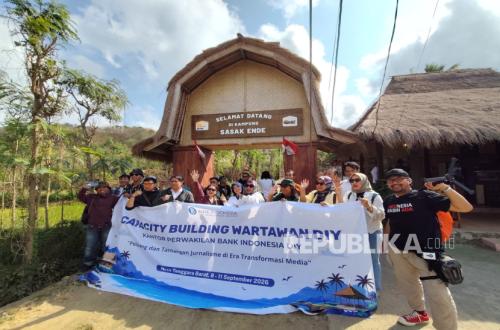
The Bank Indonesia Representative Office for the Special Region of Yogyakarta (KPw BI DIY) organised a capacity-building activity for journalists from Yogyakarta, titled ‘Opportunities and Challenges of Journalism in the Era of Media Transformation’, at the Aruna Senggigi Hotel, West Lombok, West Nusa Tenggara (NTB), on Wednesday (9/9/2026).
Running until 11 September 2026, the event was attended by 14 journalists from various media outlets based in Yogyakarta. In addition to serving as a space for enhancing journalistic capacity, the activity provided an opportunity for journalists to observe the economic and tourism potential of NTB firsthand, while broadening their perspectives on regional economic reporting.
The Head of the Bank Indonesia NTB Representative Office, Hario Kartiko Pamusc, expressed his appreciation to KPw BI DIY for selecting NTB as the location for the capacity-building programme and for introducing the potential of tourism villages in the region.
“Thank you for making NTB the venue for the Yogyakarta journalists’ capacity building. We recognise that we must learn from one another across different regions and take lessons from each area,” he stated during his opening remarks on Wednesday.
According to Hario, the relationship between Yogyakarta and NTB can continue to be strengthened through knowledge exchange and inter-regional visits. He noted that NTB possesses several economic potentials that require continuous development. In the second quarter of 2026, NTB’s economy grew by 7.41 per cent, supported by three main sectors: agriculture, mining, and trade.
In the agricultural sector, NTB holds a strategic position as one of the nation’s food granaries, with flagship commodities such as rice and maize. Meanwhile, the mining sector, particularly copper in Sumbawa, serves as a vital driver of the NTB economy. Looking ahead, Hario noted that developing the processing industry for mining products is essential so that natural resource potential can provide greater added value to the regional economy.
“In the future, processing industries will be developed, which are expected to become economic drivers,” he said.
Regarding trade and tourism, NTB’s economic activity is also being boosted by increased public mobility during long holiday periods and tourist visits. NTB possesses various premier tourism destinations and infrastructure, ranging from Senggigi and Lombok International Airport to the Mandalika kawasan. Tourism development is expected to be distributed beyond specific areas to ensure a broader economic impact across various parts of NTB.
Hario added that strengthening inter-regional connectivity is also crucial, including through regional cooperation between Bali, NTB, and NTT. Such collaboration pertains not only to tourism but also to inflation control and the strengthening of inter-regional economic ties.
“We must ensure Bali and NTB are more strongly connected. For inflation control, inter-regional relationships must be robust. If one region requires support, neighbouring regions can provide assistance,” he explained.
He concluded that these various potentials need to be communicated effectively to the public. Informative and constructive media reporting is considered vital in building economic actors’ confidence in the region.
“The potentials in NTB and the current conditions need to be reported well, so that economic actors trust the government’s commitment to economic growth. NTB’s economy is performing well, which should also attract investors to invest here,” he said.
Source: jawawa.id (https://jawawa.id/newsitem/bank-indonesia-introduces-ntbs-economic-and-tourism-potential-during-journalist-capacity-building-1788990729)
Originally published by Republika (https://rejogja.republika.co.id/berita/tl48bp291/gelar-capacity-building-untuk-jurnalis-bi-perkenalkan-potensi-ekonomi-dan-pariwisata-ntb), translated from Indonesian