
Bank Indonesia Governor Explains Why Undisbursed Loans Have Reached Rp 2,548 Trillion
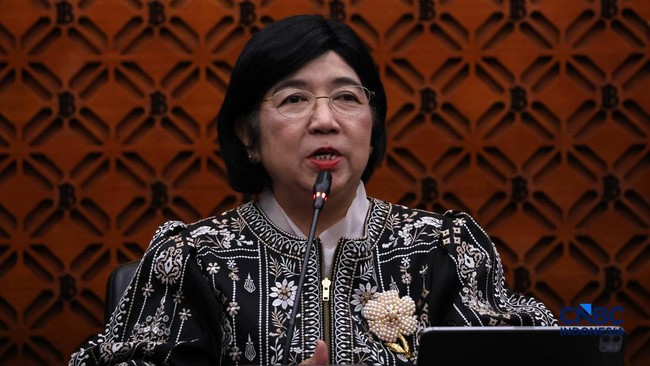
Bank Indonesia (BI) has revealed that the phenomenon of undisbursed loans—funds prepared by banks but not yet disbursed to debtors—remains at a high level. As of July 2026, the value was recorded at Rp 2,548 trillion.
BI Governor Destry Damayanti explained that the scale of these undisbursed loans is influenced by two main factors: credit demand that has not yet fully recovered and the liquidity placement strategies of banks regarding supply.
From the demand side, Destry assessed that credit growth throughout the first half of 2026 was largely supported by economic activities related to government spending and projects. Meanwhile, financing demand from the private sector was deemed insufficient to absorb all the credit facilities provided by the banking sector.
“Why is the undisbursed loan still at the Rp 2,500 trillion level? From the demand side, if we look at credit growth up to the second quarter, it is still largely driven by government-led initiatives,” Destry stated during a press conference following a high-level meeting with the Minister of Finance at the BI Office, Jakarta, on Thursday (24/9/2026).
Nevertheless, BI is beginning to see signs of improvement. According to Destry, credit demand from the private sector is slowly increasing as business activities improve. This development serves as a signal that the economic engine is starting to move more evenly and is no longer solely dependent on government spending.
From the supply side, BI noted that some banks previously preferred to place funds into securities instruments rather than distributing them as credit. These liquidity placement instruments include Government Securities (SBN) and Bank Indonesia Rupiah Securities (SRBI).
To change this behaviour, BI is implementing incentive and disincentive schemes through the Statutory Reserve Requirement (GWM) policy. Banks that place excessive liquidity into securities do not receive GWM incentives, whereas banks that aggressively distribute credit have the potential to receive a reduction in their GWM obligations.
“We are observing which banks are distributing credit despite having liquidity. We can see that the Himbara (State-Owned Banks) are currently the most active, but we also see that some banks are starting to see demand,” said Destry.
This measure is expected to encourage additional liquidity within the banking sector, which can then flow back into the business world in the form of credit.
Amidst the high levels of undisbursed loans, BI noted that credit growth is beginning to show a more positive trend. In August 2026, banking credit grew by 13.6% year-on-year, primarily supported by investment credit and working capital credit flowing into productive sectors.
According to Destry, the composition of this credit growth is good news, as it indicates that financing is increasingly being used for activities capable of increasing production capacity and driving business expansion.
“Actually, this is a good thing because it means credit growth is entering productive sectors. Therefore, it serves as a signal to us that economic activity continues to circulate, with economic capacity expanding due to the presence of investment credit,” she concluded.
Source: jawawa.id (https://jawawa.id/newsitem/bank-indonesia-governor-explains-why-undisbursed-loans-have-reached-rp-2-548-trillion-1790297472)
Originally published by CNBC Indonesia (https://www.cnbcindonesia.com/market/20260925064914-17-770753/bos-bi-beberkan-sebab-kredit-nganggur-tembus-rp-2548-triliun), translated from Indonesian