
Bank Indonesia encourages banks with excess liquidity to assist smaller banks
Jakarta (ANTARA) - Bank Indonesia (BI) is encouraging banks with excess liquidity to assist smaller banks by lending their surplus through money market and foreign exchange market transactions.
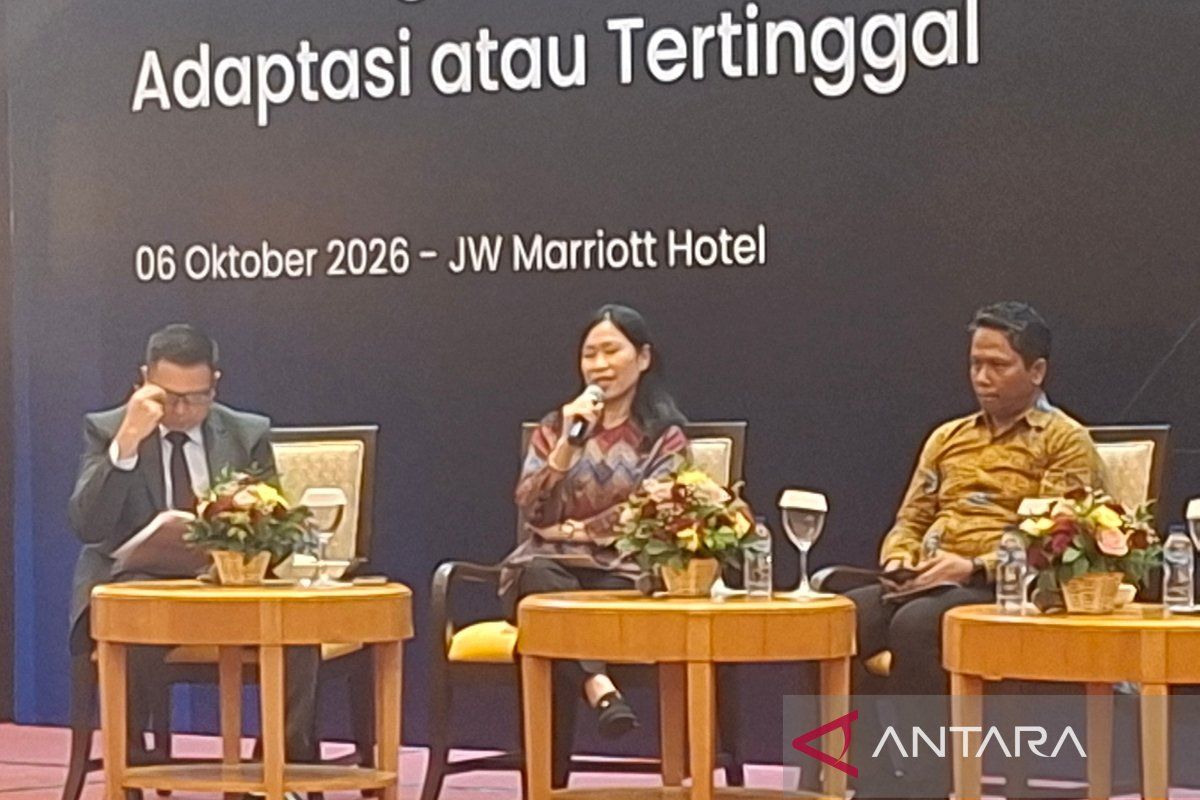
Merywati, Director of the Macroprudential Policy Department at BI, stated that through the Macroprudential Liquidity Incentive Policy for Money Market Deepening (KLM PPU), BI aims to ensure that banks with excess liquidity do not merely hold it in the form of excessive securities or asset portfolios. Instead, the central bank wants to encourage the gradual redistribution of this liquidity to other banks, particularly smaller banks facing challenges in securing third-party funding sources.
“This is what we want to redistribute, so that banks with excess liquidity do not just place it in securities or other asset portfolios, but rather optimise it by lending to smaller banks through money and foreign exchange market transactions,” Merywati said in Jakarta on Tuesday.
She continued that this is also related to an initiative involving BI, relevant authorities, and the Indonesian Money and Foreign Exchange Traders Association (APUVINDO). BI is continuously pushing for the deepening of money and foreign exchange markets to serve as a financing source for the banking industry, ensuring benefits are distributed evenly across all banks.
Consequently, she noted, liquidity needs can be balanced, with the expectation that funds will flow into and stimulate sectors that contribute to economic growth.
Bank Indonesia (BI) hopes that banking liquidity can be distributed more evenly between banks through the Macroprudential Liquidity Incentive (KLM) policy for Money Market Deepening, specifically by encouraging the redistribution of liquidity from banks with high holdings of securities.
The securities referred to in this incentive include government-issued securities, such as State Treasury Bills (SBN), and non-repo Rupiah BI Securities (SRBI).
BI observes a tendency among banks to increase their holdings of securities as investment instruments. However, the central bank maintains that securities holdings by banks should function primarily as a liquidity buffer within liquidity management.
To address liquidity segmentation, Merytywati stated that BI is issuing the Macroprudential Liquidity Incentive (KLM) PPU policy, which will take effect from 1 September 2026 for conventional commercial banks, Islamic commercial banks, and Islamic business units.
Under this KLM policy, banks can receive a maximum incentive of 2 per cent, or 200 basis points (bps), of their third-party funds (DPK) if they maintain their ratio of SBN and non-repo SRBI holdings relative to total funding below 19 per cent.
In addition to encouraging the redistribution of banking liquidity, Alexander Lubis, Director of the Macroprudential Policy Department at BI, stated that the policy also supports the deepening of the money market. This is because if a bank’s securities ratio exceeds 19 per cent, the bank can engage in repo transactions to reduce its securities holding ratio.
Source: jawawa.id (https://jawawa.id/newsitem/bank-indonesia-encourages-banks-with-excess-liquidity-to-assist-smaller-banks-1791288101)
Originally published by Antara (Indonesian) (https://www.antaranews.com/berita/5773761/bi-dorong-bank-dengan-kelebihan-likuiditas-dapat-bantu-bank-bank-kecil), translated from Indonesian