
Bank Indonesia East Java: Sharia Economy Must Deliver Real Impact for Society
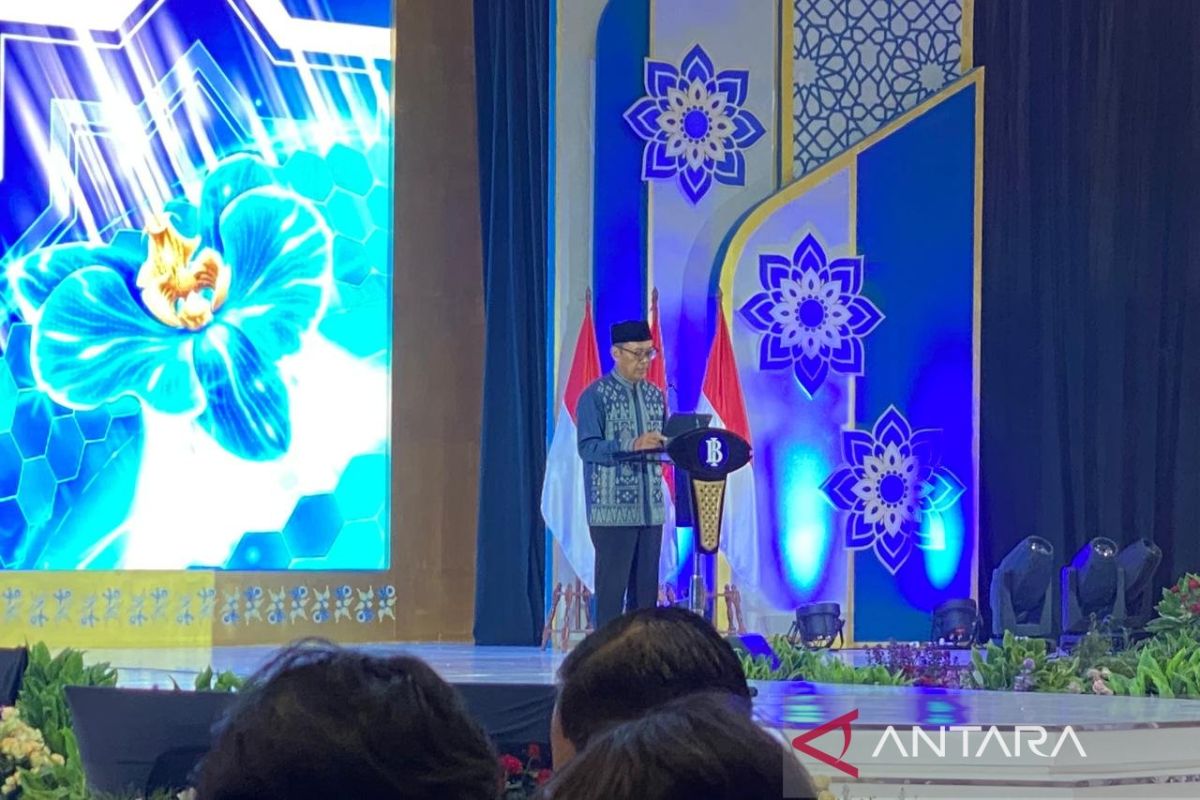
Surabaya, East Java - The Bank Indonesia Representative Office for East Java Province has emphasised that the Sharia economy must be driven not only as a potential but also to develop into an ecosystem capable of strengthening the real sector, expanding financing, and increasing community welfare.
Ibrahim, the Head of the Bank Indonesia East Java Representative Office, stated that the Sharia economy has now become a source of economic growth that connects halal and trustworthy values with productivity and inclusive economic activities.
“The Sharia economy today is no longer just a potential but has become an ecosystem and even one of the increasingly important economic interests, capable of connecting halal and trustworthy values with high productivity and tangible activities,” he said during the opening of the 2026 Java Sharia Economic Festival (Fesyar) in Surabaya on Saturday.
According to him, Java possesses strong capital to develop the Sharia economy, supported by a large base of industries and micro, small, and medium enterprises (MSMEs), a wide market, and a strong network of Islamic boarding schools (pesantren) and Islamic educational institutions.
He noted that Java’s economy grew by 5.65 per cent year-on-year in the second quarter of 2026, meaning the region plays a strategic role in driving the growth of the national halal value chain, particularly in the halal food, modest fashion, and halal tourism sectors.
Specifically for East Java, he noted that this potential is bolstered by a Muslim population of over 97 per cent, more than 7,000 pesantren, and over 600,000 students (santri).
So far, Ibrahim stated that Bank Indonesia has assisted 463 boarding schools in developing business units and facilitated halal certification for more than 2,000 business actors and over 270 halal slaughterers.
Ibrahim mentioned that another effort undertaken by Bank Indonesia to support the real impact of the Sharia economy and finance is through the organisation of the 2026 Java Sharia Economic Festival (Fesyar), taking place from 21–27 September in Surabaya.
This year’s Java Fesyar is directed to move beyond being merely an exhibition event to becoming a platform that generates direct economic impact in alignment with the national development agenda.
“This year, we want to go further from a showcase towards more impactful development, with increasingly inclusive impacts that align with the national development agenda,” he said.
Java Fesyar 2026 introduces three new programmes: the Safe, Healthy, and Halal People’s Market (RAHAS) and the strengthening of the Halal Assurance System (HAS) zone to bolster the halal chain and MSME competitiveness; the development of waqf (endowment) for educational benefits; and innovative financing to support housing provision for teachers in madrasas and boarding schools.
Additionally, the Fesyar series includes 47 activities through the collaboration of 294 institutions and strategic partners, as well as business matching that brings together 203 MSMEs and boarding school business units with Sharia financial institutions and more than 30 potential buyers, which is expected to open wider access to financing, markets, and business networks.
Ibrahim emphasised that the success of Java Fesyar 2026 will not be measured solely by the number of activities, but by the impact produced in strengthening the halal industry, expanding Sharia financing, optimising productive waqf, and helping MSMEs and boarding schools level up.
“This is part of Indonesia’s inclusive and sustainable economic development,” he concluded.
Source: jawawa.id (https://jawawa.id/newsitem/bank-indonesia-east-java-sharia-economy-must-deliver-real-impact-for-society-1790423967)
Originally published by Antara (Indonesian) (https://www.antaranews.com/berita/5759895/bi-jatim-ekonomi-syariah-harus-berdampak-nyata-bagi-masyarakat), translated from Indonesian