
Bank Indonesia Deputy Governor Emphasises Key to Safeguarding Regional Economy at AFMGM+3
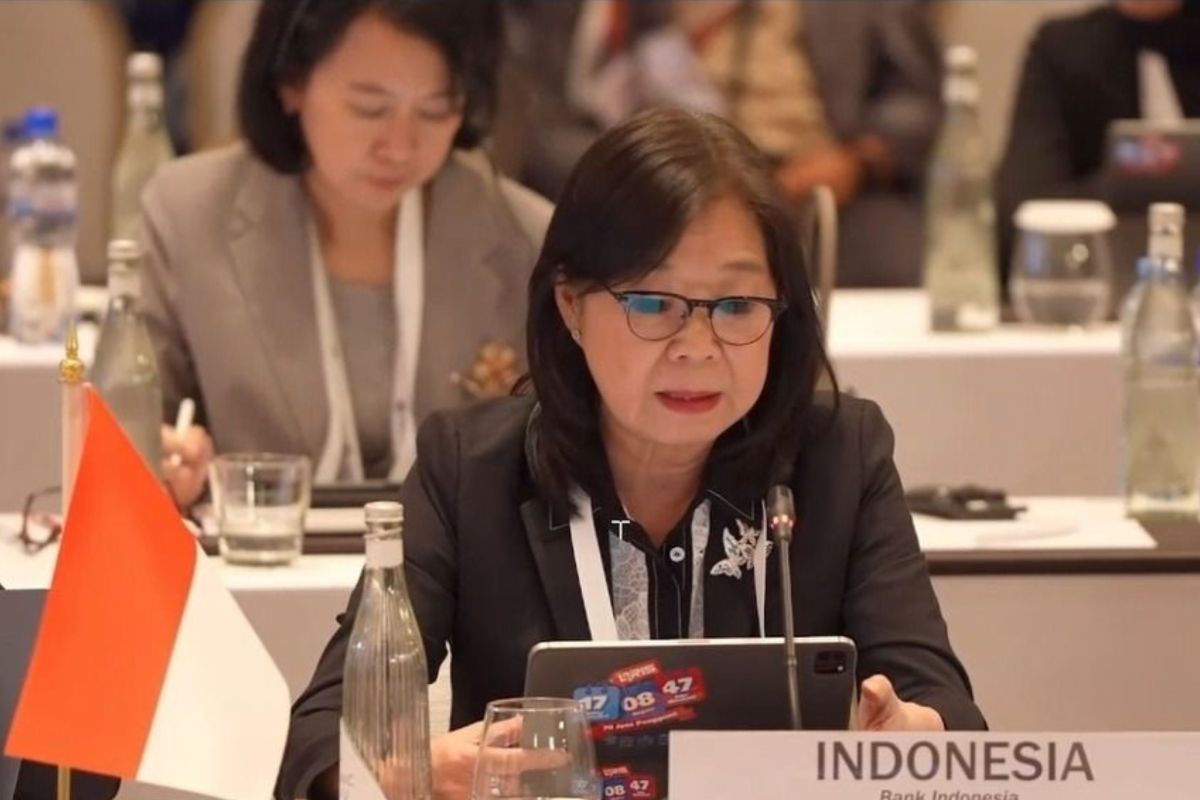
Vigilance must continue to be strengthened through solid domestic policies and regional cooperation.
Jakarta (ANTARA) - Bank Indonesia (BI) Deputy Governor Filianingsih Hendarta emphasised the importance of close coordination between monetary and fiscal policies as the key to maintaining regional economic resilience at the 29th ASEAN+3 Finance Ministers and Central Bank Governors’ Meeting (AFMGM+3).
“At the same time, vigilance must continue to be strengthened through solid domestic policies and regional cooperation,” said Filianingsih, as quoted in an official statement received in Jakarta on Tuesday.
She added that in this context, the Chiang Mai Initiative Multilateralisation (CMIM) plays a strategic role in the main pillar of the regional financial safety net.
“Therefore, strengthening CMIM is important so that it becomes increasingly adaptive and responsive to various challenges,” said Filianingsih.
The AFMGM+3 is an annual forum of ASEAN+3 Finance Ministers and Central Bank Governors to discuss global and regional economic developments and to strengthen economic and financial cooperation in the region.
The strengthening of regional financial cooperation is in response to global risks arising from conflicts in the Middle East that have the potential to pressure regional economic growth.
The meeting endorsed the Updated Strategic Direction of the ASEAN+3 Finance Process as a guide for medium- to long-term collaboration.
This effort will tighten synergy among ongoing initiatives as well as the development of new areas of cooperation so that the ASEAN+3 Finance Process can respond to economic dynamics.
The meeting also encouraged efforts to strengthen and enhance the effectiveness of CMIM as a regional financial safety net that complements the Global Financial Safety Net (GFSN).
The 29th AFMGM+3 meeting was chaired by Co-Chairs from the Philippines and Japan, and attended by all ASEAN member countries along with Japan, South Korea, and China, as well as representatives from AMRO, the Asian Development Bank (ADB), the ASEAN Secretariat, and the International Monetary Fund (IMF). This year’s meeting was also attended by Timor-Leste, which has begun to join ASEAN.
The forum also appreciated the strategic role of the ASEAN+3 Macroeconomic Research Office (AMRO), which over the past 10 years has served as a regional policy advisor in maintaining macroeconomic and financial stability. Next, Singapore and South Korea will act as Co-Chairs for the 30th ASEAN+3 AFMGM+3 in 2027.