
Bank Indonesia: Cross-border Digital Economic and Financial Connectivity to Boost Foreign Tourist Spending
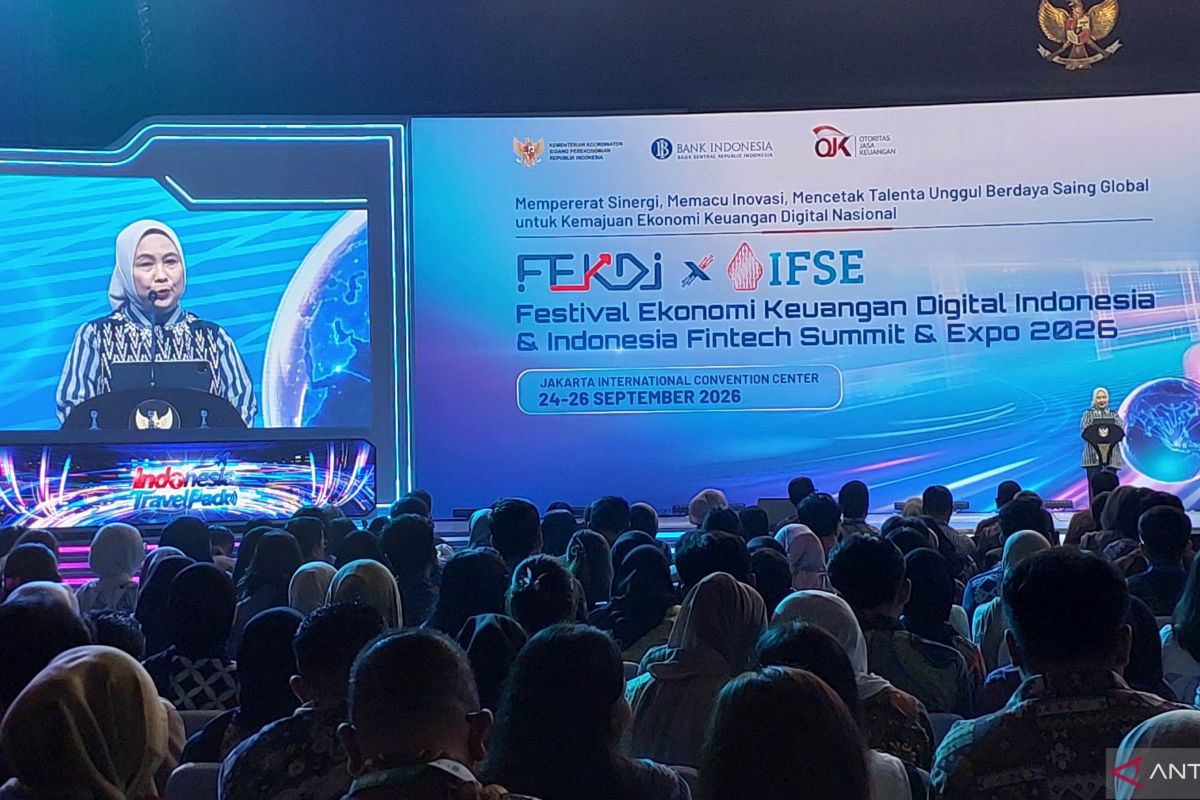
Jakarta (ANTARA) - Bank Indonesia Senior Deputy Governor Aida S. Budiman stated that strengthening cross-border digital economic and financial (EKD) connectivity will drive increased economic productivity, notably by facilitating easier transactions for international tourists in Indonesia.
According to Aida, cross-border EKD connectivity is crucial amidst various global economic challenges, ranging from geopolitical tensions and financial market volatility to the acceleration of digitalisation, which is accompanied by the need to strengthen cybersecurity.
“When we speak of cross-border relations, we must look at how to optimise what we call mobility—the mobility of people, goods, and services,” Aida said during the FEKDI x IFSE 2026 event in Jakarta on Saturday.
In the Indonesian context, Aida views the tourism sector as a key area that can be optimised through digital economic and financial connectivity. This aligns with Indonesia’s natural wealth, culture, and tourist destinations, which serve as major attractions for foreign visitors.
She noted that while international tourist arrivals have shown a positive trend over the last three years, the average spending per tourist has actually experienced a decline. “If we look at it, tourist spending has decreased. It was once nearly 1,400 USD per person, and now it is below 1,300 USD,” she remarked.
Therefore, according to Aively, transaction ease is one of the aspects that needs to be strengthened to encourage international tourists to increase their spending while in Indonesia.
She assessed that the shifting pattern of public transactions towards digital payments illustrates how payment convenience can drive consumption activities. Such ease allows tourists to conduct spontaneous transactions at various points, including when purchasing food or beverages from local businesses.
“This means transaction ease. And that is what we must do—how to make it easier for these tourists to come to us, spend, and make purchases, so that spending will increase,” she explained.
To support this, Bank Indonesia, alongside ministries, agencies, and associations, continues to expand the implementation of cross-border QRIS. Currently, cross-border QRIS connectivity is available with six countries.
Nevertheless, Aida believes there is still significant room for development. This is because tourists from the six countries currently connected via cross-border QRIS only account for approximately 40 per cent of the total international tourists arriving in Indonesia.
“So, we still need to tap into the remaining 60 per cent of these tourists, so that more people come and their spending also increases,” she concluded.
Source: jawawa.id (https://jawawa.id/newsitem/bank-indonesia-cross-border-digital-economic-and-financial-connectivity-to-boost-foreign-tourist-spending-1790416689)
Originally published by Antara (Indonesian) (https://www.antaranews.com/berita/5759772/bi-konektivitas-ekd-antarnegara-naikkan-spending-wisman), translated from Indonesian