
Bank Indonesia boosts Sharia economy through productive waqf and halal certification
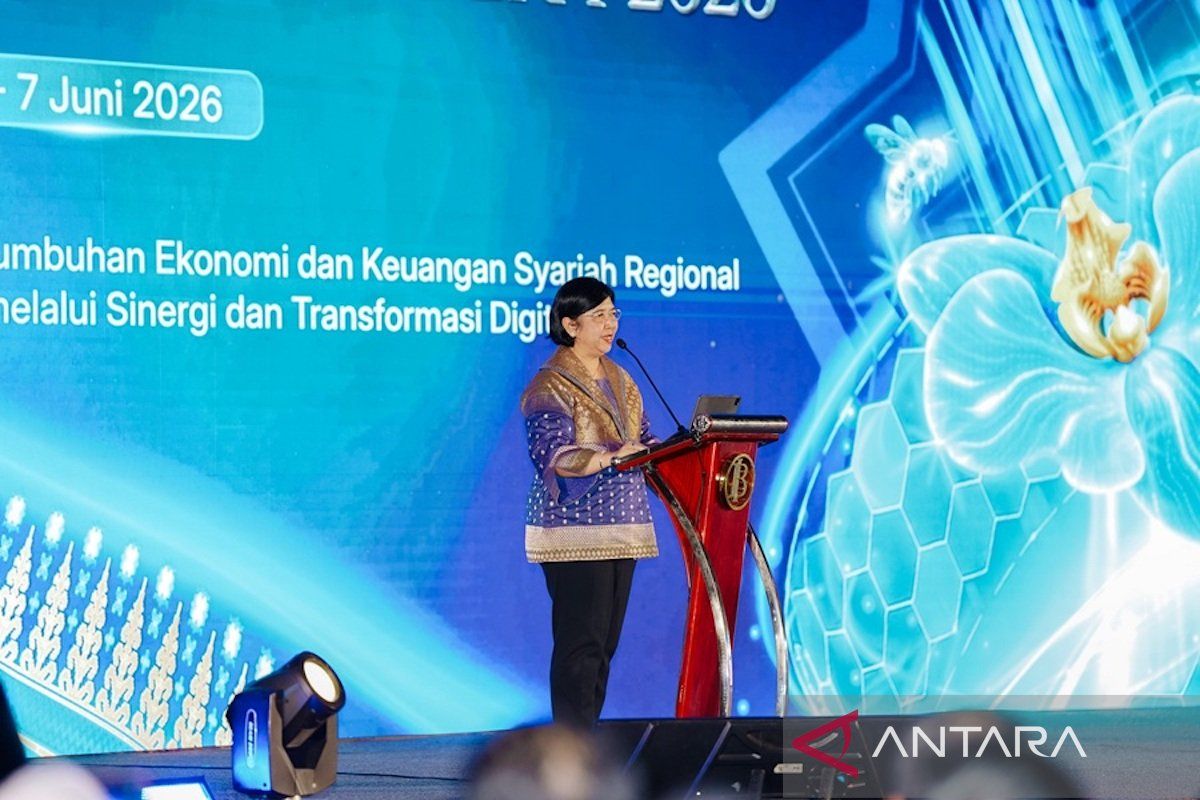
Bank Indonesia (BI) is strengthening the development of Sharia economy and finance as a new source of regional economic growth by reinforcing the role of Islamic boarding schools (pesantren), optimising productive waqf, and accelerating halal certification.
BI Senior Deputy Governor Destry Damayanti stated that the central bank is organising the Sharia Economic and Finance Festival (FESyar) across various regions in Indonesia to encourage the creation of inclusive and sustainable regional economic growth, while providing space for collaboration to increase the capacity of MSMEs and the younger generation.
“Sharia economy and finance is one of the important pillars of economic growth and strengthens national economic resilience,” she said during the opening of the FESyar Sumatra 2026 in Palembang.
At FESyar Sumatra 2026, Destry noted that BI is introducing flagship programmes: Accelerated Prosperous Pesantren (Pesat), Nationalisation Effort of the Waqf Movement for Leading Commodities (Unggul), and Coaching and Accelerating Halal Certification for Tourism (Berkah). Through the Pesat programme, BI encourages the role of pesantren as centres for community economic empowerment. Meanwhile, the Unggul programme focuses on optimising the use of waqf to support the development of regional leading commodities. The Berkah programme is directed towards coaching to accelerate halal certification in the tourism sector, thereby increasing the competitiveness of the halal industry.
These programmes were introduced as part of the series leading up to the Indonesia Sharia Economic Festival (ISEF) 2026. “The development of inclusive and sustainable Sharia economy and finance aims to strengthen new sources of economic growth in the regions, increase the competitiveness of Indonesia’s Sharia economy, and support the vision of Indonesia as a global centre for Sharia economy and finance,” she added.
Furthermore, Destry explained that Indonesia holds an increasingly strategic position in Sharia economic development. In 2025, Indonesia’s halal supply chain sector showed positive performance, reflected in the increase in exports of halal food, beverages, and Muslim fashion. In line with national development goals, the Sharia economy bridges productivity and inclusivity, innovation and noble values, and economic growth and community welfare.
In 2025, Indonesia’s halal supply chain sector grew by 6.21 per cent year-on-year (yoy). Sharia financing also contributed positively to the strengthening of the Sharia economy, with Sharia financing growing by 10.84% (yoy) in April 2026, maintaining a low credit risk of 2.28% (yoy).
During the same event, South Sumatra Governor Herman Deru stated that the development of the Sharia economy and finance is a vital part of the regional development agenda. “Through various flagship programmes such as 100,000 Young Sultans and the South Sumatra Food Self-Sufficiency Movement Goes to Pesantren, we continue to encourage the emergence of a young generation and boarding schools that are independent, productive, and competitive,” said Herman.
According to Herman, South Sumatra possesses great potential for Sharia economic development, with a Muslim population of approximately 7.72 million, or 97.22 per cent of the total population. This potential is supported by 670 Islamic boarding schools, 34 Sharia commercial bank offices, 15 Sharia business units, and over 27,000 products that have already obtained halal certification.