
Bank Indonesia and the Exchange Rate in the Next Five Years
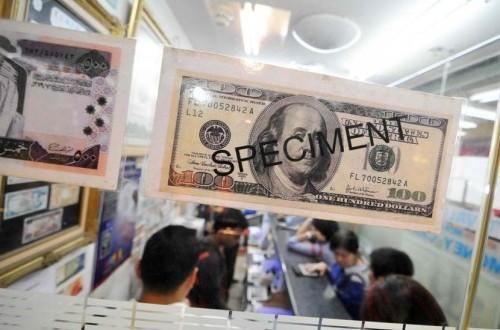
The leadership of Bank Indonesia (BI) has changed and the new leader will helm BI for the next five years. Will the current BI leadership shift the rupiah’s position to become more stable and stronger than before? The answer is difficult and even nearly impossible. For the next five years, the rupiah will still not strengthen; it will remain weak and even continue to weaken.
Why? The main cause is that BI’s leadership is expected to continue operating as usual, compounded by many other external and internal BI factors that remain constraints on the monetary sector. The new leadership also cannot possibly change the factors that have been constraints all this time. So I predict the new leadership will not significantly alter the monetary system, and the rupiah will remain weak as usual.
A large domestic market does not guarantee a strong economy, at least as seen from its currency exchange rate. The prediction of a weak exchange rate over the next five years is based on many factors, so the new leadership is merely an ordinary cycle of change that will relatively change nothing.
Indonesia is already classified as a large economy with a large domestic market as well. Yet despite this large economic scale, its currency has never been able to strengthen because that is how Indonesia’s economic structure was formed — weak in its external sector. This new leadership is also expected to be unable to change this economic structure.
So Bank Indonesia may be able to defend the exchange rate, but the current system and structure will continue to operate. The policies to be carried out will be routine as usual, raising interest rates when the rupiah exchange rate weakens drastically.
With these higher interest rates, it is hoped that foreign capital can be attracted because Indonesian assets offer greater returns for investors. However, transaction costs in Indonesia are very high, with legal, socio-political and policy disarray. This also has a negative impact on the business world, housing loans (KPR), and domestic investment. BI’s other policy instrument is lowering interest rates to encourage investment.
However, if interest rates are lowered too quickly, investors may switch back to dollar-denominated assets. A simple conservative policy using only the interest rate instrument will not make the exchange rate stronger. Other factors associated with investment and production are not supportive, such as low trust in the law, corruption, and a weak external sector due to low competitiveness.
Source: jawawa.id (https://jawawa.id/newsitem/bank-indonesia-and-the-exchange-rate-in-the-next-five-years-1788144733)
Originally published by Republika (https://analisis.republika.co.id/berita/tklzz1475/bi-dan-nilai-tukar-lima-tahun-mendatang), translated from Indonesian