
Banjarsari Culinary MSMEs Flourish Through Cooperative Ecosystem Digitalisation
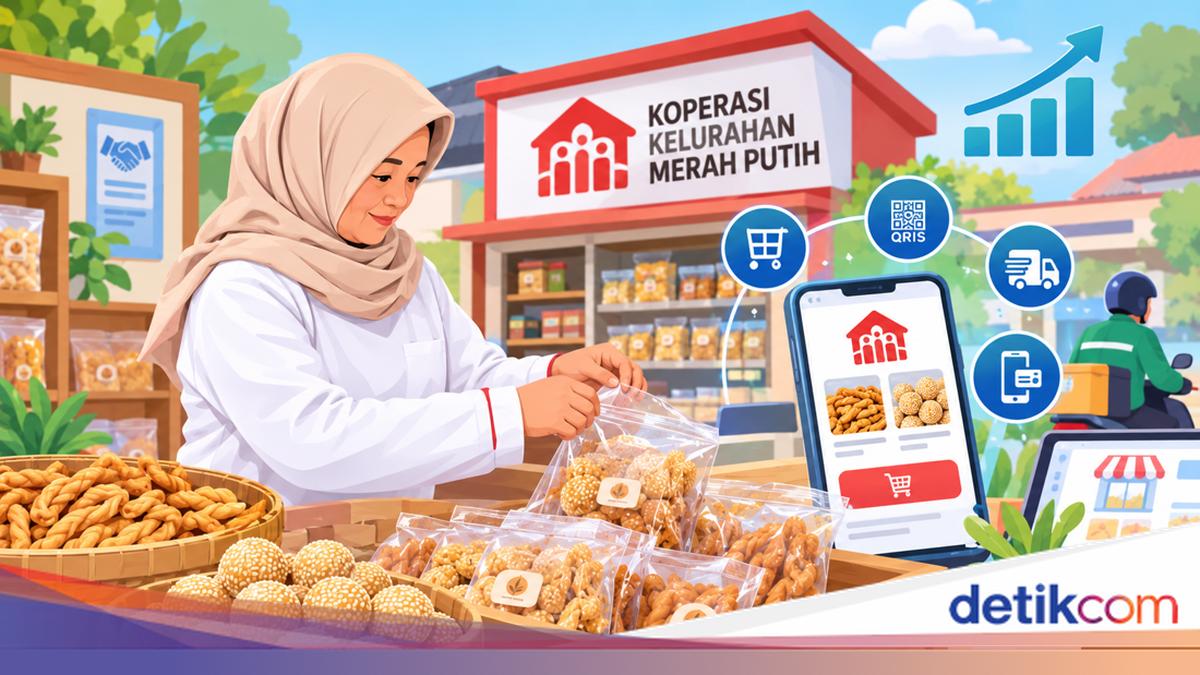
Traditional snack businesses, such as the signature ‘untir-untrol’ and ‘onde-onde’ of Banjarsari, are continuously transforming to keep pace with the times. These family heritage culinary products, maintained since 1951, are seeing increased demand thanks to the support of the Merah Putih Village Cooperative (KKMP) ecosystem in Banjarsari.
One MSME entrepreneur, Gustini, shared that her production of untir-untir and onde-onde uses a recipe passed down from her parents. Following her retirement, she focused on developing these Surakarta specialties and eventually joined the cooperative as a member in July 2025.
“It was a legacy from my parents since 1951. After the Merah Putih Cooperative was established in Banjarsari Village, I joined as a member and participated in the culinary group,” said Mrs Gustini during an interview.
Mrs Gustini experienced immediate positive changes after her culinary products were marketed through the cooperative’s network. Her sales turnover experienced a significant increase, rising from approximately Rp500,000 to Rp700,000 every 3-4 days to between Rp1 million and Rp1.2 million.
“Alhamdulillah, since then, orders have increased and turnover has risen to improve my family’s welfare. The system ensures that products are made immediately upon order so they are always fresh,” she explained.
KKMP Banjarsari’s role is no longer limited to providing savings and loan services or internal business activities. The cooperative has transformed into a hub and marketing platform for various local MSME products.
The cooperative positions itself as a wholesale shopping centre to supply low-cost raw materials for local eateries and culinary traders. This initiative is implemented through a three-tier pricing scheme adjusted to the scale of the buyer’s business.
The Head of Banjarsari Village, Dan Dare, explained that the village administration provides full support for the cooperative’s operations. This support includes providing a former official residence as a retail outlet and providing operational vehicles.
“We are committed to making KKMP a hub. The MSME potential within Banjarsari Village works alongside KKMP, so their products are sold both in physical showcases and on digital platforms,” he stated.
Currently, at least eight local MSMEs have joined and are utilising the cooperative’s marketing ecosystem. The range of marketed products is diverse, ranging from traditional snacks and souvenirs such as onde-onde, untir-untir, and ciput chips, to the supply of basic food staples like rice and spices for culinary businesses.
This development coincides with the growth of the cooperative’s membership. KKMP Banjarsari, established on 5 June 2025, has seen its membership increase from 32 to 138 people.
Digitalisation serves as one of the methods used by KKMP Banjarsari to expand the marketing of its members’ products. The cooperative utilises the MyKopkel digital platform, marketplaces, and digital payments such as QRIS.
In addition to physical displays at the cooperative’s outlet, MSME products can be showcased through digital channels, allowing potential buyers to view products and place orders without having to visit the location in person.
The cooperative also provides operational vehicles to support the delivery process. This scheme ensures that marketing activities are not limited to in-store sales but extend to ordering and delivery to consumers.
Furthermore, the cooperative functions as a wholesale centre to supply raw material needs for eateries and culinary traders. The development of this ecosystem is reflected in the cooperative outlet’s sales performance. Between January and August 2026, KKMP Banjarsari’s turnover was recorded to have exceeded Rp400 million.
For MSMEs like Gustini, the existence of the cooperative serves as a gateway to expand the marketing of products that previously relied heavily on direct sales. The use of digital channels complements this marketing network, allowing products previously only known locally to be showcased via digital storefronts and ordered online.