
Banjarmasin trials electric microtrans public transport
This is still a trial. We want to know how far its durability, range, and effectiveness hold from morning to evening. In about one month, we will see the results, and only then will we decide.
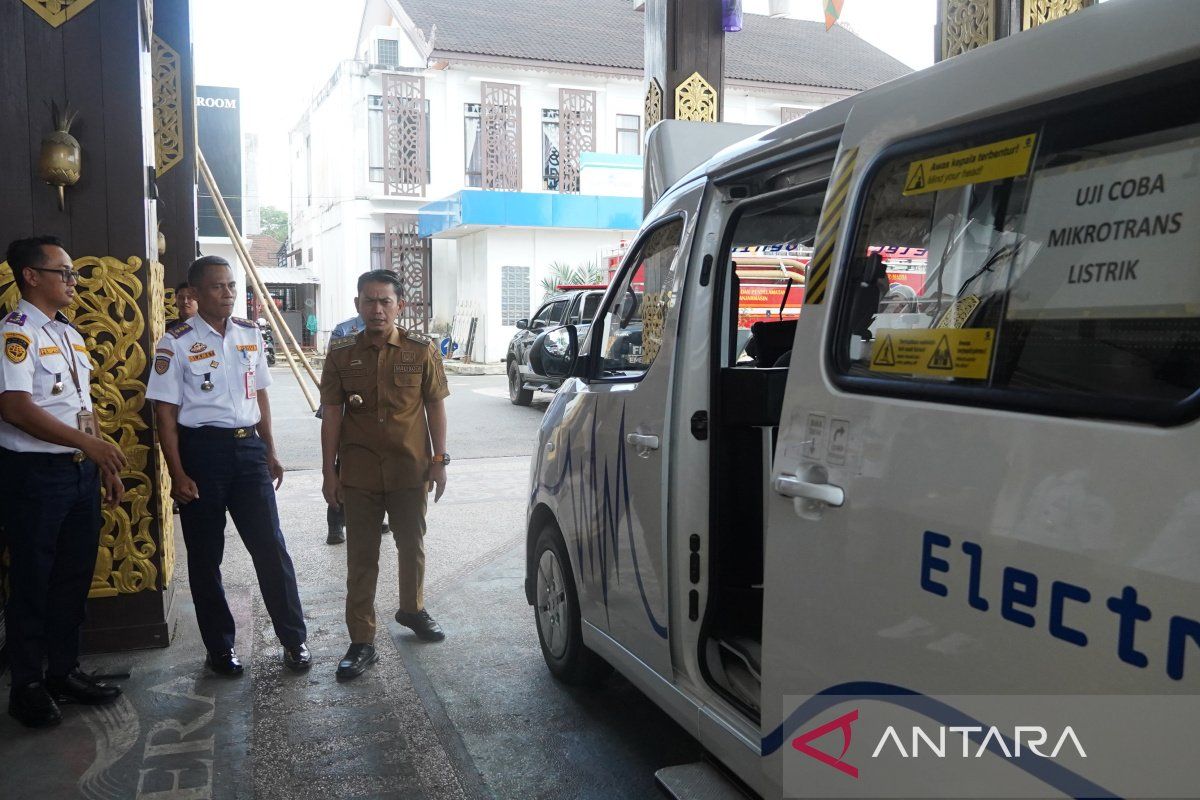
Banjarmasin (ANTARA) - The Banjarmasin city government in South Kalimantan is conducting a trial of public transport in the form of electric microtrans minibuses, which are touted as the future eco-friendly mass transit in the city.
“This is still a trial. We want to know how far its durability, range, and effectiveness hold from morning to evening. In about one month, we will see the results, and only then will we decide,” said Banjarmasin Mayor H Muhammad Yamin HR during the trial of the transport at the city hall courtyard on Tuesday.
He stated that the decision to trial the electric fleet is based on field data, not just a trend, but a current necessity to maximise public services and reduce vehicles using petroleum fuel.
Moreover, this microtrans can carry up to 12-13 passengers, is equipped with CCTV and GPS, as well as air conditioning, which is considered to provide greater comfort for users.
“But still, we don’t want to rush; everything must be measured,” he said.
He also opened the possibility for this mode to replace the role of city taxis or “yellow taxis” which are now starting to lose competitiveness amid changes in public transport patterns.
The city government is also reading significant challenges. Dependence on electrical power, the need for charging infrastructure, and route readiness are important notes.
The Head of the Banjarmasin Transportation Department, Slamet Begjo, stated that this step is in line with national policy.
“The central government’s directive is clear: public transport must shift from conventional to electric. This is part of energy savings and budget efficiency,” he said.
He acknowledged that the need for public transport in Banjarmasin is still unmet, while the existing city taxis are in a stagnant condition. As a solution, the Transportation Department is designing a transition pattern that does not kill off the old players.
He added that the operational plan will refer to 13 transport corridors, where currently only six corridors are active. The rest will be filled gradually, including the possibility by this electric fleet, with operating hours from 06:00 to 18:00 WITA.
This trial becomes a crucial point, namely between maintaining the old system that is increasingly abandoned or daring to shift to future transport. The Banjarmasin city government is now at a crossroads, and the results over the next month will determine the direction of its residents’ mobility.