
Banjarmasin Mayor Urges House of Representatives to Review Impact of Regional Fiscal Policies
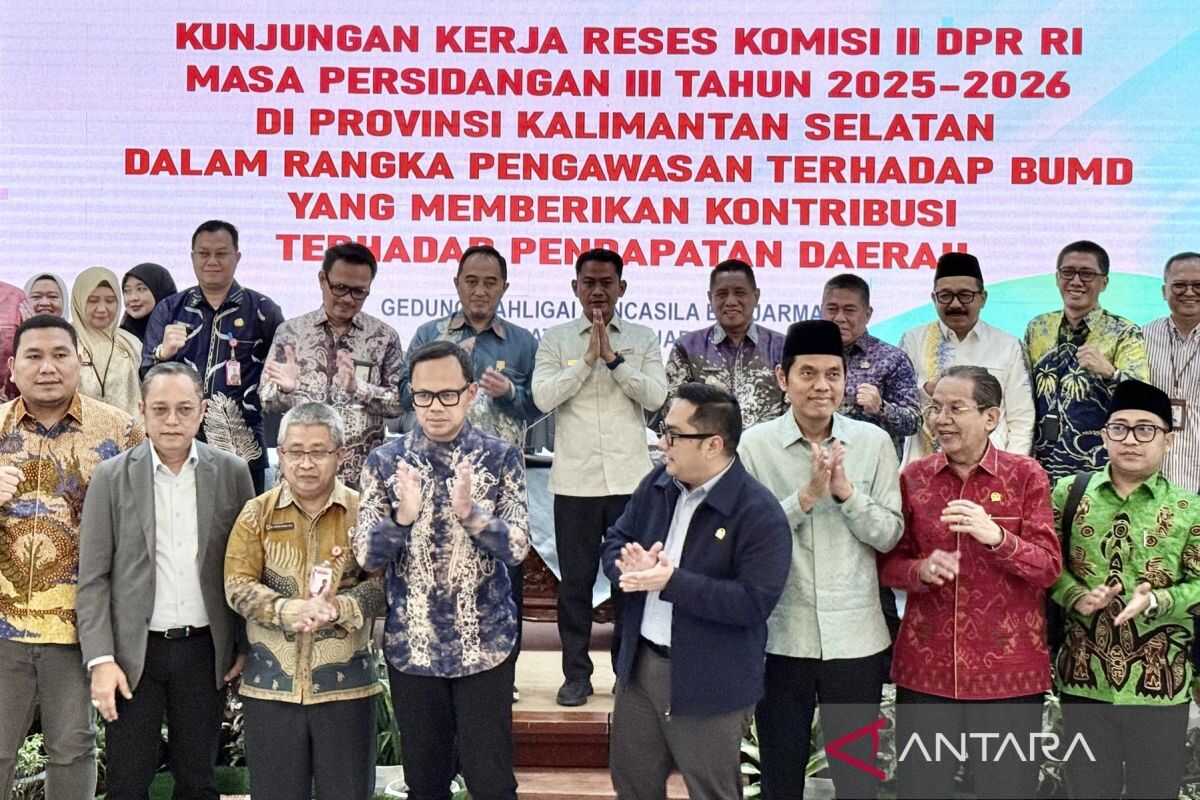
Banjarmasin (ANTARA) — Banjarmasin Mayor Muhammad Yamin HR has asked House of Representatives Commission II to review the impact of fiscal policies, particularly Transfers to Regions (TKD), which are considered to be affecting regional financial capacity and the strengthening of public services in Banjarmasin and other regions.
“Adjustments to regional transfers naturally affect our fiscal capacity, including in strengthening the capitalisation of Regionally Owned Enterprises (BUMD) and the development of public services,” Yamin said during the Commission II recess working visit for the Third Session Period of 2025–2026 in Banjarmasin on Friday.
According to the mayor, the Banjarmasin city government has undertaken efficiency measures and rationalisation of regional expenditure to maintain financial stability. However, limited fiscal space remains a challenge in driving the optimisation of public services.
“BUMD play a strategic role as drivers of the local economy and providers of public services. Nevertheless, BUMD face constraints including limited capital and a number of regulations considered still too rigid, thereby restricting the flexibility of business development in the regions,” he said.
Before Commission II and Deputy Home Affairs Minister Bima Arya Sugiarto, the mayor also highlighted waste management as an urgent issue, particularly following the closure of the Basirih Final Disposal Site (TPA), which is currently undergoing rehabilitation and has affected the city’s waste management system.
As a concrete measure, the Banjarmasin city government has deployed 1,582 Reduce, Reuse and Recycle (3R) agents to encourage waste sorting and processing at source, with the aim of reducing waste volumes whilst raising public awareness of environmental management.
On infrastructure, Yamin explained that Banjarmasin’s character as a downstream city makes it vulnerable to tidal flooding and high rainfall, which trigger waterlogging and floods.
He expressed hope for central government and parliamentary support in developing infrastructure, including the management of riverside embankments and drainage systems, to strengthen flood mitigation.
In response to the various inputs, the Commission II delegation leader stated that the aspirations of the Banjarmasin city government would be noted and brought to discussions at the central level, including those relating to the evaluation of TKD policies and the strengthening of BUMD.
Commission II affirmed its commitment to exercising its oversight and legislative functions to ensure that fiscal policies and regional governance remain oriented towards the optimisation of public services.
The Commission II recess activity served as a dialogue forum between the House of Representatives and regional governments to absorb aspirations and evaluate the implementation of central government policies in the regions.