
Bangil Station Shows Positive Growth, Becoming a Hub for Students and Communities in East Java
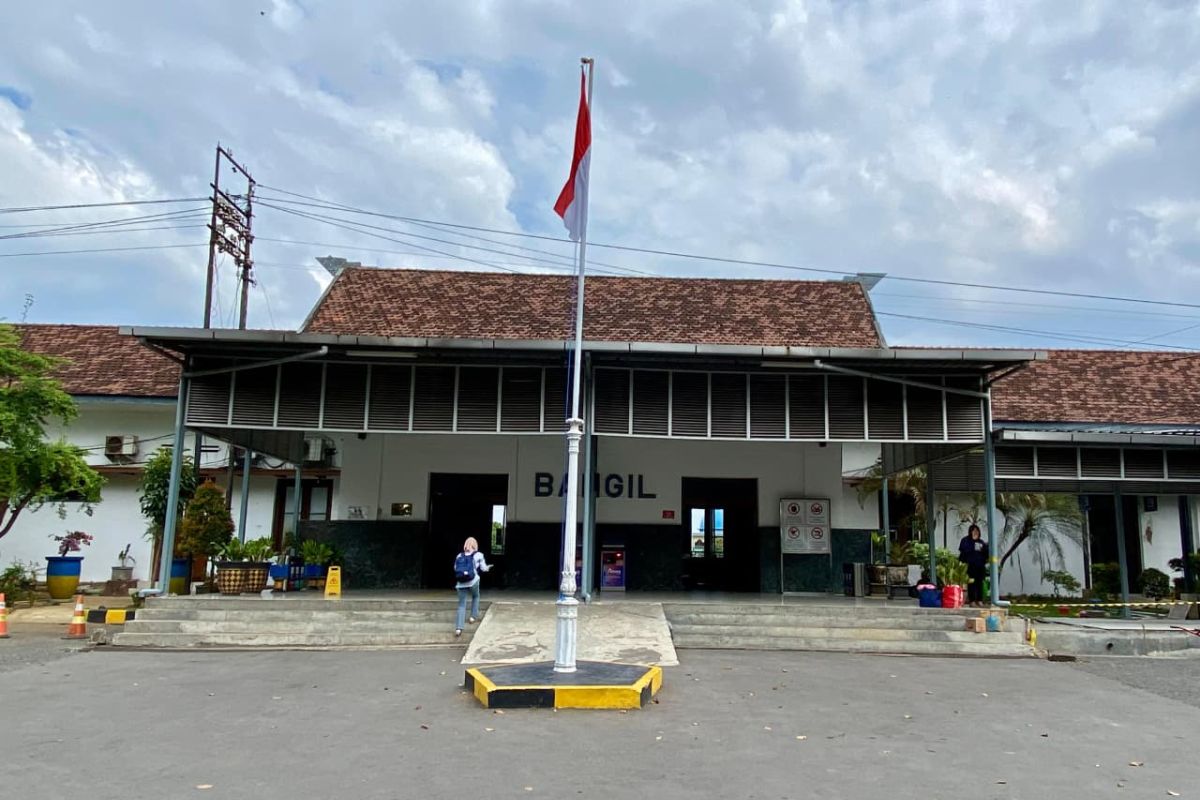
Located on a branch line towards Malang and Banyuwangi, Bangil Station has developed as an important mobility hub for communities in eastern Java. Activity at this station reflects the dynamics of the Pasuruan area, which relies on education, trade, home industries, and religious pilgrimages that take place throughout the year.
The flow of passengers at Bangil Station is largely supported by the mobility of students, commuter workers, local business people, and people making religious pilgrimage trips to various regions in East Java. Bangil’s position as the capital of Pasuruan Regency further strengthens the station’s function as a major connection between regions in the ‘Tapal Kuda’ area and its surroundings.
Throughout January-April 2026, Bangil Station served 38,482 departing passengers and 36,965 arriving passengers. This is an increase compared to the same period in 2025, which recorded 36,484 departing passengers and 35,314 arriving passengers. Annually, the volume of departing passengers grew by 5.48 percent, while arriving passengers increased by 4.67 percent.
Vice President of Corporate Communication at KAI, Anne Purba, said that the characteristics of Bangil Station are strongly influenced by the high level of educational activity based on Islamic boarding schools and community mobility between cities in the Pasuruan area.
“Bangil has a unique mobility characteristic because it is supported by religious education activities, family trips, and daily worker mobility. The presence of trains is an important part of maintaining connectivity between communities and centers of education, economy, and residential areas in East Java,” said Anne.
Pasuruan Regency is known to have hundreds of Islamic boarding schools with tens of thousands of students coming from various regions of Indonesia. This makes Bangil Station one of the main arrival and departure points, especially during educational holidays, semester changes, and major religious celebrations.
As a station located at the eastern end of the Surabaya Area 8 operational area, Bangil is a strategic stopping point for trains traveling across northern, southern, and eastern Java. Passengers have a fairly diverse choice of travel options, ranging from long-distance train services such as the Pandalungan train (Gambir-Jember route) and the Wijayakusuma train (Cilacap-Ketapang route), to local services that support daily community mobility.
The Dhoho and Penataran train services are a favorite mode of transportation for people from and to Surabaya, Malang, Blitar, and Kertosono with affordable fares. Meanwhile, the Supas train (Surabaya-Probolinggo route) also plays an important role in supporting the daily travel of communities in the eastern coastal area of Java.
Travel activity at Bangil Station also has an impact on local economic activity. The Bangil area is known as the largest embroidery center in East Java, with the identity of “Bangil Kota Bordir” or Bangkodir. In addition, this area is also one of the largest producers of jasmine flowers in East Java, with a production of more than 20 million stems in 2025. The high mobility of people helps to revitalize trade activities, culinary businesses, and small businesses around the station, including the local specialty Nasi Punel, which is part of Bangil’s local identity.
“KAI continues to maintain connectivity at Bangil Station so that community mobility takes place safely, comfortably, and on time. Train travel in this area helps maintain the rhythm of education, economic activity, and social relations between communities in different regions,” Anne concluded.