
Bandung's Main Public Minibuses to Serve as Gateway to Blockchain-Based Digital Economic Ecosystem
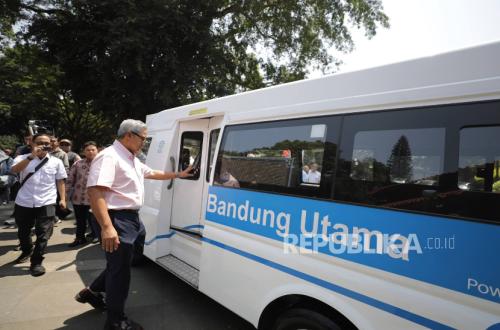
The Bandung City Government is positioning the development of ‘Bandung Angkot Utama’ as a gateway to building a blockchain-based digital economic ecosystem in Bandung. The Mayor of Bandung, Muhammad Farhan, stated that the development of this ecosystem begins with sectors that directly touch the needs of the community, specifically public transport through the implementation of electric vehicles that support the Bus Rapid Transit (BRT) system.
“Bandung City is building a blockchain-based digital economy ecosystem. There are six stakeholders involved. The entry point is the implementation of an electric transport ecosystem that supports BRT,” Farhan said at the Bandung City Hall on Wednesday, 16 September 2026.
According to Farhan, the electric transport ecosystem encompasses various elements, ranging from vehicles and batteries to vehicle and battery maintenance, safety aspects, Public Electric Vehicle Charging Stations (SPKLU), and the provision of spare parts.
Bandung Angkot Utama will eventually become part of Bandung’s transport connectivity, linking various modes of transport, including high-speed rail, intercity trains, motorways, aviation, BRT, and electric minibuses acting as feeder services.
“This is part of Bandung’s connectivity, from high-speed rail, intercity trains, motorways, aviation, and BRT to electric angkot as feeders,” he added.
Farhan stated that the government will not act as a business operator in the procurement of the fleet. Procurement will be handled by Kopamas through Sole Agents (ATPM) or vehicle providers, while the Bandung City Government will focus on providing permits and conducting oversight.
“The government must not engage in business. Therefore, procurement is carried out by Kopamas, purchasing from ATPM or providers. The government only provides permits and performs enforcement,” he said.
He also ensured that the transition to electric vehicles is not intended to eliminate the livelihoods of existing minibus drivers. The electric vehicles are part of a fleet rejuvenation process, and the drivers will remain the same individuals who have been operating the minibuses all along.
“These electric angkots will not erode the existing angkot system. This is about replacing or rejuvenating existing vehicles. The drivers remain the veteran players,” Farhan noted.
Changes will also be made to the drivers’ working patterns. By implementing a salaried driver system, Farhan hopes that services will no longer be driven by the need to meet daily targets (setoran) and that the habit of idling at terminals (mengetem) can be reduced.
The fare for Bandung Angkot Utama is set at Rp7,000 in accordance with applicable regulations, using a cashless payment system. The fleet is also designed to feature air conditioning, Wi-Fi, CCTV, and priority seating for persons with disabilities.
Meanwhile, the Chairman of Kopamas Bandung, Budi Kurnia, stated that they are ready to be part of the urban transport rejuvenation process through electric vehicles. Kopamas currently operates approximately 475 units, two of which have been used in a trial phase. One unit has even received permission to operate within the Husein Sastranegara International Airport area and has been operational for about one month.