
Bandung Regional Parliament Commission I Asserts Social Assistance Must Foster Economic Independence
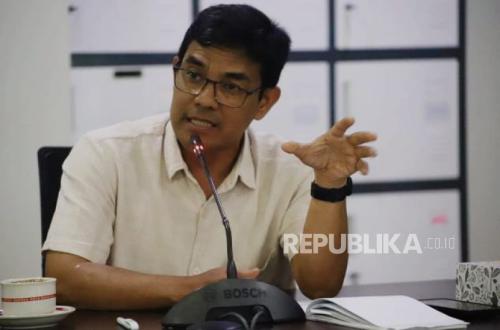
Ahmad Rahmat Purnama, a member of Commission I of the Bandung City Regional Parliament (DPRD), has emphasised the importance of reformulating social assistance (bansos) policies so they do not merely serve as instruments for aid distribution, but instead drive the economic independence of the community. This was stated by Ahmad during a public discussion featuring the Head of the Bandung City Social Services, Yorisa Sativa, in Bandung on Tuesday (26/05/202 ม). During the forum, it was revealed that certain groups of beneficiaries have been receiving social assistance for extended periods, even spanning several years.
“Periodic evaluations are necessary to ensure that poverty alleviation programmes do not create dependency, but truly encourage the economic independence of the people,” said Ahmad. He argued that the fundamental concept of social assistance should not stop at direct aid, but rather serve as a means of sustainable empowerment. He noted that the ‘hook and bait’ approach should be prioritised over simply ‘giving the fish.’
“Assistance must be a tool for empowerment, not just for momentary consumption. Training, business capital, and economic stimuli need to be strengthened so that beneficiaries can achieve upward economic mobility,” he added.
Meanwhile, the Head of Bandung City Social Services, Dr Yorisa Sativa, explained that the government is continuously updating social welfare data based on the national system. However, field dynamics often cause some residents to experience automatic changes in their decile status. She mentioned that these data shifts are the result of updates by the Data and Information Centre (Pusdatin) in conjunction with Statistics Indonesia (BPS), which periodically adjusts to the socio-economic conditions of the community.
“Changes in circumstances, such as redundancies, disasters, or the death of a head of household, can cause socio-economic status to change rapidly,” she said. Yorisa added that residents who find their data to be inaccurate can seek clarification through their local sub-district (kelurahan) by presenting their National Identity Number (NIK). Officers will then conduct re-verification through the SIKS-NG system at the sub-district and district levels.
“If discrepancies are found, a ground check will be conducted to ensure the data reflects the actual conditions on the ground,” she stated. She further emphasised that government budget constraints make collaboration with social institutions and development partners essential. Currently, dozens of social welfare institutions play a role in supporting poverty alleviation programmes in Bandung City. Ahmad concluded by stressing the importance of policy consistency to ensure that social assistance does not become a long-term burden on the state or the region, but rather serves as a bridge towards community self-reliance.