
Bandung Regency Government Seeks to Maximise Clean Energy Potential
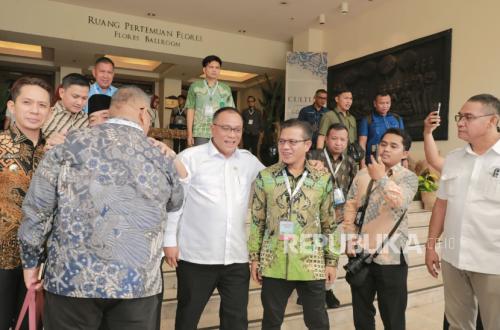
BANDUNG — The Bandung Regency Government has reaffirmed its support for the implementation of Carbon Economic Value (NEK) and climate-resilient, low-carbon development. Its contribution includes practical measures in reforestation, clean energy, agriculture and regional policy, as well as the attendance of Bandung Regent Dadang Supriatna, also known as KDS, at a technical capacity-building session for regional leaders at the Borobudur Hotel in Jakarta on Tuesday (13 October 2026).
Bandung Regency’s support for NEK extends beyond attending the forum. Concrete initiatives are under way across several sectors.
In April 2025, KDS signed a policy declaration on reducing greenhouse gas emissions to control climate change, under Regent’s Instruction No. 5 of 2023. The regency government has also developed waste-processing innovations and is preparing the Sarimukti Waste-to-Energy Plant. In transport, the Soreang–Kutawaringin electric feeder bus is in operation and has cut emissions along the corridor by around 18 per cent, while the Bandung Regency Transport Agency is preparing eight bus rapid transit (BRT) corridors.
The regency government, PT Sarana Multi Infrastruktur and the West Java Provincial Government are also running a programme to restore degraded land in Cihawuk village, Kertasari district. The programme reached its first harvest in September 2026 and is projected to absorb 308.28 tonnes of CO₂ a year.
Bandung Regency also has substantial geothermal resources, including the Kamojang Geothermal Working Area, Indonesia’s oldest geothermal field, which has been in commercial operation since 1983. The Kamojang Geothermal Power Plant has an installed capacity of 235 megawatts, produces 1,326 GWh of electricity and cuts emissions by up to 1.22 million tonnes of CO₂ a year. Its electricity supplies 260,000 households. Bandung Regency as a whole has estimated geothermal potential of around 2,711 megawatts across Kamojang, Wayang Windu, Darajat, Patuha and Cibuni.
Environment Ministry Secretary Rosa Vivien Rahmawati said climate change had become a national development issue, with direct implications for the economy, food and energy security, and public welfare.
“The outcome we are seeking is to map the scope for contributions from each province, regency and city, and to draw up follow-up commitments after this workshop,” Rosa said.
Environment Minister Mohammad Jumhur Hidayat said the national government wanted local communities to receive the greatest share of benefits from carbon trading. He also highlighted the role of regionally owned enterprises in managing carbon units.
“Regionally owned enterprises need to start identifying areas or activities that can be properly maintained as carbon units, and then use them as a basis for regional revenue,” Jumhur said.
He said the new scheme requires agreements with local communities and government from the outset, so that proceeds from carbon sales can reach communities.
“A carbon unit could mean that people suddenly receive money. But if they are not used to managing money, it could quickly be wasted. That is why empowering local communities is important,” he said.
Jumhur also identified open-dump waste sites that produce methane as a sector for near-term action. Captured methane can be sold, while the resulting emissions reductions have economic value. Pertamina, through Perusahaan Gas Negara, has reportedly expressed willingness to buy captured methane.
“One regency may be too small. Perhaps on a residency-wide basis, developers or investors working with regionally owned enterprises could secure a more worthwhile return,” he said.
The technical session, organised by the Environment Ministry, was attended by around 300 participants, including one governor, one deputy governor and 56 regents and mayors from Sumatra and Java. It aimed to improve regional leaders’ understanding of climate change, Nationally Determined Contribution targets, the Zero Waste Zero Emission policy, and the governance of carbon economic value and the SRN/SRUK registries.
Source: jawawa.id (https://jawawa.id/newsitem/bandung-regency-government-seeks-to-maximise-clean-energy-potential-1792039891)
Originally published by Republika (https://rejabar.republika.co.id/berita/tmxjkt370/pemkab-bandung-maksimalkan-potensi-energi-bersih), translated from Indonesian