
Bandung Grand Mosque: History, Social Role, and Efforts to Empower the Congregation
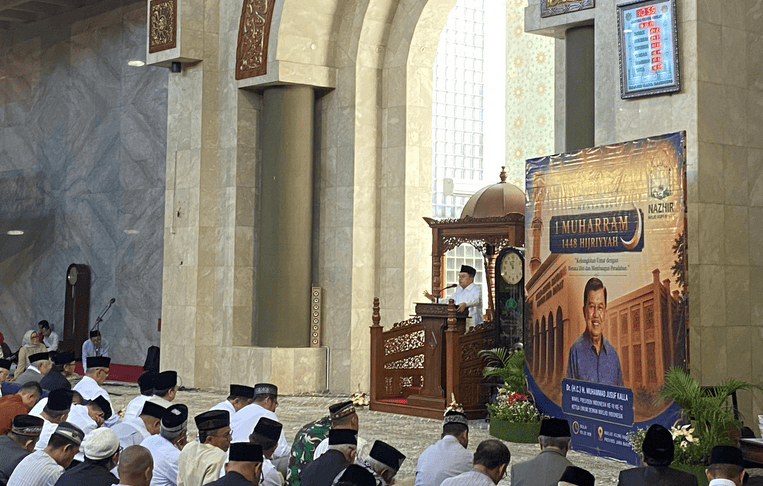
For hundreds of years, the Grand Mosque of Bandung has stood firm, witnessing the transformation of West Java’s capital. From a simple place of worship in the past to an icon of modernity in the city centre, this historic mosque continues to carry the same hope: to be a place that is not only enlivened by the presence of worshippers, but also capable of bringing prosperity to those who come to prostrate within its walls.
Now, the Bandung Grand Mosque is preparing to strengthen its role as a centre for Islamic propagation as well as a driver of economic and social empowerment for the community. This vision was reaffirmed during a visit by the Chairman of the Indonesian Mosque Council (DMI), Jusuf Kalla, accompanied by Bandung Mayor Muhammad Farhan, on Tuesday (16/6/2026).
During his visit, Jusuf Kalla emphasised that the strategic role of mosques must go beyond mere religious ritual functions. According to the former Vice President of the Republic of Indonesia, mosques must transform into centres for community development, education, and welfare enhancement.
“All this time we have often talked about enlivening mosques. But what is no less important is how mosques can also bring prosperity to their congregations,” said Jusuf Kalla. He added that the prosperity of a mosque is not only measured by its architectural grandeur, but by the vitality of activities that provide real benefits to the surrounding community.
Bandung Mayor Muhammad Farhan welcomed the message. He considered the concept of “mosques empowering citizens” to be highly relevant to the city government’s efforts to strengthen socio-religious roles. Farhan confirmed that the Grand Mosque’s administrators would immediately formulate strategic programmes to realise this vision.
The Bandung Grand Mosque is not just a new building with towering twin minarets. Its history stretches back more than two centuries, making it one of the oldest silent witnesses to the development of the City of Flowers. It was first established shortly after the capital of Bandung Regency was moved from Dayeuhkolot to the banks of the Cikapundung River in the early 19th century, and has undergone numerous renovations since.
Jusuf Kalla expressed high appreciation for the historical resilience of the mosque. He expressed hope that amidst rapid progress and the modernisation of the Alun-alun Bandung area, the Grand Mosque would remain a consistent centre of civilisation that is adaptive yet firmly upholds spiritual values.
The Bandung City Government pledged full support for various initiatives launched by the mosque’s management. Muhammad Farhan stressed that collaboration between the government and religious institutions is crucial to ensure the mosque’s benefits are felt by all levels of society.
“We are ready to fully support the various programmes initiated by the Grand Mosque, so that the benefits can be felt directly by the wider community,” Farhan stated. The presence of a national figure like Jusuf Kalla is expected to inspire mosque administrators across Bandung to start thinking about economic empowerment programmes for their congregations.
Source: jawawa.id (https://jawawa.id/newsitem/bandung-grand-mosque-history-social-role-and-efforts-to-empower-the-congregation-1781625096)
Originally published by Media Indonesia (https://mediaindonesia.com/nusantara/901188/masjid-agung-bandung-sejarah-peran-sosial-dan-upaya-memakmurkan-jamaah), translated from Indonesian