
Bandung Faces Waste Crisis, City Government Intensifies Campaign to Prevent Food Waste
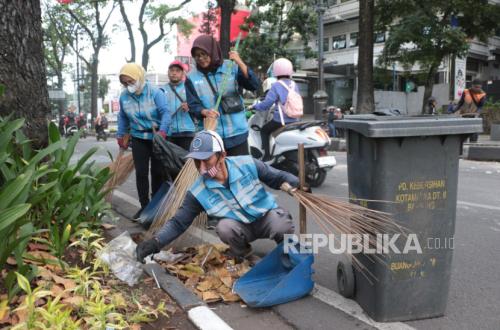
The Bandung City Government, through its Culture and Tourism Office (Disbudpar), in cooperation with WRI Indonesia, has been promoting a campaign urging people not to leave food uneaten, under the slogan “Tong Kalap, Tong Nyesa!” (Don’t be greedy, don’t regret!), on Saturday (11/7/2026). The campaign, part of the Urban Futures programme, targets millennials and Generation Z to reduce food waste.
The initiative, supported by the Humanis Foundation and Social Innovation, responds to the waste crisis in Bandung, where the city generates 1,600 tonnes of waste per day, dominated by food waste. As much as 80 per cent of household waste occurs at the point of consumption. Indeed, 44 per cent of it is edible food that goes to waste.
Tomi Haryadi, Director of the Food, Land and Water Programme at WRI Indonesia, described food waste as a major urban challenge. He said global data shows that the hotel, restaurant and café sector, along with households, are the main contributors.
“Findings by the Bandung Environment Office reveal that 63 per cent of food waste comes from the hotel, restaurant and café sector, with the rest from households,” he said over the weekend.
He emphasised that changing people’s behaviour is the key to cutting off waste at its source. Through the campaign, he hopes to bring about a shift in how young people in Bandung consume food.
He said the issue of food waste has become increasingly urgent given the limited remaining capacity of Bandung’s final processing sites (TPA). The Sarimukti landfill is now operating far beyond its ideal capacity, with around 78 per cent of the waste it receives coming from Bandung.
Arti Indallah, Programme Development Manager for Climate Justice at the Humanis Foundation and Social Innovation, said reducing food waste is part of concrete action to address climate change.
“Climate change is a matter of justice. Young people will be the group most affected, but at the same time they have a major role in leading the solution,” she said.
The Head of the Bandung Culture and Tourism Office, Adi Junjunan Mustafa, said Bandung’s tourism sector cannot be separated from the thousands of cafés and restaurants that serve as its magnet for visitors. However, the current high volume of food waste poses a real threat.
He invited all culinary businesses to take part in the change. “We are committed to encouraging café and restaurant owners to contribute to creating a more responsible consumption ecosystem towards sustainable tourism in Bandung,” he said.
As an initial step, the campaign has enlisted ten restaurants and cafés as pilot partners, namely Nara Park, Greens & Beans, Work.unusual, Milestone Coffee, NERD Laboratory, Tedja Koffee on Jalan Aceh, Pho Ngon, Hutanika, Kopitera on Burangrang, and Bagi Kopi Signature.
Source: jawawa.id (https://jawawa.id/newsitem/bandung-faces-waste-crisis-city-government-intensifies-campaign-to-prevent-food-waste-1783828254)
Originally published by Republika (https://rejabar.republika.co.id/berita/ti1jyu487/bandung-krisis-sampah-pemkot-galakkan-kampanye-cegah-food-waste), translated from Indonesian