
Bandung Confinement Case: Expert Highlights Dangers of Coercive Control
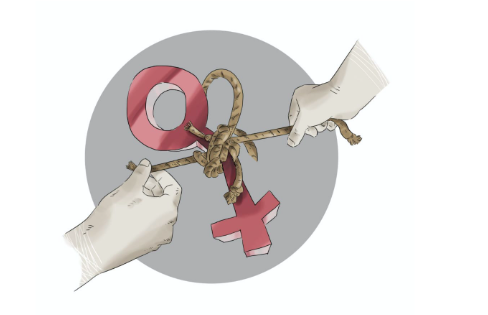
The detention case in Bandung serves as a reminder that violence within relationships does not always leave physical scars. Behind seemingly ordinary relationships, an individual can experience continuous control, manipulation, and intimidation, eventually losing their personal freedom.
According to the Head of the Centre for Gender and Child Studies (PKGA) at IPB University, Yulina Eva Riany, this condition is known in psychology as coercive control.
“Coercive control is a pattern of manipulative, intimidating, and threatening behaviour that causes victims to slowly lose their freedom, sense of security, self-confidence, and even the ability to make decisions. What needs to be recognised is not just a single incident, but a pattern of relationship that continuously erodes the victim’s autonomy,” Yulina stated on Tuesday (30/6).
She explained that this concept, introduced by Evan Stark, can manifest in various forms, such as isolating the victim from family and friends, controlling communication and social media, limiting activities, unilaterally managing finances, and even performing gaslighting, which causes victims to doubt their own memories and judgements. Because it occurs gradually, such behaviour is often misinterpreted as a form of care or affection.
Yulina explained that many people ask why victims remain in unhealthy relationships. According to her, the answer is far more complex than simply not wanting to leave.
“The more appropriate question is not ‘Why doesn’t the victim leave?’, but rather ‘What factors make it difficult for the victim to leave?’ Victims often face emotional dependency, economic pressure, concerns regarding children, threats from the perpetrator, and a lack of social support,” she revealed.
Psychologically, this condition is explained through attachment theory, the phenomenon of trauma bonding, and learned helplessness. Victims can form strong emotional bonds with perpetrators due to a cycle of violence interspersed with apologies and promises to change. Repeated experiences of control can also make victims feel powerless and believe that nothing they do will change the situation.
Yulina added that relationships leading to psychological violence usually develop slowly, making them difficult to recognise. Signs include excessive jealousy and possessiveness, controlling social circles, demanding full access to phones and social media, belittling a partner, making a partner feel constantly guilty, using emotional threats, gaslighting, and ‘love bombing’ that later transforms into controlling behaviour.
“Victims often do not realise they are experiencing psychological violence because the behaviour develops bit by bit and is normalised as a form of care,” she said.
The impact of psychological violence should not be underestimated. Victims are at risk of chronic stress, depression, anxiety disorders, and post-traumatic stress disorder (PTSD). Continuous manipulation can also destroy self-esteem, causing victims to lose trust in themselves and struggle with decision-making.
“Psychological violence can be just as heavy, and in some cases even more persistent, than physical violence. Victims become very doubtful of themselves and find it difficult to establish healthy boundaries in relationships,” she said.
She emphasised that families and the surrounding environment play a crucial role in helping victims. Support should be provided by listening without judgement, validating the victim’s experience, and encouraging them to seek psychological assistance or legal aid if necessary.
“Victims need support, not judgement. The most important thing is to make them feel heard, trusted, and to know that they are not alone in facing such a situation,” she concluded.