
Bandung City's Food Security Still Dependent on Supplier Regions
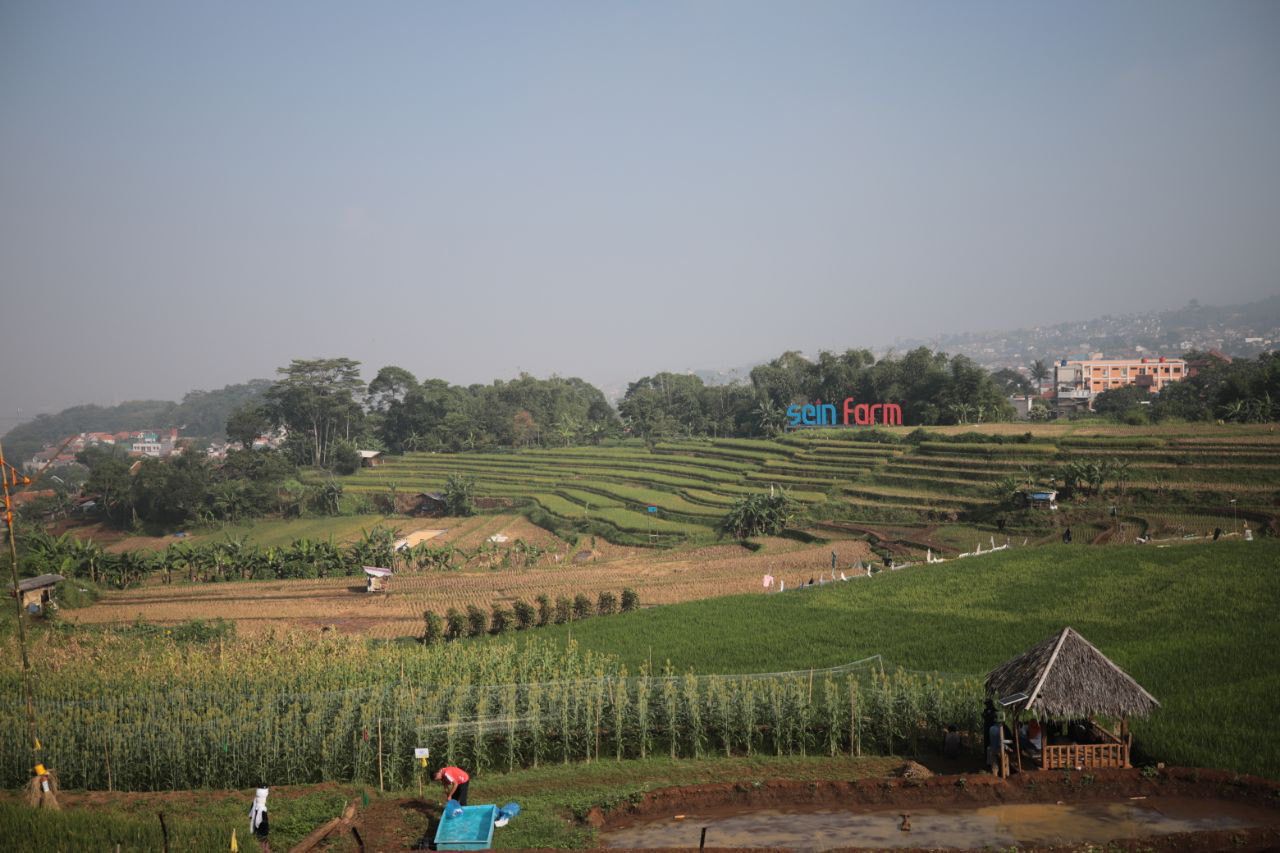
The Bandung City Government continues to strive to strengthen food security amidst increasing public demand and growth in the tourism sector, although the city does not yet have its own food reserves. Mayor Muhammad Farhan confirmed that the supply of essential goods remains secure thanks to the distribution system that has been operating effectively. Bandung is a region without extensive agricultural areas, so almost all its food needs are supplied from various regions across Indonesia. Therefore, the distribution network is the most critical factor in maintaining supply and price stability. “We indeed do not have a food reserve yet. We rely heavily on two main markets, Gedebage and Caringin, plus Bulog and other large markets,” he stated on Friday (19/6).
According to Farhan, these two main markets serve as the primary entry points for food commodities from at least 16 provinces in Indonesia. Daily essentials ranging from rice, vegetables, and fruit to meat and other foodstuffs are distributed every day to meet the needs of more than 2.5 million residents, plus millions of tourists who visit annually. In addition to the two main markets, food distribution is also strengthened by several large markets specialising in specific commodities. “Ciroyom Market is the distribution centre for fresh meat and fish, while Andir, Kosambi, Sederhana, and Pasar Baru markets function as secondary markets supplying vegetables and other commodities,” he explained.
Farhan added that Bulog plays a strategic role in maintaining Bandung’s food stability. Approximately 30% of the needs for rice, cooking oil, granulated sugar, and wheat flour are met through Bulog’s distribution, with the remainder fulfilled through market mechanisms that have been functioning well. As long as distribution runs smoothly, the public need not worry about food availability. “Nevertheless, the government is beginning to consider long-term steps to strengthen regional food security. One option being studied is building a cooperation scheme with food-producing regions through leasing production land, as has been implemented by the DKI Jakarta Provincial Government,” he said.
Farhan noted that Jakarta has long-term contracts with several regions for specific commodities. Rice is supplied from Subang Regency, while beef needs are met through cooperation with West Nusa Tenggara Province. However, this concept cannot necessarily be directly applied in Bandung without thorough study. “The question now is, which commodities does Bandung truly need to secure? We must not end up contracting land at great expense when the market mechanism can still meet that need,” he stressed.
Therefore, Farhan continued, the Bandung City Government is opting to conduct a comprehensive study before making a decision. The analysis covers commodity types, public demand volume, distribution effectiveness, and budget efficiency if such cooperation is realised. Besides strengthening supply, the government also continues to control inflation through coordination with the central government, Bank Indonesia, and the Trade and Industry Office. “Inflation control in Bandung is fundamentally not just about goods prices, but more about ensuring food distribution runs smoothly. For Bandung, the key is supply and distribution. As long as distribution is smooth, public needs can still be met,” he said.
Farhan acknowledged that Bandung’s inflation rate was once among the highest in West Java. However, this was not caused by declining food production but by a significant increase in demand. From late 2025 to mid-2026, the number of tourists visiting Bandung rose sharply, directly impacting food needs, especially to meet demand from the culinary, hotel, restaurant, and tourism industry sectors. “When tourists increase, food demand automatically rises. Market prices cannot differentiate between purchases made by residents and those by restaurants. Consequently, prices go up,” he explained.
He assessed that Bandung’s biggest future challenge is no longer merely maintaining food stocks but increasing supply to keep pace with the continuously growing tourism sector. Besides demand factors, Farhan also highlighted the threat of climate change beginning to affect the supply of several commodities, particularly vegetables. Prolonged dry seasons can reduce vegetable production from supplier regions, potentially impacting market prices. “Unlike vegetables, rice stocks are relatively secure because Bulog has sufficient reserves through the Food Supply and Price Stabilisation programme. There are now three categories of rice circulating in the market: SPHP rice, premium rice, and speciality rice,” he said.
However, Farhan noted that problems have mostly occurred with premium rice due to its high demand. Supply actually exists, but the high demand for premium rice is often exploited by speculators who hoard goods to sell when prices rise. Therefore, monitoring hoarding practices is one of the government’s focuses in maintaining food price stability. Farhan hopes that synergy between the government, Bulog, businesses, distributors, and the public can be further strengthened so that Bandung’s food security is maintained despite challenges from climate change, population growth, and increasing tourism activity.