
Bandung City Government Prepares 'Buy The Service' Scheme to Accelerate Street Lighting Management
The issue of public street lighting (PJU) in Bandung City is entering a new chapter. Amid a gap between the required budget of approximately Rp350 billion and the regional budget’s allocation of only Rp45 billion, the Bandung City Government is preparing a managed service or ‘buy the service’ scheme as a new strategy. To improve street light management, the city government will no longer just purchase assets like lamps, but will also buy management, maintenance, and technology-based monitoring services to ensure faster and more measurable handling of damage.
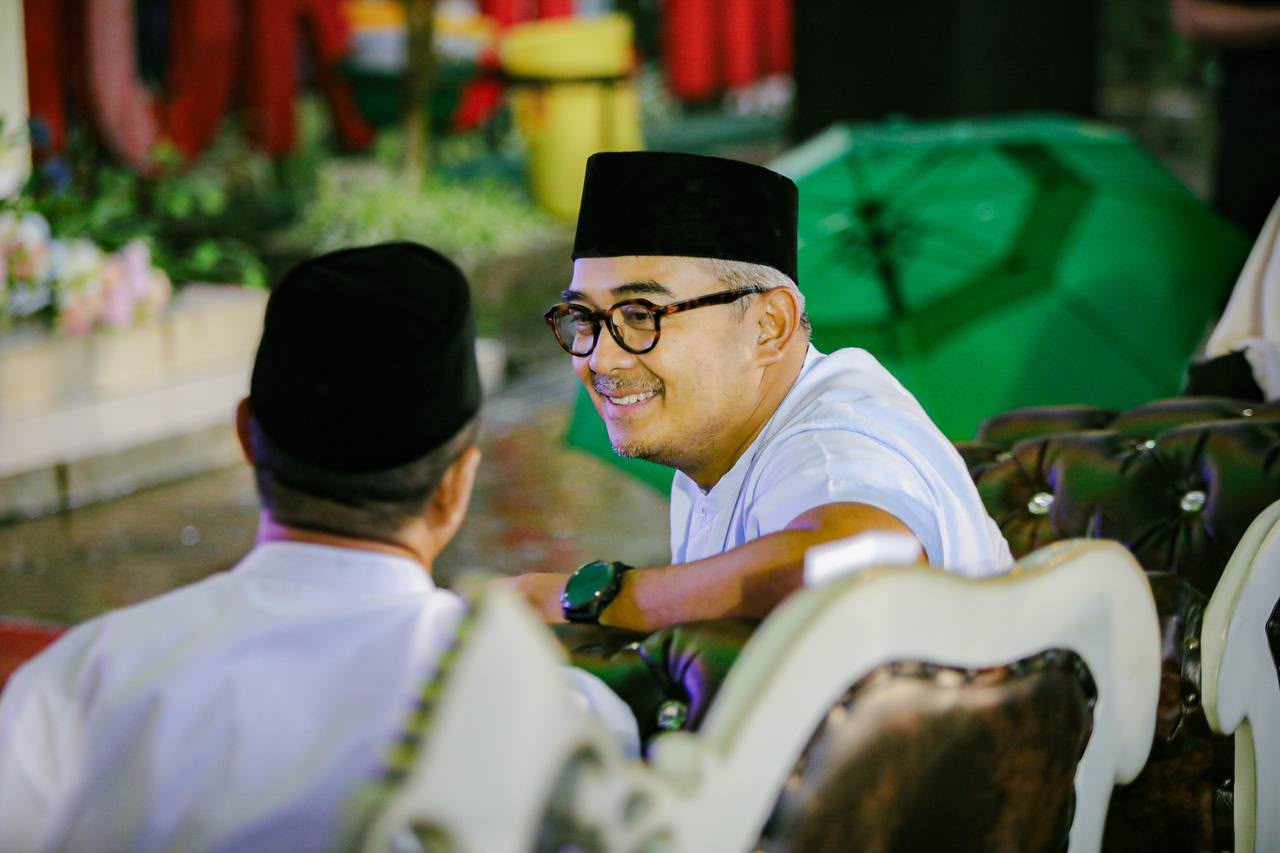
Mayor of Bandung Muhammad Farhan stated that the PJU problem can no longer be solved using the old pattern of relying on public reports or manual monitoring by officers. According to him, this system causes many non-functioning street lights to only be repaired after a complaint is lodged, resulting in delayed government response. “So far, we have done it manually. Manual monitoring, manual reporting, the most sophisticated being through the 112 service. This means the response to PJU damage is not fast. It cannot be like that anymore,” Farhan said at Bandung City Hall on Friday (8/7).
Therefore, the city government plans to implement an automation system through the managed service concept. In this system, every PJU point will be connected to a command centre, enabling it to automatically send information when a disruption occurs. Through a digital dashboard, the government can identify lights that are off, dim, not operating on schedule, or damaged without waiting for public reports. “Everything will be controlled in one dashboard so that the service is much better than the current system,” he said.
Farhan explained that the buy the service concept represents a fundamental change in the governance of Bandung City’s PJU. Previously, the government allocated budgets to purchase lamps and their infrastructure. Under the new scheme, the government will pay for a comprehensive service. The service provider will not only install the lamps but will also be responsible for maintaining lighting quality, performing routine maintenance, and repairing damage according to agreed service standards. With this model, the government hopes that service quality to the public will be more assured because the provider is obliged to ensure the entire system functions during the contract period.
Farhan revealed that this scheme will still be discussed with the Bandung City Regional People’s Representative Council (DPRD) as it requires a medium-term budget commitment. “I will talk to the DPRD leadership and faction leaders because this requires a long-term commitment. At a minimum, it must be included in the 2027, 2028, and 2029 budgets,” he said. He also expressed appreciation to the DPRD for their various inputs regarding PJU improvements, including City Council member Andri Gunawan, who has been actively pushing for the acceleration of street lighting service repairs.
Behind this modernisation plan, the biggest challenge remains the region’s fiscal limitations. Farhan disclosed that the budget needed to realise adequate street lighting throughout Bandung City is estimated at around Rp350 billion. Meanwhile, the current regional budget capacity can only provide around Rp45 billion. In addition to investment costs, the government must also bear annual PJU maintenance costs reaching around Rp90 billion. This large requirement means the city government cannot rely solely on the regional budget. Therefore, the government will strengthen collaboration with the West Java Provincial Government and the central government.
One priority project is the improvement of PJU along Jalan Soekarno-Hatta. Farhan stated that this national road will be improved through cooperation between the Ministry of Transportation, the West Java Provincial Government, and the Bandung City Government. According to him, collaboration is a necessity because the status of Jalan Soekarno-Hatta is under the authority of the central government. In addition to lighting on the main road, the city government will also repair PJU on connecting roads or sub-systems on the left and right sides of the Soekarno-Hatta corridor with support from the central government. He mentioned that coordination with the Indonesian House of Representatives and the West Java Provincial Government has been carried out so that the programme can be realised soon.
For the implementation of the managed service scheme, the city government is still reviewing which institution will be the executor. One option being considered is involving a regional-owned enterprise (BUMD) engaged in infrastructure and investment. However, the final decision is still awaiting the results of a study by the Bandung City Transportation Agency and the West Java Provincial Transportation Agency. The study will determine the cooperation model, monitoring mechanism, and financing effectiveness so that the new system can run sustainably.
Farhan also linked the quality of street lighting to public safety. He assessed that the presence of PJU does not automatically eliminate a person’s criminal intent. However, good lighting can narrow the opportunity for crime to occur. “Every crime has an opportunity. With good PJU, we reduce that opportunity,” he said. Therefore, the improvement of PJU is not only seen as an infrastructure project but also as part of an effort to create safer, more comfortable, and more liveable public spaces for the community. Farhan also noted that improving PJU quality aligns with the significant contribution of the public to regional revenue through the Motor Vehicle Tax, Motor Vehicle Title Transfer Fee, and Specific Goods and Services Tax on electricity.
Source: jawawa.id (https://jawawa.id/newsitem/bandung-city-government-prepares-buy-the-service-scheme-to-accelerate-street-lighting-management-1786121485)
Originally published by Media Indonesia (https://mediaindonesia.com/jabar/berita/919559/pemkot-bandung-siapkan-skema-buy-the-service-untuk-percepat-pengelolaan-pju), translated from Indonesian