
Bandung City Government Finalises Transition Preparations from Sarimukti Landfill to Legok Nangka Waste Processing Facility
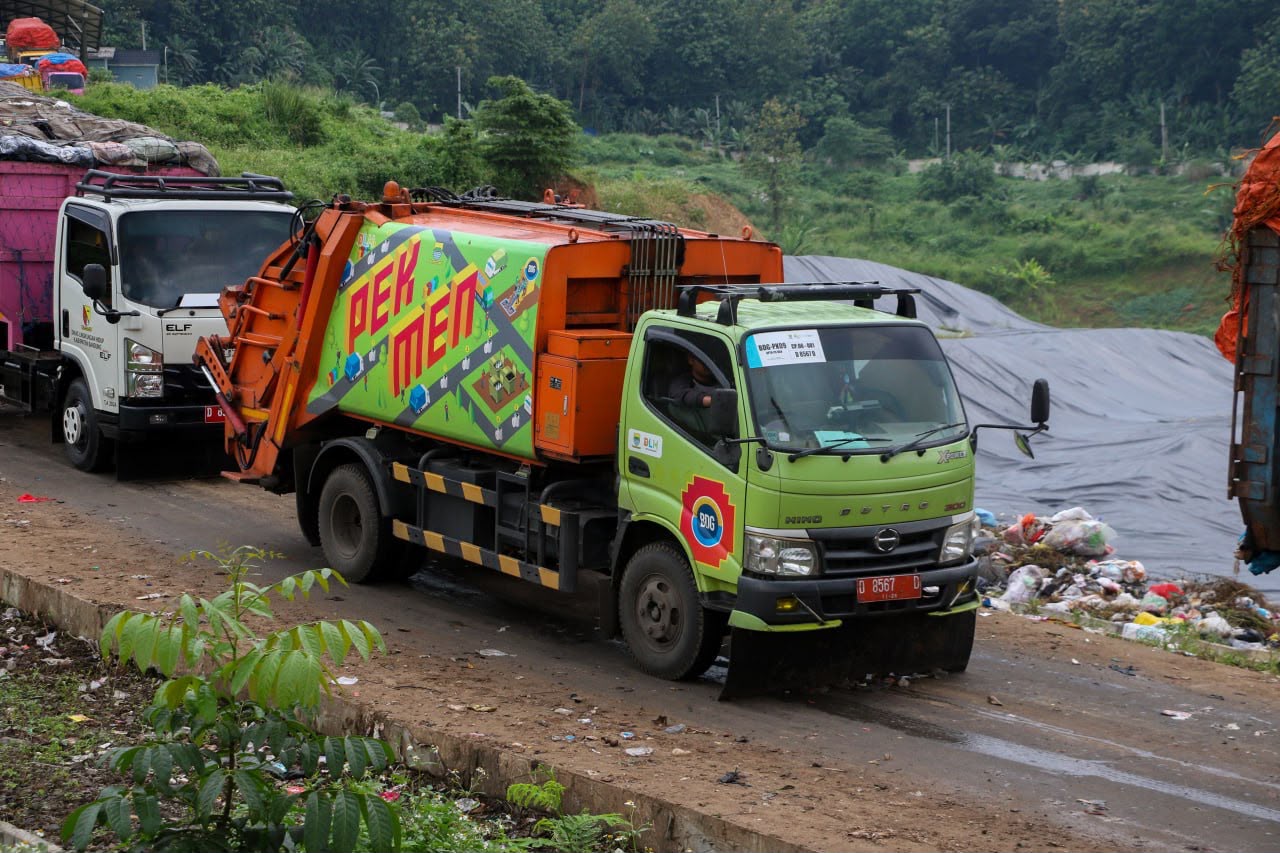
The Bandung City Government is finalising various preparations ahead of the operation of the Legok Nangka Waste Processing and Final Treatment Facility (TPPAS), which is targeted to commence operations by the end of 2029. In addition to preparing a specialised fleet of waste transport vehicles, the city government is also strengthening waste reduction and processing at the source to ensure the transition from the Sarimukti landfill to Legok Nangka proceeds optimally.
Head of the Waste and Hazardous Waste Management Division at the Bandung City Environmental Agency (DLH), Salman Faruq, stated that the city government is committed to fulfilling the agreement signed in 2021 to send 800 to 1,000 tonnes of waste per day to the Legok Nangka TPPAS. "Bandung City’s commitment, as agreed in 2021, is to send a minimum of 800 to 1,000 tonnes of waste per day to Legok Nangka. Therefore, we must prepare all supporting facilities, especially the transport fleet and a waste management system that meets the requirements there," he explained on Tuesday (4/8).
Salman noted that the waste sent to the Legok Nangka TPPAS will be domestic household waste. However, the Environmental Agency is targeting that only residual waste, resulting from sorting processes, will actually enter the facility to ensure no waste is rejected upon arrival. "We are continuously preparing the sorting system. The hope is that the waste entering Legok Nangka is truly residual, in accordance with the established operational provisions," he said.
A primary focus of the preparations is the provision of a transport fleet capable of reaching the Legok Nangka site, which features steep, uphill road contours. The fleet to be used must have special specifications, both in terms of vehicle capability and transport systems. "The fleet must be truly fit because the access to Legok Nangka is quite steep. Additionally, all vehicles are expected to use a closed or compactor system so that transportation is safer, does not disturb the environment, and leachate can be properly contained," he explained.
Salman stated that the Bandung City Government currently possesses part of this fleet. However, over the next two to three years, the number will be increased to reach approximately 80 to 100 units. In addition to regional procurement, the Environmental Agency is also open to the possibility of fleet support from the West Java Provincial Government through cooperation with the Dutch Government. "We already have part of the fleet. Going forward, it will continue to be added. There is even a plan for assistance with closed fleet vehicles through the provincial government in cooperation with the Dutch Government," he revealed.
While waiting for Legok Nangka to operate, the Bandung City Government continues to optimise waste reduction from the source. Various efforts are ongoing, ranging from education on reducing household and commercial waste, organic waste processing, to the application of various processing technologies. "During this transition period, we continue to maximise waste reduction at the upstream level, then processing at the middle and downstream levels. The goal is for Bandung City to become more self-sufficient in managing waste even though the quota to Sarimukti is still limited," he asserted.
Salman said this step is crucial considering the increasingly limited capacity of the Sarimukti landfill, meaning Bandung City can no longer rely entirely on final disposal. He also confirmed that when the Legok Nangka TPPAS begins operations in 2029, the Sarimukti landfill will be closed by the West Java Provincial Government. The Sarimukti area is currently over capacity, while the expansion zone being utilised is estimated to last only about two more years.
In addition to strengthening the transport system, the Environmental Agency is also testing organic waste processing technology provided by the National Research and Innovation Agency (BRIN). This technology has currently been placed in six sub-districts in Bandung City and its effectiveness will be evaluated before being expanded to other areas. "If the results are good and suitable for application in Bandung City, it will certainly be expanded for communal-scale organic waste processing," he said.
Salman added that the current waste management situation in Bandung City is still relatively under control. The dry season weather has made the transport process to the Sarimukti landfill smoother. Approximately 1,000 tonnes of waste are successfully transported to Sarimukti each day, preventing significant waste accumulation at temporary disposal sites.
Source: jawawa.id (https://jawawa.id/newsitem/bandung-city-government-finalises-transition-preparations-from-sarimukti-landfill-to-legok-nangka-waste-1785837101)
Originally published by Media Indonesia (https://mediaindonesia.com/jabar/berita/918109/pemkot-bandung-matangkan-persiapan-transisi-dari-tpa-sarimukti-ke-tppas-legok-nangka), translated from Indonesian