
Bandung City Government Distributes Aid to ,1832 Food-Insecure and Stunting-Risk Families
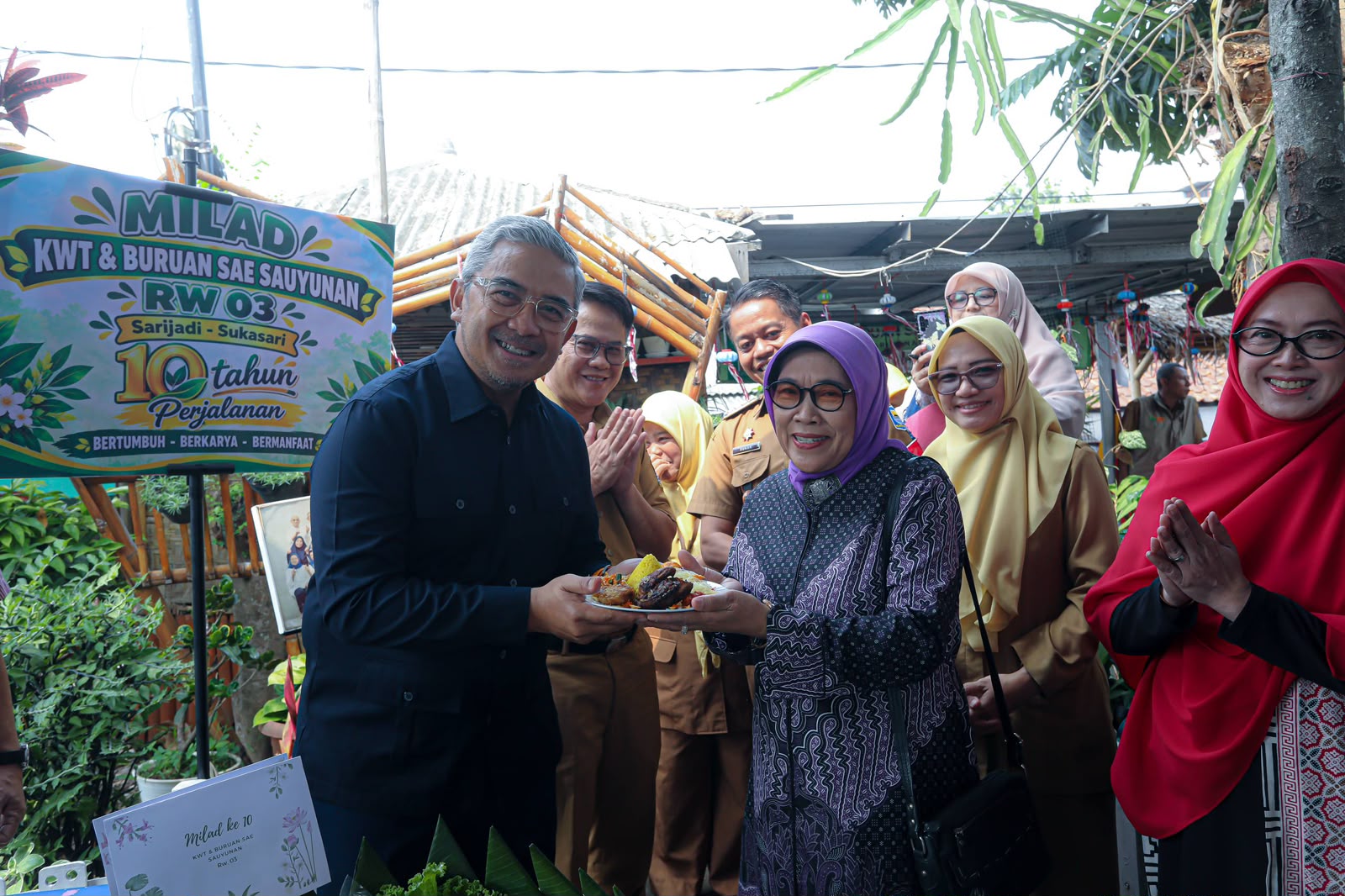
The Bandung City Government is distributing food aid through the Food Assistance Programme for Food-Insecure and Stunting-Risk Areas (Pangersa). This programme targets ,1832 families across 12 districts and 16 sub-districts.
The Mayor of Bandung, Muhammad Farhan, stated that the programme is part of the government’s commitment to ensuring food aid reaches those in need. He noted that following presidential directives, local governments must distribute aid according to both necessity and available capacity.
He emphasised that because the community’s need for food assistance is limitless, the government must balance aid distribution with available resources while ensuring that the beneficiaries are truly the most vulnerable groups. The distribution of Pangersa is carried out in collaboration with regional agencies, local authorities, community health centres (Puskesmas), and officials at the district, sub-district, and neighbourhood (RW) levels.
Unlike aid that consists solely of cash or specific staple foods, Pangersa provides various agricultural products, including rice, fish, chicken, eggs, and vegetables. The Head of the Bandung City Food Security and Agriculture Office (DKPP), Gin Gin Ginanjar, explained that Pangersa represents the Bandung City Government’s presence in ensuring vulnerable groups have access to sufficient, nutritious, safe, and affordable food.
He added that the programme is also part of an effort to reduce poverty, manage food insecurity, and prevent stunting. Beyond mere food provision, the programme focuses on educating the public on diverse, balanced, and safe (B2SA) food consumption patterns.
The distribution is based on the Food Security and Vulnerability Atlas (FSVA) of Bandung City, which serves as the primary basis for identifying areas at risk of food insecurity and stunting. The programme targets families experiencing food insecurity and families with toddlers at risk of stunting. Priority is given to those within the National Socio-Economic Single Data (DTSEN) Deciles 1-4 who have not yet received the Family Hope Programme (PKH) or Non-Cash Food Assistance (BPNT).
To ensure the aid is well-targeted, recipients are identified through data-driven methods followed by verification and validation by local officials. Out of the total 1,832 beneficiaries, 1,232 are food-insecure families and 600 are families with toddlers at risk of stunting.
Source: jawawa.id (https://jawawa.id/newsitem/bandung-city-government-distributes-aid-to-1832-food-insecure-and-stunting-risk-families-1788872016)
Originally published by Media Indonesia (https://mediaindonesia.com/jabar/berita/931115/pemkot-bandung-salurkan-bantuan-untuk-1832-keluarga-rentan-pangan-dan-risiko-stunting), translated from Indonesian