
Banda Islands farmers trained in crop pest control
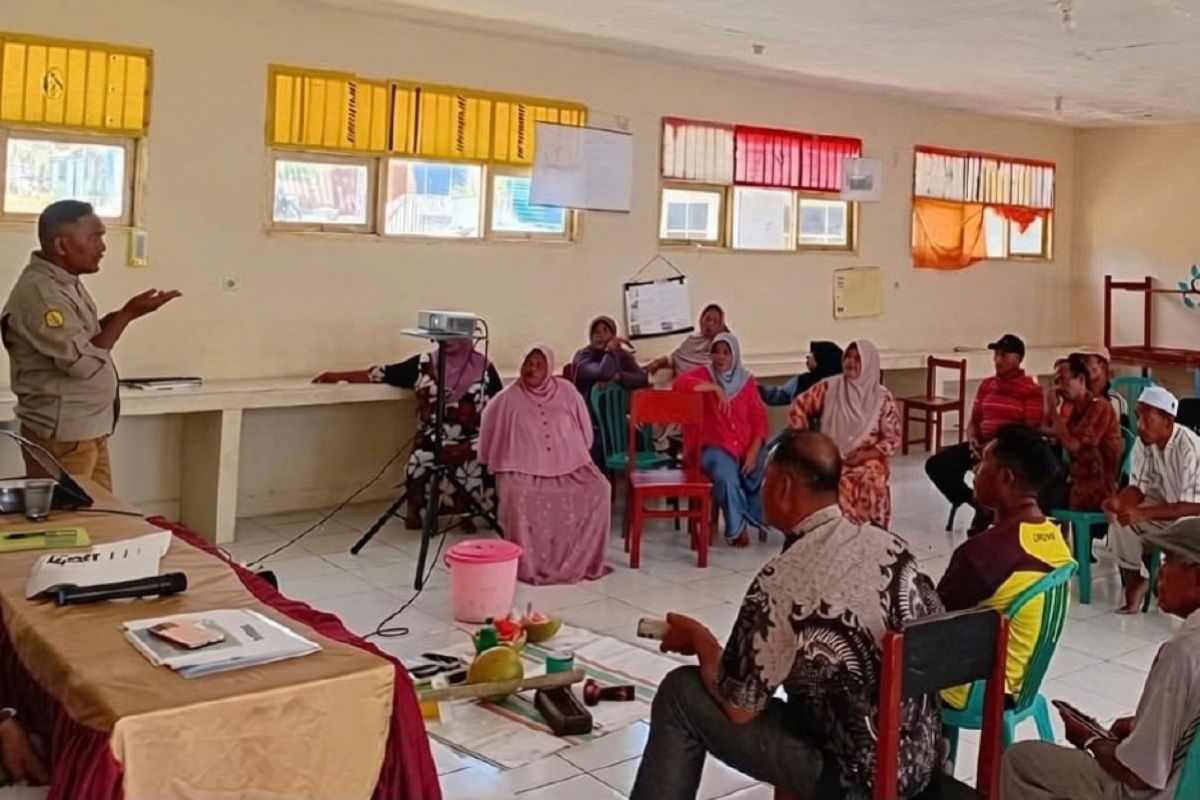
Farmers on Ay Island and Rhun Island in the Banda Islands, Malusc, have received training in controlling plant pests and diseases to maintain the productivity of nutmeg, cloves, and horticultural crops, which serve as the primary source of livelihood for the local community.
The EcoNusa Foundation facilitated this training on plant pest management on 20 August 2026 on Rhun Island and 21 August on Ay Island. Each session was attended by 37 participants from farming and women’s groups.
“When crops are protected, harvests are preserved. And when harvests are preserved, the livelihoods of farmers can continue to be strengthened,” said Zulkifli Hasem, Program Associate at the EcoNusa Foundation, in a press release on Friday.
The training was designed based on the specific problems faced by farmers, including nutmeg fruit drop, fire blight (fungus), and white mould on nutmeg seeds.
Farmers received both theoretical and practical instruction from the Maluku Provincial Agriculture Office and the Technical Implementation Unit of the Maluku Provincial Office for the Protection of Food Crops, Horticulture, and Plantations.
To manage fire blight on nutmeg roots and stems, farmers practised fertilisation by injecting natural liquid fertiliser into the stems and applying root fertiliser through circular trenches.
To reduce white mould attacks on nutmeg seeds, farmers were trained to improve post-harvest hygiene, including using mats during picking and drying, and storing produce in separate rooms with floor elevations of at least 20 centimetres.
Farmers also received explanations regarding the phenomenon of nutmeg fruit drop that frequently occurs in May, known locally as “ombong Mei.”
According to Zulkifli, this condition is related to high rainfall during the transition season and a lack of soil nutrients. Anticipation can be achieved through root fertilisation to improve nutrient levels.
In addition to technical control, farmers practised making botanical pesticides using bael fruit (Aegle marmelos) mixed with liquid soap and water, which is then fermented for 12 hours before being diluted and applied to the plants.
Farmers on Ay and Rhun Islands previously faced limitations in recognising the early symptoms of pest and disease attacks and determining the appropriate control methods.
Iskandar, a farmer from Rhun Island, stated that pest and disease attacks significantly impact nutmeg yields and productivity.
“Pests and diseases have a massive influence on the harvest and fertility of nutmeg trees. The most serious threat is disease affecting trees that are currently in their productive phase,” he said.
He noted that fire blight can cause nutmeg trees to die, while diseases affecting the fruit skin remain a difficult problem for farmers to manage.
Dead nutmeg trees must be replanted, and generally only begin to bear fruit after five to eight years if grown from seeds, meaning farmers lose their source of income during the waiting period.
Nutmeg is one of the main commodities for the people of the Banda Islands, alongside cloves and horticultural crops. Since 2025, the Banda Naira Mandiri Producer Cooperative has been purchasing nutmeg from Rhun Island farmers, while nutmeg from Ay Island is purchased directly by PT KOBUMI.