
Banda Aceh’s ESG Commitment Offers Inspiration for the Country
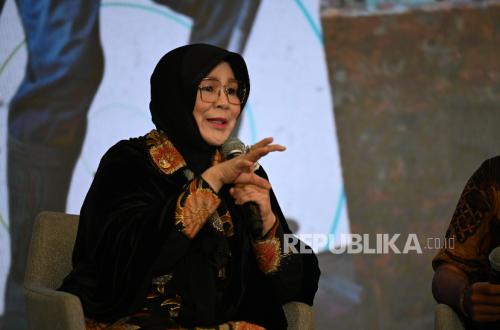
Banda Aceh Mayor Illiza Sa’aduddin Djamal has reaffirmed the city administration’s commitment to protecting the environment through waste-management regulations aligned with Environmental, Social and Governance (ESG) principles. Illiza said environmental management could not rely solely on government programmes, but needed to be reinforced by regulations, budget allocations and changes in public behaviour.
“People of faith should be clean, because cleanliness is also part of faith. That is why we regulate this through a qanun, or local regulation. If we want to implement it in the community, it must be backed by commitment in terms of funding and enforcement. It is not only a qanun, but also a mayoral regulation,” Illiza said at a panel discussion entitled “From Waste to Value: Building Indonesia’s Circular Economy” during the ESG NOW Leadership Forum & Awards 2026, organised by Republika in Jakarta on Monday (19 October 2026).
Illiza said the Banda Aceh administration had regulated waste management through a qanun, or local regulation, as a demonstration of the local government’s commitment. The rules had been reinforced by a mayoral regulation and appeals to the public.
Banda Aceh has enacted City Qanun No. 1 of 2017 on Waste Management, as well as rules on community-based waste management through Waste Collecting Points (WCPs). Illiza said implementation of the regulations addressed not only environmental concerns, but also the social and governance dimensions central to ESG.
“When we are bound by state regulations—in this case, local government rules—they are actually derived from central government legislation, including the law on waste. This is then applied at local level through a qanun. It is a form of commitment by the local government,” she said.
Illiza stressed that regulation must be accompanied by efforts to change how people view waste. The Banda Aceh administration is encouraging waste reduction at source in collaboration with communities, women’s groups, universities and residents at gampong, or village, level.
One approach involves WCPs and waste banks. Organic waste is turned into compost and used to grow food, while non-organic waste such as plastic and bottle caps is collected for recycling. Illiza said the approach not only reduces the volume of waste, but also creates economic benefits for the community.
“When we talk about waste, we are talking about how we can value and respect what is in front of us. The behaviour of the community is still a problem,” she added.
Illiza said Banda Aceh was a small city covering 61 square kilometres, with 271,000 residents across 90 villages and a budget of Rp1.4 trillion. She said the city administration was committed to reducing waste at source.
“On major holidays it reaches 270 tonnes; per month it reaches 250 tonnes a day. Of the 250 to 260 tonnes, 70 tonnes are organic waste, while non-organic waste accounts for 30 per cent,” she said.
The administration is also working with various parties, including universities, to promote reuse, reduction and recycling in Banda Aceh. Illiza added that applying circular-economy principles was one way for the city to transform waste from an environmental problem into a source of economic value.
“We are also bringing the circular economy to life. Waste can be attractive to collect and recycle, and to turn into fertiliser,” she said.
Illiza said community groups could earn income from waste collected through waste banks, while women’s groups were developing food and other value-added products from organic waste. She said waste management at source, the circular economy, community involvement and local regulations formed a set of policies intended to build awareness of the need to save the planet.
“What we are building now is awareness of the need to save the planet and protect future generations,” Illiza said.